
How can Vietnam keep its startups from moving to Singapore?
Vietnam risks losing promising startups to Singapore as founders take their legal entities, investment capital and intellectual property offshore, even while their engineers, R&D operations and core businesses remain at home.
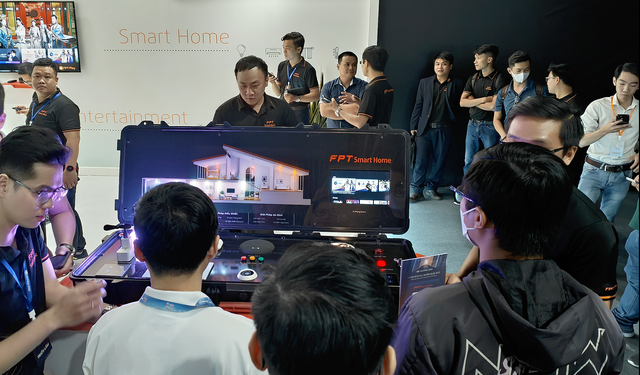
Vietnamese businesses need a supportive environment to grow at home. Photo: Duc Thien / Tuoi Tre
Vietnam's Resolution No. 19/NQ-TW calls for the country to complete regulations on controlled testing, or sandbox mechanisms, encourage localities to develop appropriate testing frameworks, accept risks in scientific research, technology and innovation, and allow controlled pilots of new business models, governance mechanisms and special policies.
The "Singapore HoldCo - Vietnam OpCo" model, in which a Singapore-based parent company holds the capital while its Vietnamese subsidiary handles contract work, has long been a familiar structure among innovation-driven start-ups.
But behind the model are a number of legal and financial barriers that continue to push Vietnamese start-ups abroad.
Why in Singapore?
Speaking to Tuoi Tre (Youth) online newspaper, Nguyen The Vinh, chairman of the Ho Chi Minh City Blockchain Association, said international venture capital funds require companies to establish legal entities in Singapore not because they doubt the capabilities of Vietnamese teams.
"The issue is that Singaporean law provides a set of financial tools that are widely understood and trusted internationally, such as preferred shares, liquidation preferences, anti-dilution provisions, employee stock ownership plans (ESOPs) and drag-along clauses," he said.
Many of these basic instruments remain unfamiliar in Vietnam, Vinh added.
Another bottleneck is the valuation of intangible assets and the movement of capital out of businesses, which is pushing start-ups beyond Vietnam's borders.
Nguyen Thanh Trung, co-founder and CEO of Sky Mavis, which developed the globally successful game Axie Infinity, said bringing resources back to Vietnam remains subject to too many barriers.
"The biggest difficulties are mechanisms for receiving foreign capital and valuing intellectual property. The lack of mechanisms to value source code and intangible assets means companies cannot put digital assets on their accounting books to access domestic funding," Trung said.
Vo Xuan Hoai, deputy director of Vietnam National Innovation Center (NIC), shared the view, pointing out that for start-ups, the greatest value lies in source code, algorithms and intellectual property rights rather than factories and land.
But in Vietnam, using intellectual property as collateral for bank loans or as a capital contribution is almost impossible, while in Singapore and the U.S., such practices are commonplace.
Don't turn the sandbox into another barrier
Nguyen Phuong Linh, representative of Superteam in Vietnam, said the country accounts for more than three percent of the world's new blockchain developers, ranking eighth globally.
The country has abundant human resources, but its legal environment for testing new technologies has yet to keep pace.
The controlled testing framework, or sandbox, was once expected to serve as a launchpad.
But in practice, it is still being shaped by traditional administrative management.
"An effective testing mechanism needs to reduce uncertainty rather than create more procedures that drag on for months," Linh said, calling for a one-stop, specialized sandbox mechanism for new technologies.
Pham Manh Tuong, product director of PILA Group JSC, said the biggest barrier to obtaining approval for testing is not simply officials' fear of responsibility.
Many new technologies, including AI, data and digital assets, fall within the jurisdictions of multiple ministries and agencies, he said.
Without a common coordinating body, prolonged caution is inevitable, Tuong said.
Another issue is the difficulty of shutting down a failed project in Vietnam.
While closing a company in Singapore can be done quickly, allowing founders to move on to new projects, procedures for closing tax identification numbers and dissolving companies in Vietnam remain cumbersome.
This makes many young founders wary of becoming entangled in lengthy legal procedures.
A "green lane" for start-ups
To prevent technology talent, capital and intellectual property from continuing to flow toward Singapore, Vietnam needs a more breakthrough approach, particularly as Resolution No. 19 has opened the way for a shift away from the mindset of "if it cannot be managed, ban it" and toward making science and technology a driver of growth.
According to Hoai, among the millions of businesses in Vietnam, only a few thousand are innovation-driven start-ups.
Vietnam could therefore design a separate institutional "green lane" for this specific group, he said.
First, Vietnam needs to standardize its legal and financial infrastructure by recognizing internationally accepted investment instruments, simplifying procedures for changes in shareholders and taxing share transfers based on actual profits.
Second, it needs to establish a specialized trading platform, with a goal of launching a stock exchange for innovation-driven businesses in 2027 under more flexible listing criteria, rather than requiring companies to have been profitable for two consecutive years as is currently the case.
This could turn the International Financial Center (IFC) models in Ho Chi Minh City and Da Nang into channels for attracting foreign capital, while allowing procedures to be completed within two to four weeks.
Third is seed capital from the State and a mechanism for valuing intellectual property.
The State should provide seed capital and establish venture capital funds in partnership with the private sector, following successful examples in Singapore and South Korea.
At the same time, it should soon issue standards for valuing intangible assets so that start-ups can use them as collateral for bank loans.
Fourth, the State itself should become the first customer.
For start-ups to survive, the most important factor is not only capital but also the market.
Vietnam can learn from how major global corporations grew through R&D orders from governments.
When State agencies have the confidence to become early users of domestic technology solutions, that would provide the strongest credibility for start-ups to expand.
The Ky - Nguyen Nguyen - Duc Thien / Tuoi Tre News
Link nội dung: https://news.tuoitre.vn/how-can-vietnam-keep-its-startups-from-moving-to-singapore-103260907184338007.htm