
How K-pop turns cultural appeal into revenue a lesson for Vietnam
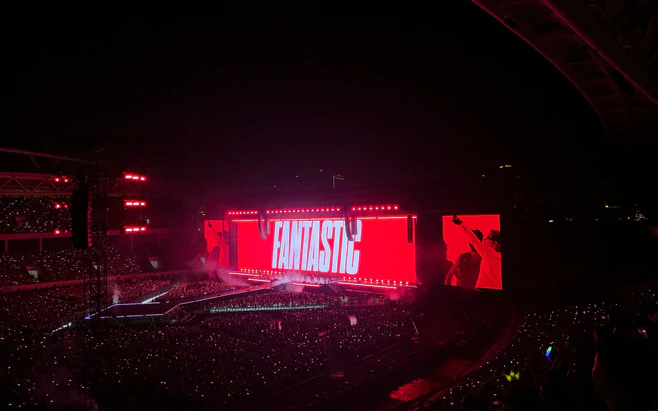
Beyond attracting tens of thousands of fans to concerts, K-pop generates revenue through intellectual property rights, merchandise, and fan communities, offering valuable lessons for the development of Vietnam’s cultural industries.
At the Korea-Vietnam Content Connects conference, part of Korea Spotlight 2026, held in Ho Chi Minh City on Friday and Saturday, businesses and industry experts from Vietnam and South Korea discussed music business models, artist development and international market expansion, exploring opportunities for Vietnam’s entertainment industry.
Turning cultural appeal into sustainable revenue
According to the Korea Creative Content Agency, South Korea’s music industry revenue in 2025 grew by 15.8 percent year on year, while its music exports climbed 32.4 percent.
Beyond live performances, South Korean entertainment companies have diversified their business models by developing products and services associated with their artists.
In 2025, merchandise sales and intellectual property (IP) licensing accounted for 21.53 percent of South Korean global entertainment company HYBE’s total revenue, while live performances contributed 28.83 percent.
In Vietnam, the music market is undergoing a transformation, with an increasing number of artists organizing ticketed concerts.
Speaking at the conference, Dinh Thi Nam Phuong, a representative from DatVietVAC Group Holdings and NOMAD MGMT Vietnam, said the company was developing entertainment properties such as Rap Viet and Anh trai say hi through content production, copyright exploitation, and live performances.
"We have organized numerous concerts, but making a profit is actually not easy,” Phuong said.
This reality highlights the need for additional revenue streams beyond live performances, allowing entertainment properties to generate commercial value over a longer period.
Hwang Insung, an executive at K-pop superfan platform bemyfriends, said that social media follower counts do not necessarily reflect the depth of audience engagement.
Businesses should pay closer attention to whether fans return for activities, purchase products, and maintain ongoing interactions with artists.
Building a fan community before introducing paid services such as memberships, exclusive content, and limited-edition merchandise can help establish sustainable revenue streams, he said.
Nguyen Huu Anh, founder and CEO of The First Management, cited Anh trai say hi as an example of how a television entertainment program can be developed into concerts and other commercial activities.
However, the program's popularity does not automatically translate into loyal fan communities for every participating artist.
Continued investment in content and sustained engagement with audiences are essential.
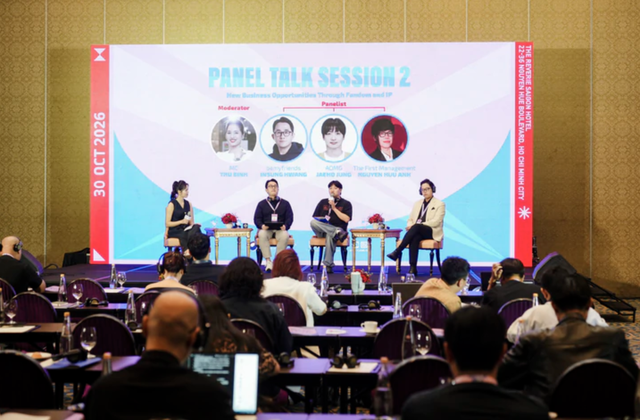
Vietnamese and South Korean experts discuss copyright exploitation and fan community development in the music industry at a conference in Ho Chi Minh City. Photo: Supplied
Investing in Vietnamese culture for global markets
Alongside the expansion of the domestic market, music exports are creating new opportunities for Vietnamese businesses.
DatVietVAC brought its Anh trai say hi concert to Las Vegas in 2025 and plans to return to the United States in November this year.
The move represents one of the company's efforts to introduce Vietnamese entertainment products to international audiences.
To attract audiences beyond the Vietnamese diaspora, firms need to study local consumer preferences, establish partnerships with local players, and develop long-term market entry strategies.
Speakers at the conference emphasized that building distinctive products rooted in domestic cultural identity should be the foundation for international expansion.
Young Vietnamese artists shared similar views, highlighting the need for access to international producers, professional management teams, and investment resources to support their careers.
Collaboration in songwriting, music production, and distribution is seen as an opportunity to improve product quality and reach wider markets.
Anh stressed the importance of working with partners who understand local markets.
"We should learn from international business models, but that does not mean we have to copy our counterparts abroad,” he said.
“Local identity must come first.
"Vietnamese elements are what can help us stand out when entering the global market.”
South Korea's experience also demonstrates that cultural promotion should go hand in hand with business development.
Vietnam could strengthen connections between creative businesses and international distributors, concert organizers and production partners, creating opportunities for collaborative projects with long-term commercial potential.
Copyright protection is another crucial factor in encouraging businesses to participate in the market.
For cross-border collaborations, clearly establishing content exploitation rights, revenue-sharing arrangements and each party's responsibilities from the outset can help ensure smoother business operations.
Tieu Bac - Ha Phuong / Tuoi Tre News
Link nội dung: https://news.tuoitre.vn/how-k-pop-turns-cultural-appeal-into-revenue-a-lesson-for-vietnam-103261101123631912.htm