
How public transport is driving Ho Chi Minh City's sustainable mobility transition
Ho Chi Minh City is speeding up its transition toward sustainable urban mobility through a range of investments designed to make public transportation a more convenient and attractive choice for daily commuters.
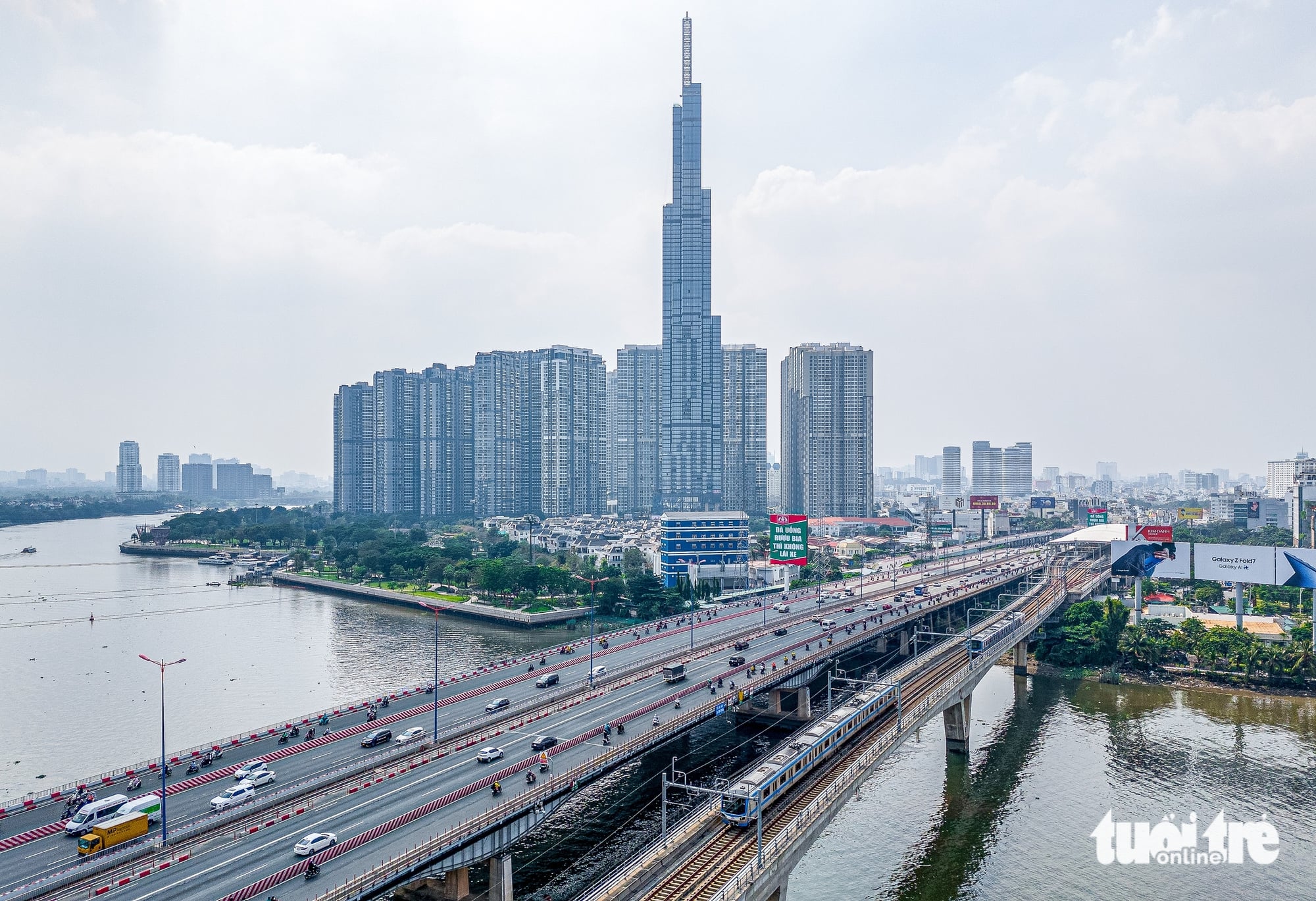
An elevated station offers panoramic views, where metro line No. 1 runs parallel to road traffic on its own dedicated route in Ho Chi Minh City. Photo: Chau Tuan / Tuoi Tre
Free bus rides, an expanding metro network, a growing river bus system, and a bicycle-sharing program are all part of the city’s broader strategy to build a cleaner, more connected transport network while reducing reliance on private vehicles.
Buses gain momentum
Le Bao Ngoc, a 23-year-old office worker, found that commuting by motorbike was taking a toll on her health after joining a new company about 20 kilometers from her home.
"I used to arrive at work or get home completely drained because I had to stay focused on the road for such a long distance,” Ngoc said, adding that she has since switched to taking the bus.
“Buses were already one of the most affordable ways to get around, and now they're free, making them even more convenient."
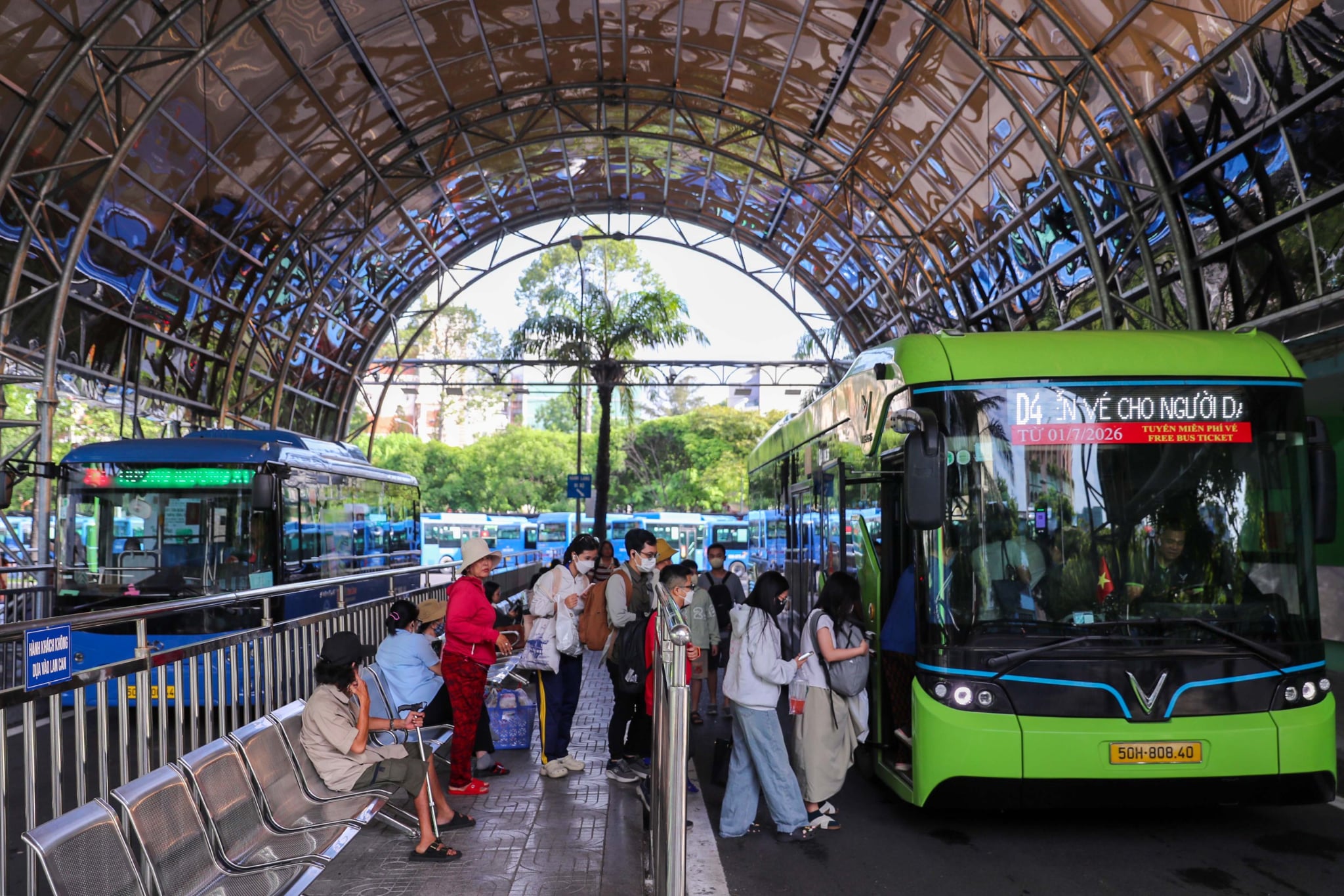
Passengers board a bus in Ho Chi Minh City. Photo: Hoang Trieu / Tuoi Tre
Ngoc is among a growing number of Ho Chi Minh City residents benefiting from the city's steadily improving public transportation network, including an ongoing free bus ride initiative.
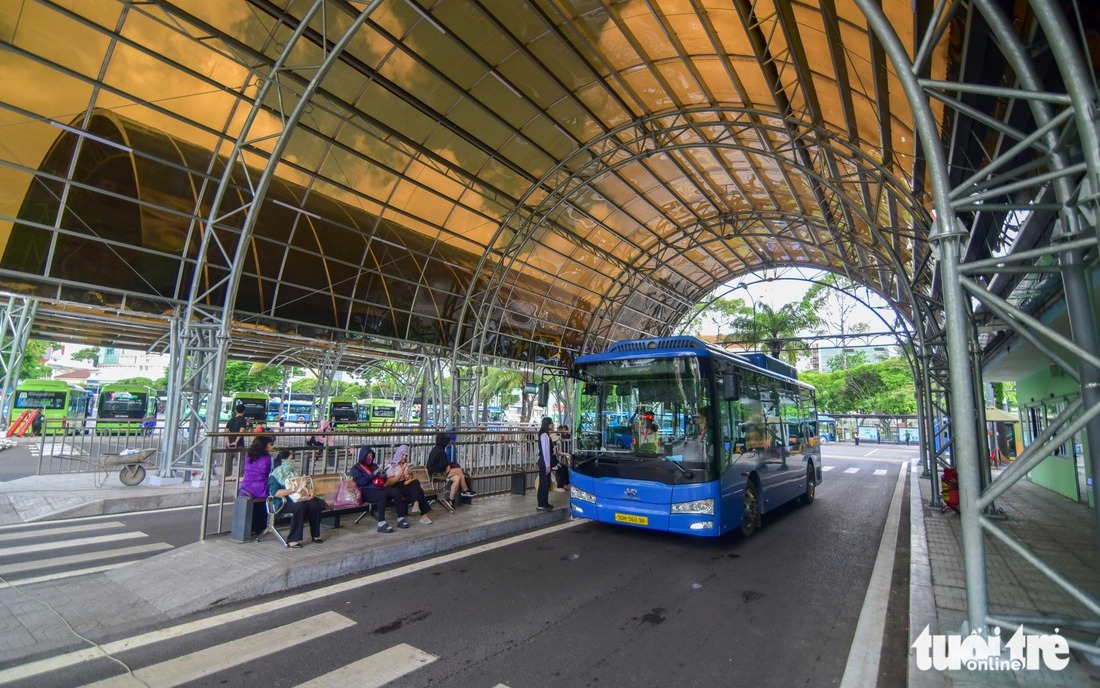
The free bus program, covering 134 routes and runs from July 1 through December 31, is intended to reduce commuting costs for residents while encouraging greater use of public transportation and contributes to easing traffic congestion and reducing environmental pollution.
According to Ngoc, bus services have improved significantly in recent years.
Many routes are now operated by electric buses that offer a quieter, more environmentally friendly ride, while cashless card payments have made boarding faster and more convenient.
She hopes the city will add more bus stops in areas with a high concentration of office buildings, expand mini bus services or feeder routes linking residential neighborhoods with major transport corridors, and offer substantial discounts on ride hailing apps for trips to and from bus stops.
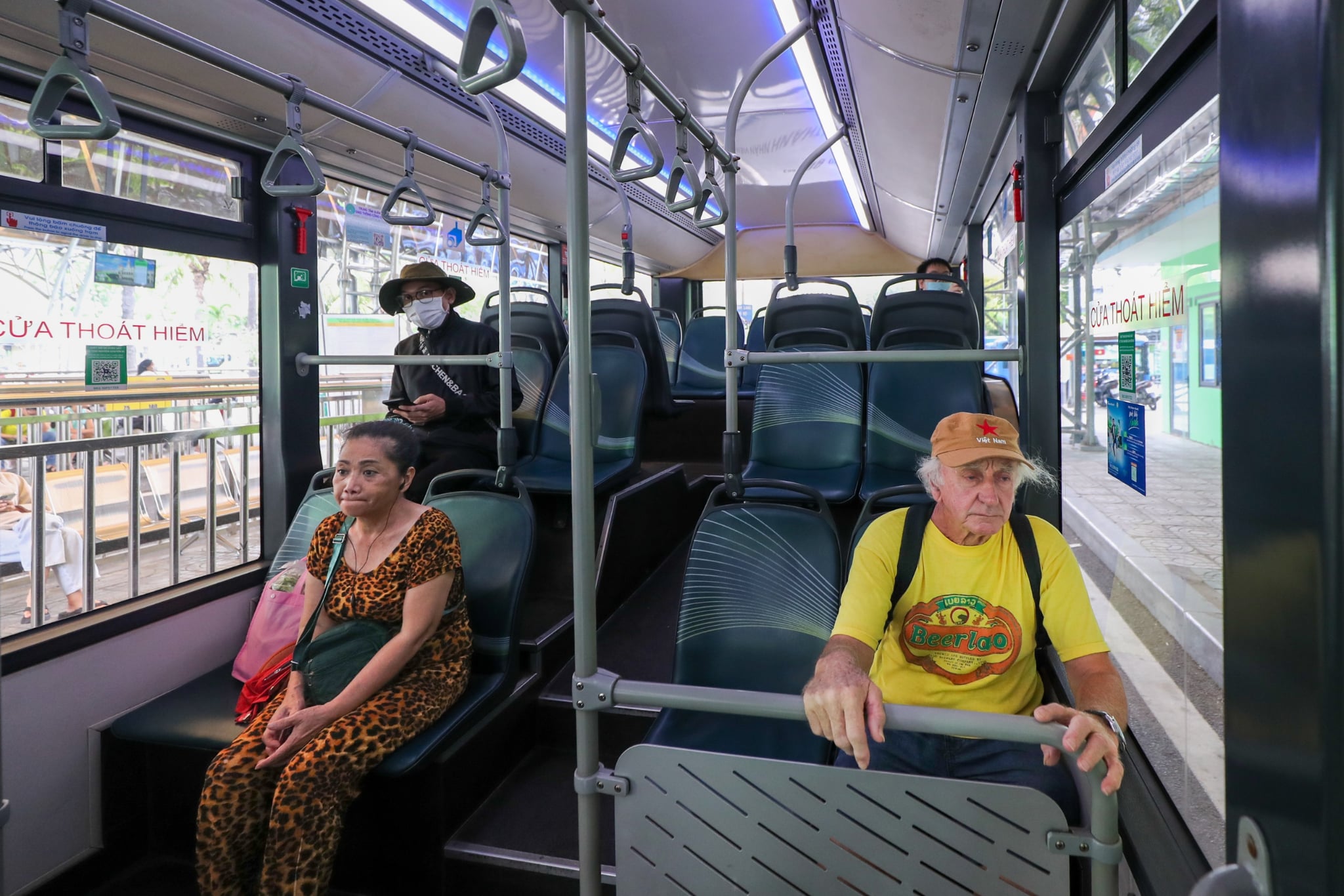
Richard (right), an 80-year-old British visitor, praises Ho Chi Minh City's bus service for being clean and convenient, adding that free fares encourage more people, especially tourists like himself, to use public transport. Photo: Hoang Trieu / Tuoi Tre
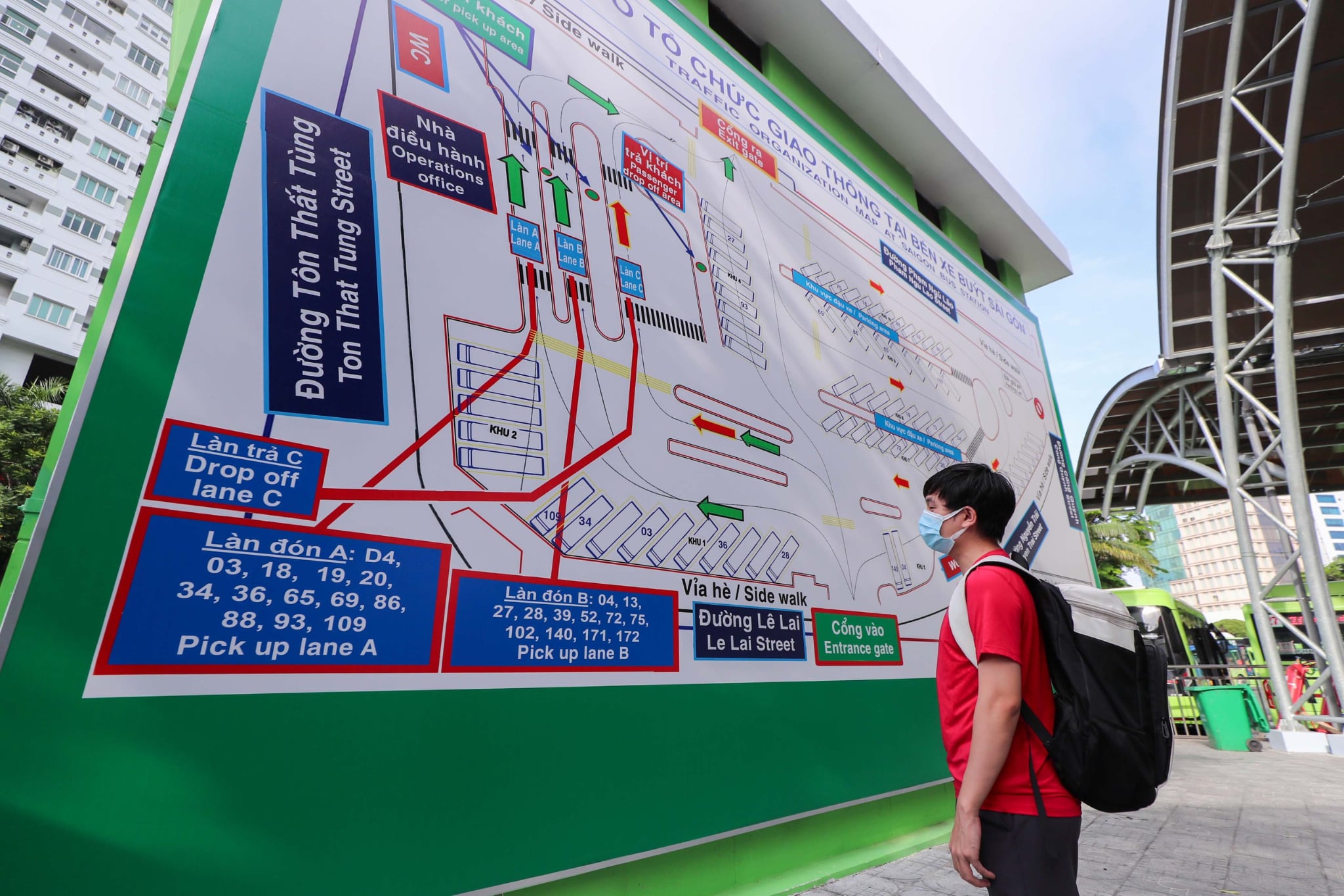
Vietnamese-English information boards have been installed at bus stations, making it easier for passengers, especially foreign visitors, to find route information, check bus itineraries, and plan their journeys. Photo: Hoang Trieu / Tuoi Tre
According to Pham Ngoc Dung, director of the Ho Chi Minh City Public Transport Management Center, the city operates around 2,442 buses, with electric and CNG vehicles accounting for about 67 percent.
The city plans to convert all intra-city buses to cleaner energy by 2027.
After about two weeks of implementing free bus fares, the Public Transport Management Center said passenger numbers have continued to rise sharply, demonstrating the policy's positive impact and a clear shift in residents' travel habits.
From July 1 to 13, the city's 134 bus routes carried a total of 3,521,840 passengers.
Notably, July 13 recorded the highest daily ridership since the policy took effect, with the city's bus network serving 294,266 passengers across 17,757 trips.
The ridership on July 13 increased 68 percent, up from 175,169 passengers recorded on July 13, 2025.
Metro on the move
More than one and a half years after entering service, metro line No. 1 has gradually become part of daily life for Ho Chi Minh City residents.
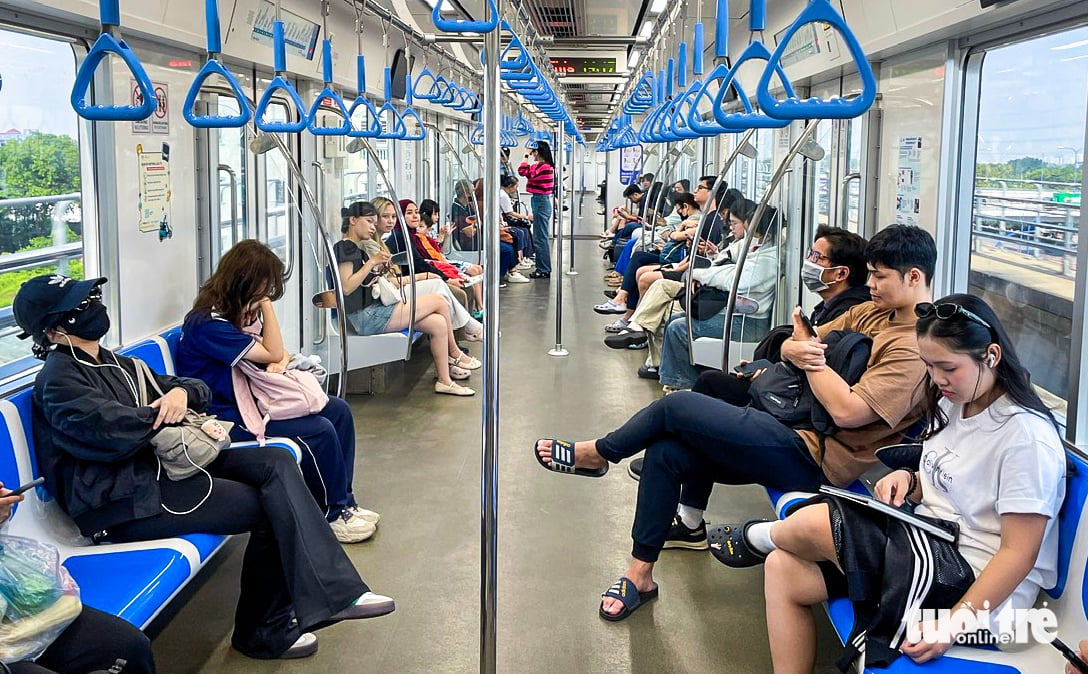
Passengers travel on metro line No. 1 in Ho Chi Minh City. Photo: Chau Tuan / Tuoi Tre
Officially launched on December 22, 2024, the nearly-20-kilometer line connects the Ben Thanh area in the city center with the eastern part of the city, formerly Thu Duc City.
It passes through riverfront areas, emerging financial and service hubs, and major destinations such as the Vietnam National University, Saigon High-Tech Park, and Suoi Tien Theme Park.
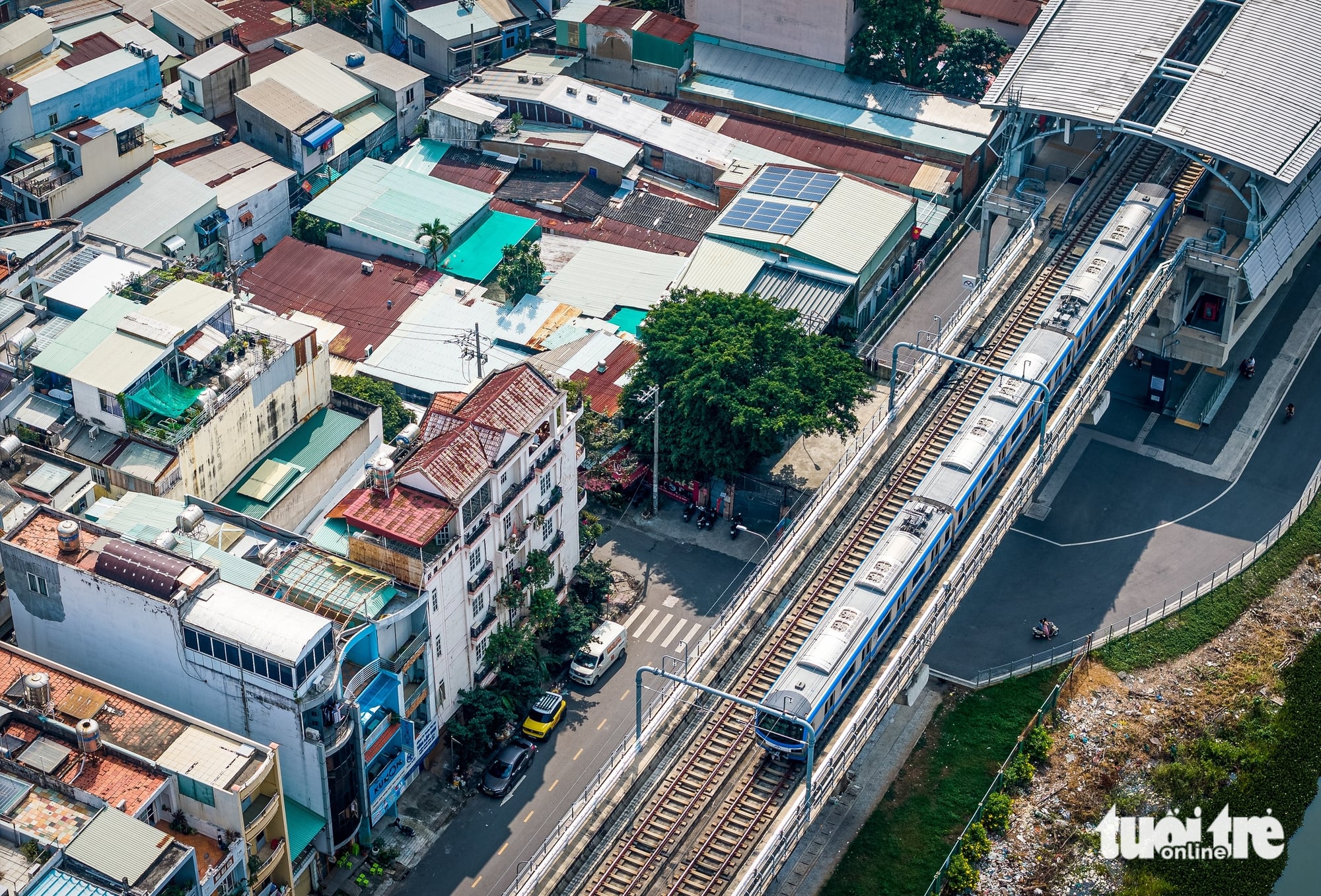
Metro line No. 1 trains pass through densely populated neighborhoods, linking former Thu Duc City with downtown Ho Chi Minh City. Photo: Chau Tuan / Tuoi Tre
The experience on board and at stations has also steadily improved.
Electronic information boards, clearer travel information, essential passenger amenities, and more flexible payment options have made metro travel a comfortable alternative in a city where traffic congestion is a daily occurrence.
The growing popularity of metro line No. 1 comes as Ho Chi Minh City pushes ahead with plans to expand its metro network.
According to a July report by the municipal People's Committee, the city is developing a 10-line urban railway network, comprising two metro lines under construction and eight others in the preparation stage.
Among them, the Ben Thanh - Tham Luong metro line broke ground in January and is currently undergoing detailed design and station construction, with the goal of being completed before 2030.
The Ben Thanh - Thu Thiem metro line broke ground in April 2026 under the public-private partnership (PPP) model and is now in the design and contract negotiation phase, with a target completion date of 2030.
Ho Chi Minh City is also preparing to invest in eight other urban railway lines, including priority routes such as Binh Duong New City - Suoi Tien, metro line No. 6 (Tan Son Nhat - Phu Huu), Thu Thiem - Long Thanh, and Ben Thanh - Can Gio, along with lines connecting Binh Duong, Ba Ria - Vung Tau, and the southern region.
The city aims to break ground on the key projects from 2026 and put at least four lines into operation before 2030.
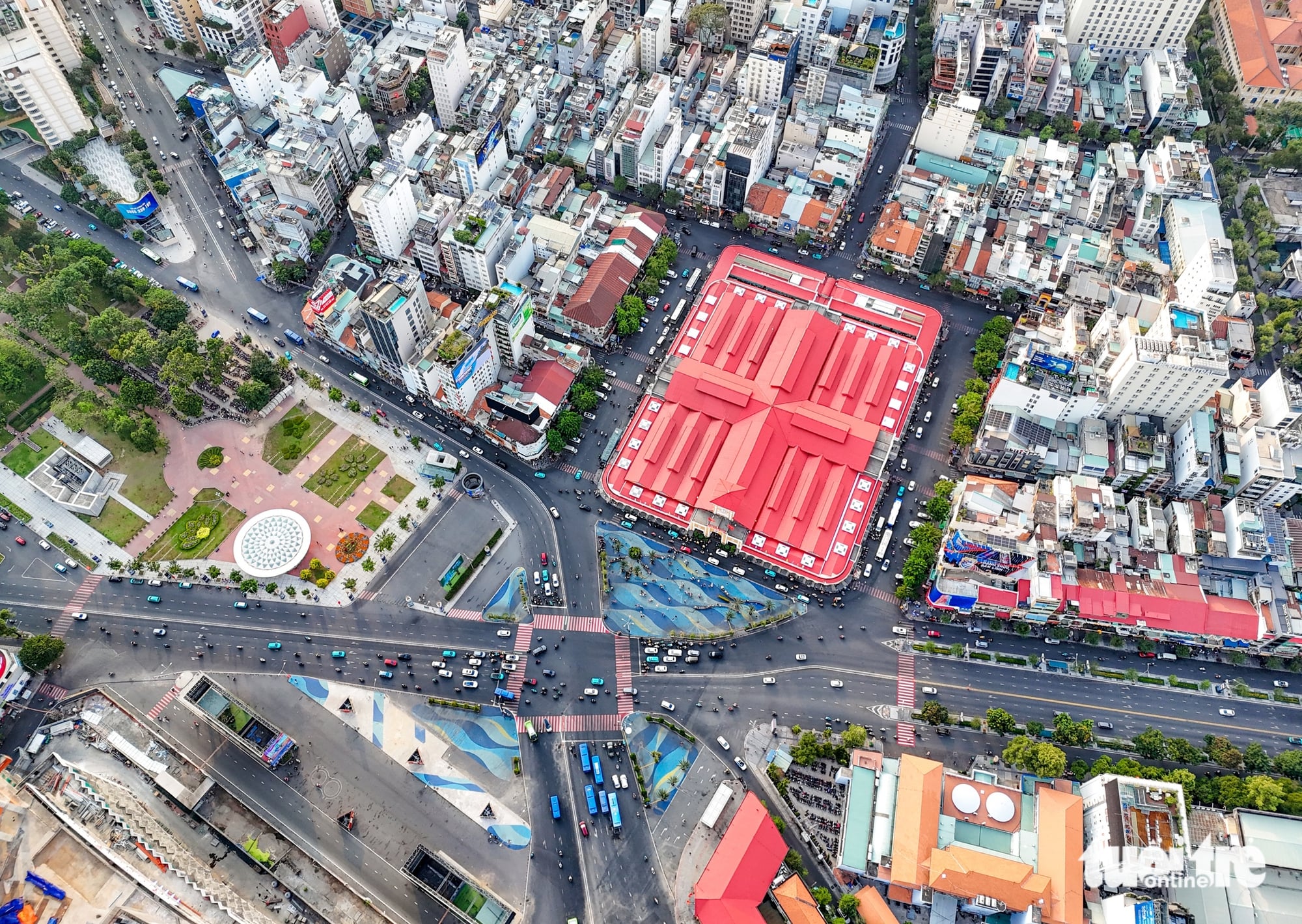
Ben Thanh underground station, designed to serve as the central interchange for Ho Chi Minh City's future metro network. Photo: Chau Tuan / Tuoi Tre
"Metro is not only a means of transportation but also a driver of economic growth,” said Vo Hoang Ngan, director of the Ho Chi Minh City Department of Planning and Architecture, at an international conference on transit-oriented development (TOD) and urban railway development held in the city in March this year.
“It helps increase land values, creating resources for reinvestment in infrastructure.
“The city is also pursuing a TOD model that reduces emissions while prioritizing walking and public transportation, in line with the development trends of major cities around the world.”
Saigon Waterbus links metro, river travel
Ho Chi Minh City's public transport network also includes the Saigon Waterbus, the city's first urban river bus service.
Operating along an 11-kilometer route between Bach Dang Wharf in the city’s downtown and Linh Dong area in formerly Thu Duc City, it offers an alternative to road travel while allowing passengers to enjoy views of the Saigon River.
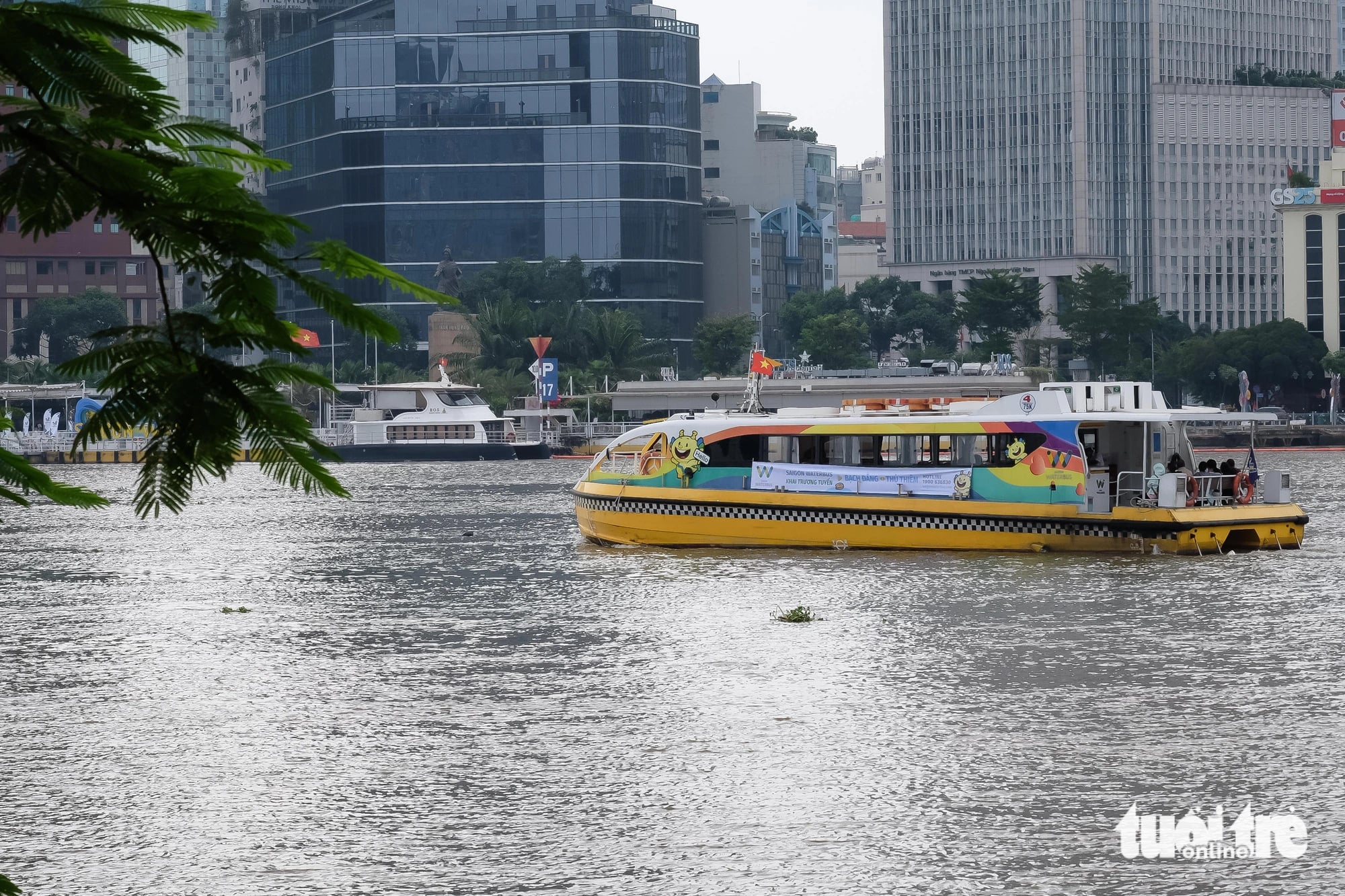
A Saigon Waterbus cruises along the Saigon River between Bach Dang Wharf and Thu Thiem area. Photo: Phuong Nhi / Tuoi Tre
The Saigon Waterbus operates daily, including on public holidays. Services run from 7:00 am to 9:00 pm on weekdays, with extended hours until 11:00 pm on weekends and public holidays.
The service's website says Saigon Waterbus carries more than 1,500 passengers each day and operates over 900 trips every month.
In 2026, the Saigon Waterbus opened Ba Son Wharf, adding another stop to its river route while strengthening Ho Chi Minh City's public transport network.
The new wharf connects directly with Ba Son Station on metro line No. 1, allowing passengers to transfer easily between the two modes of transport.
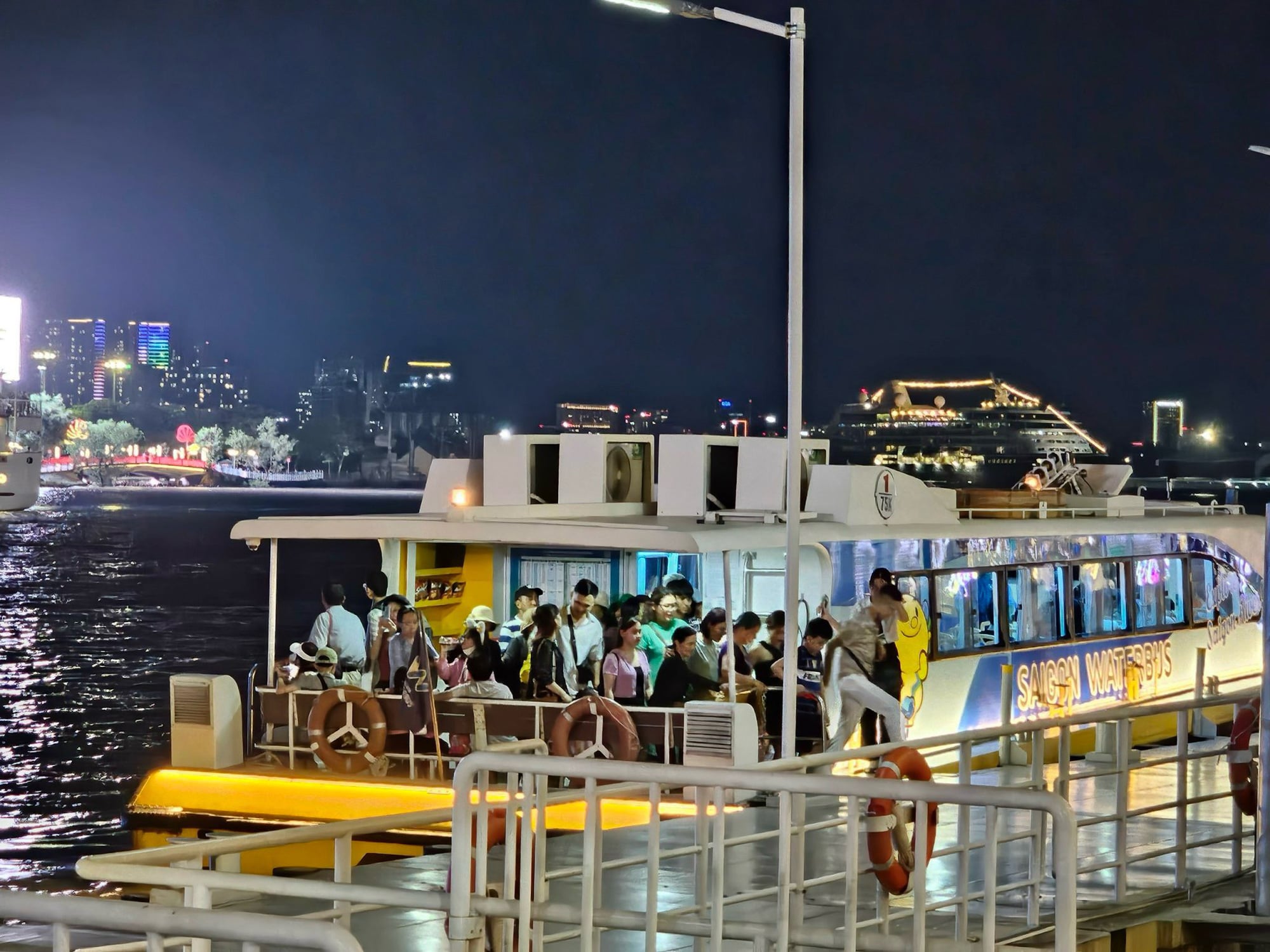
A nighttime Saigon Waterbus arrives at Bach Dang Wharf. Crew members help passengers disembark, while a few remain on board to enjoy the views of the Saigon River. Photo: Thu Dung / Tuoi Tre
With the service attracting a growing number of passengers, Ho Chi Minh City plans to launch additional waterbus and inland waterway transport routes between 2026 and 2030, including a route linking Bach Dang Wharf with the Lo Gom area in the former District 8, further expanding river-based public transport and tourism connectivity.
As part of its efforts to promote seamless connectivity across the city's public transport network, Ho Chi Minh City has rolled out the MultiGo mobility app and the TNGo public bicycle-sharing service.
MultiGo is the official public transport app of Ho Chi Minh City that integrates multiple public transport services into a single platform.
The app allows users to search for routes, look up bus and metro services, track bus locations in real time, plan multimodal journeys combining buses, metro lines, waterbuses, public bicycles, and ride-hail motorbike taxis.
It also provides estimated travel times, walking distances, and bus arrival information based on GPS data, as well as allows users to receive notifications when approaching their stop, making public transport more accessible and user-friendly.
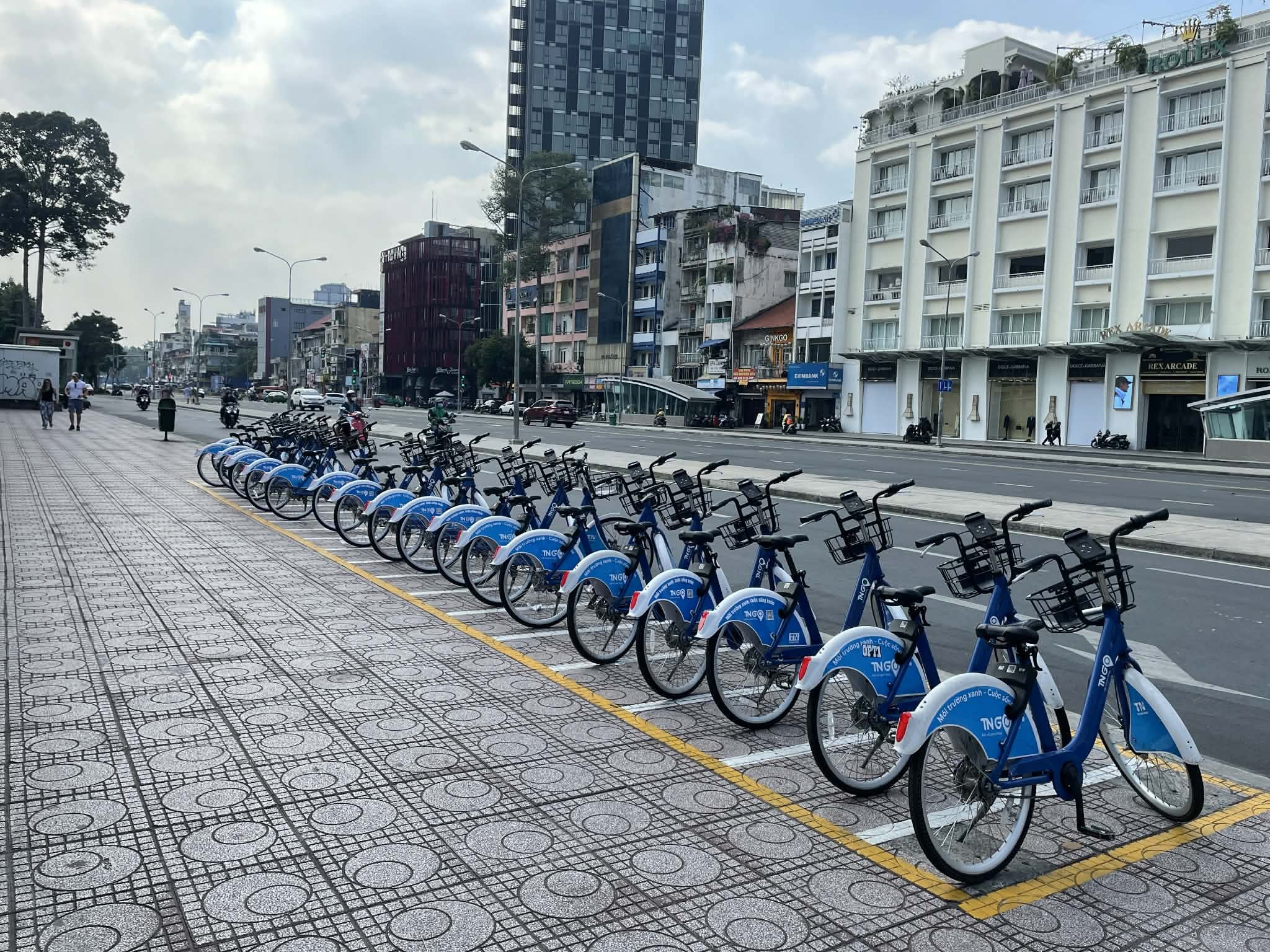
Public bicycles are available at a docking station in Ho Chi Minh City. Photo: Le Phan / Tuoi Tre
Meanwhile, through the TNGo mobile app, users can rent and return bicycles at any docking station across the city with just a few taps.
The service, which is currently available in Hanoi and Ho Chi Minh City, is designed to complement other public transport systems, including buses and metro services, making urban travel more flexible and convenient.
Also, metro line No. 1 is integrated with other modes of public transport, creating new transit hubs throughout Ho Chi Minh City.
Since December 21, 2024, 17 electric bus routes have been operating to connect passengers with metro stations and destinations throughout the city.
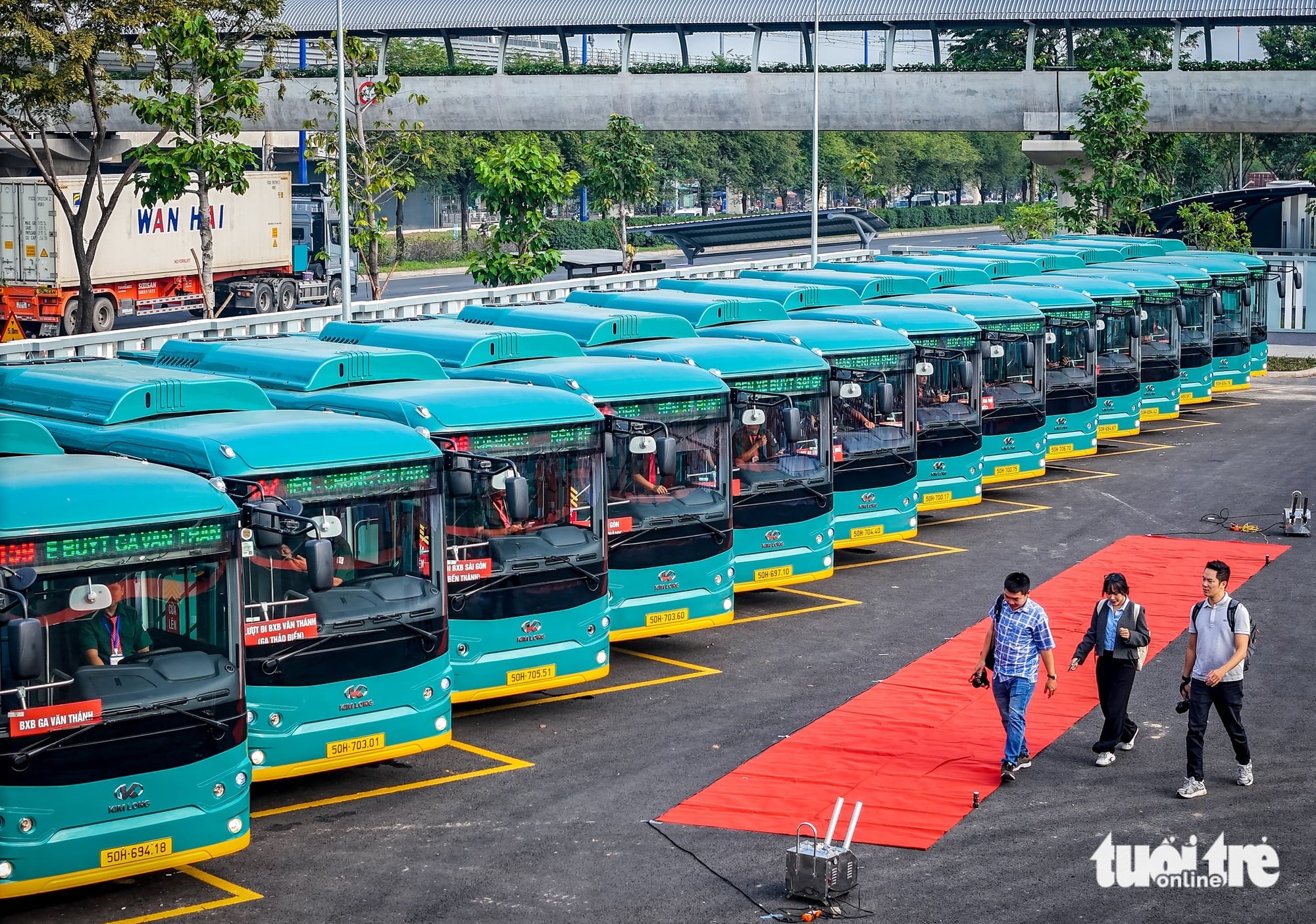
Since December 21, 2024, 17 electric bus routes have been operating to connect passengers with metro stations and destinations throughout the city. Photo: Chau Tuan / Tuoi Tre
Tuoi Tre News
Link nội dung: https://news.tuoitre.vn/how-public-transport-is-driving-ho-chi-minh-citys-sustainable-mobility-transition-103260716210413675.htm