
Hybrid cars flood Vietnam market as prices grow more competitive
A growing number of hybrid car models are entering the Vietnamese market at increasingly accessible prices, but many buyers remain cautious as they weigh which technology best suits their needs.
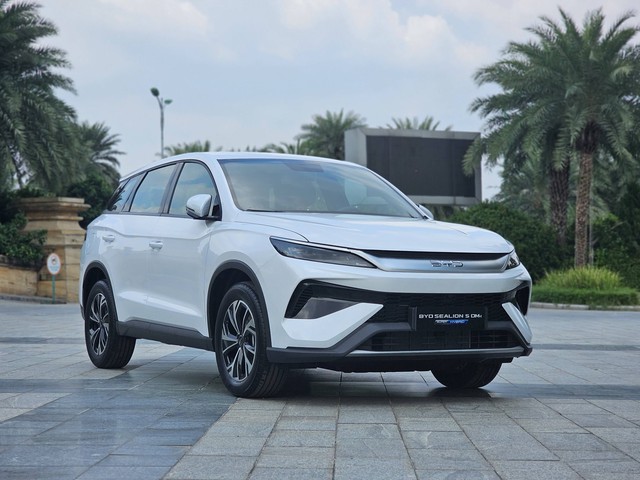
Automakers are rolling out a series of new models in the Vietnamese market in October 2026. Photo: L.H / Tuoi Tre
Vietnam's hybrid car market has become increasingly competitive as automakers prepare to launch new models and dealerships roll out early-booking incentives ahead of the year-end shopping season.
New hybrid models hit the market
Advertisements for new vehicles, cost comparisons and promotional programs have become increasingly common on social media, with competition particularly intense in the hybrid segment as more brands enter the market.
Vo Minh Luc, operations director of BYD Vietnam, said the automaker will introduce the Sealion 5 DM-i, a plug-in hybrid (PHEV), in October.
Its price has not been announced, but some dealerships are advertising an expected price of below VND800 million (US$30,800) per vehicle.
Other automakers are also stepping up efforts to stimulate demand, introducing new hybrid models including the Lexus ES 350h, Subaru Forester, Hyundai Tucson and Hyundai Palisade.
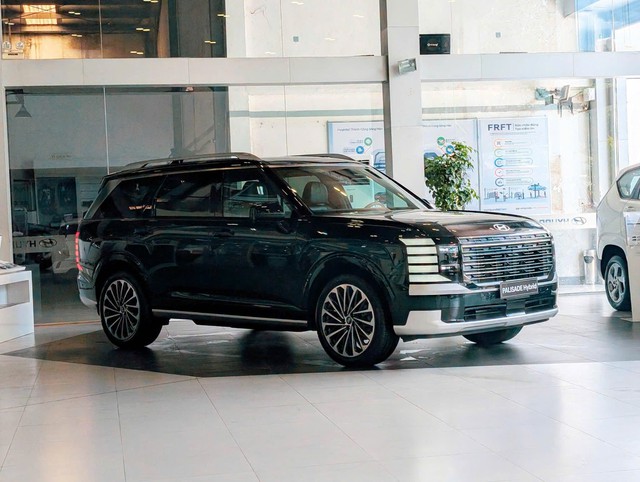
A Palisade hybrid on display at a dealership. Photo: T.C / Tuoi Tre
Facing mounting competition, many dealerships are offering early-booking programs.
Some are advertising discounts of up to VND100 million ($3,850) for customers who place a VND20 million ($770) deposit, although the number of promotional slots is limited.
The VND600 million-800 million ($23,100-30,800) price range now offers a wide selection of hybrid cars.
The Suzuki XL7 Hybrid starts at VND599.9 million ($23,100), while the BYD Seal 5 PHEV is priced at VND696 million ($26,800).
The Toyota Yaris Cross HEV is listed at VND765 million ($29,400) but is currently available from VND728 million ($28,000) under promotional pricing.
The Honda HR-V e starts at VND835 million ($32,100), while the Toyota Corolla Cross HEV is priced at VND905 million ($34,800).
In the C-segment, the BYD Sealion 6 is priced at VND799 million-899 million ($30,800-34,600), while the Kia Sportage Hybrid costs VND999 million-1.099 billion ($38,400-42,300).
The Jaecoo J7 SHS-P and Geely EX5 EM-i are competing around the VND1 billion ($38,500) mark.
Fuel savings weighed against higher prices
Despite the growing selection, many buyers remain cautious.
Hybrid versions are typically priced tens of millions of dong to more than VND100 million ($3,850) higher than their gasoline counterparts.
The Honda CR-V e:HEV L costs VND1.17 billion ($45,000), about VND71 million ($2,730) more than the gasoline-powered L version.
The Civic e:HEV RS carries a price premium of around VND110 million ($4,230) over the gasoline RS.
Although hybrids are marketed as fuel-efficient and smooth to drive, the fuel-saving benefits vary depending on how and how often the vehicle is used.
Drivers who frequently travel in urban areas may recoup the price premium sooner thanks to electric-motor assistance during acceleration and energy recovery during braking.
By contrast, people who use their vehicles infrequently or mainly drive on highways need to calculate the savings carefully, as lower fuel costs may not offset the initial price difference significantly.
Beyond pricing, battery life and after-sales service are among the key concerns for buyers.
Japanese automakers have an advantage with their extensive dealership networks, readily available spare parts and more established used-car pricing.
Toyota said new hybrid vehicles sold from 2026 can receive warranties of up to 10 years if they meet the company's conditions.
BYD, meanwhile, offers an eight-year or 160,000-kilometer warranty for its batteries.
Automotive experts said the year-end hybrid race will not be determined solely by the number of new models introduced.
The actual price after promotions, delivery time, battery warranty terms and the ability to resell or trade in a used vehicle are factors that directly affect buyers' decisions.
Why are hybrid cars selling well?
Members of the Vietnam Automobile Manufacturers Association (VAMA) sold 13,889 hybrid vehicles in the first eight months of 2026, up 65 percent year on year.
A major boost came from new tax policies.
From January 1, 2026, eligible gasoline-electric hybrid vehicles are subject to a special consumption tax equivalent to 70 percent of the rate imposed on vehicles with internal combustion engines of the same type.
The policy has helped reduce the prices of many hybrid models by tens to hundreds of millions of dong.
The Ky - Cong Trung / Tuoi Tre News
Link nội dung: https://news.tuoitre.vn/hybrid-cars-flood-vietnam-market-as-prices-grow-more-competitive-103261002084144754.htm