
In Vietnam, higher fines for apartment pets fail to curb violations
Under Vietnam’s latest regulations, fines for keeping or letting dogs and cats roam freely in apartment buildings or public spaces have doubled. Yet on the ground, the problem appears far from resolved.

A woman plays with a pet at a café in Ho Chi Minh City, Vietnam. Photo: An Vi
Editor's note: The following opinion was submitted to Tuoi Tre (Youth) newspaper by lawyer Nguyen Thi Kieu Nhi of the Dong Nai Bar Association.
The piece was translated from Vietnamese into English and edited by Tuoi Tre News, the daily's English edition, for clarity, consistency, and coherence.
A reader in Ho Chi Minh City says stray livestock and pets are still common in his neighborhood.
Dogs roam without leashes or muzzles, often unattended, even though many children live nearby.
Recent cases of dog attacks on children have heightened public concern, but some pet owners have made no changes in how they manage their animals.
Higher penalties, persistent risks
Poorly-managed pets and livestock continue to disrupt community life.
Vietnam's laws already spell out a range of violations and penalties, from administrative fines to criminal liability, but many people either remain unaware of the rules or choose not to follow them, sometimes with serious consequences.
In apartment buildings, keeping dogs and cats has long been a source of friction.
Residents complain about animals sharing elevators with adults and children, or being taken through common areas without muzzles or proper carriers.
Large dogs, in particular, can frighten other residents simply by their presence.
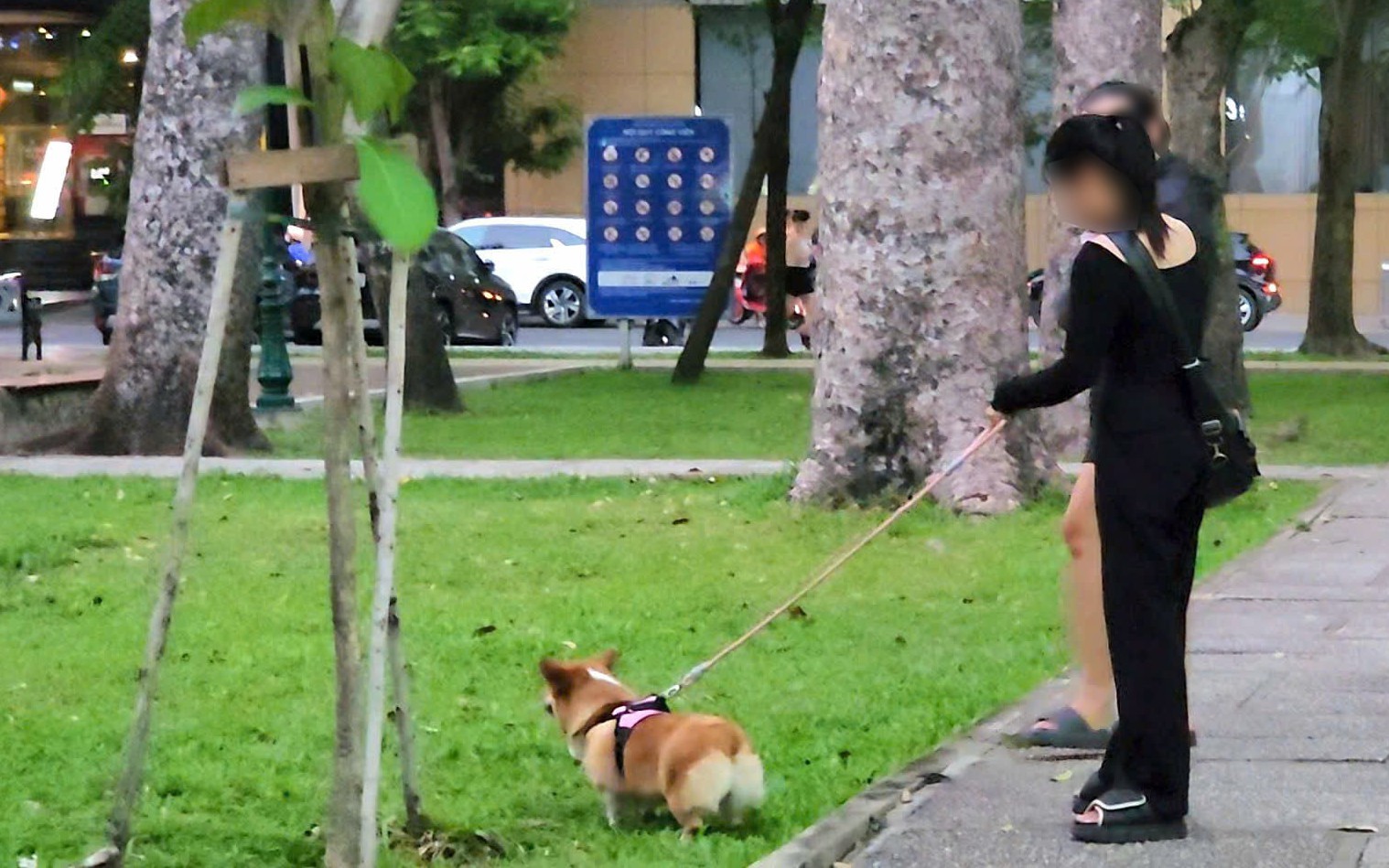
Authorities have fined numerous cases of pets roaming freely in residential areas, parks, and public spaces.
In more serious incidents, owners whose animals caused severe harm have faced criminal charges.
What the new decree says
Decree 28 of 2025, which took effect on December 15, 2025, doubles penalties related to animal management compared with previous rules.
Under the decree, letting pets roam freely in urban or public areas, including roads, sidewalks, parks, playgrounds or shared spaces in residential complexes, or keeping livestock and poultry in apartment buildings can result in a warning or a fine of VND500,000 (US$19) to VND1 million ($38).
Previously, fines ranged from VND300,000 ($11.4) to VND500,000.
If an animal causes injury or property damage to others, owners face fines of VND2 million ($76) to VND3 million ($114), double the level set under Decree 144 of 2021.
Organizations committing the same violations are subject to fines twice those imposed on individuals.
The decree also requires owners to restore affected public spaces and to cover all medical expenses if their animals injure others.
Civil liability for damages to health or property applies under Article 603 of the 2015 Civil Code.
Are dogs and cats 'livestock'?
Beyond administrative penalties, owners may face criminal liability if their animals cause serious injury or death.
Vietnam's Penal Code includes offenses such as unintentional injury or manslaughter resulting from negligence.
In many apartment complexes, internal rules ban the keeping of livestock or poultry.
This has sparked debate: some residents argue that dogs and cats are not livestock and therefore not covered by such bans, while others insist they are.
The dispute has fueled long-running tensions in many buildings, prompting some management boards to explicitly ban dogs, cats, livestock, and poultry altogether.
Under the 2018 Law on Animal Husbandry, 'livestock"' includes domesticated four-legged mammals raised by humans, a definition that covers dogs and cats.
As a result, keeping dogs or cats in apartment buildings in violation of regulations can still lead to administrative penalties or criminal responsibility, depending on the severity of the case.
In practice, apartment rules that prohibit livestock already include dogs and cats, even if enforcement remains uneven.
Tuoi Tre News
Link nội dung: https://news.tuoitre.vn/in-vietnam-higher-fines-for-apartment-pets-fail-to-curb-violations-103260117153617425.htm