
Int’l arrivals surge in Vietnam, but longer stays remain elusive
As international arrivals surge, Vietnam is turning its focus from attracting more tourists to getting visitors to stay longer and spend more.
At a conference on implementing the Politburo’s Resolution 26 on tourism development a few days ago, Deputy Prime Minister Pham Thi Thanh Tra emphasized the need to move away from growth driven primarily by visitor numbers and toward higher-quality tourism that generates greater added value.
Vietnam welcomed nearly 16 million international visitors between January and August, up over 14 percent year on year.
The Southeast Asian country is targeting 25 million arrivals for the full year.
Yet the key question is no longer just how many tourists the country can attract, but how to persuade them to extend their stays, use more tourism services, and spend more.
Huynh Phan Phuong Hoang, deputy general director of Vietravel, said the shift from ‘more tourists’ to ‘higher-spending tourists’ is an inevitable step as Vietnam seeks to develop tourism more deeply and sustainably.
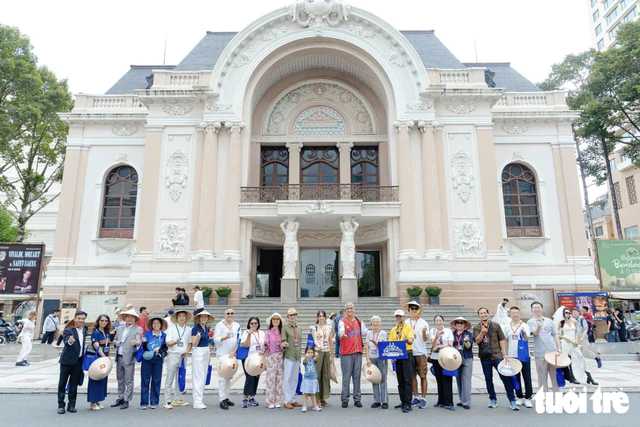
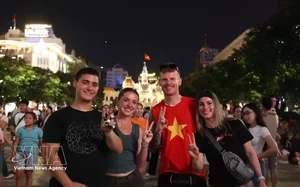
International travelers visit Ho Chi Minh City. Photo: Do Dat
Visitor numbers remain important, she said, but they should be assessed alongside average spending, length of stay, the number of services tourists use, and their likelihood of returning.
In addition to simply selling tour packages, Vietravel is developing higher-value products aimed at free independent travelers (FITs), MICE groups, families, and visitors seeking in-depth experiences.
Products are increasingly being personalized, with greater emphasis on service quality and additional offerings rather than competing mainly on price.
Hoang said international visitors’ length of stay and spending depend heavily on the diversity of tourism products, destination connectivity, and supporting services.
Vietnam has clear advantages in nature, culture, cuisine, and hospitality.
However, at some destinations, tourism products still revolve largely around sightseeing and resort stays, while distinctive experiences capable of persuading visitors to extend their trips remain limited.
If, after a day of sightseeing, tourists have few options for shopping, recreation, entertainment, arts, culture or high-quality services, they are unlikely to extend their stay.
Without additional reasons to stay, their spending is also unlikely to increase.
Therefore, Vietravel is focusing on specialized, high-quality products tailored to different customer groups, combining local experiences, cuisine, leisure, culture, and green tourism.
Each trip should deliver memorable experiences while offering additional services that encourage visitors to spend more time and money at the destination, she said.
At each destination, it is necessary to have distinctive shopping, diverse cuisine, entertainment and safe, convenient night-time economic activities.
These services should be connected rather than developed in isolation, creating more reasons for tourists to stay longer and spend more.
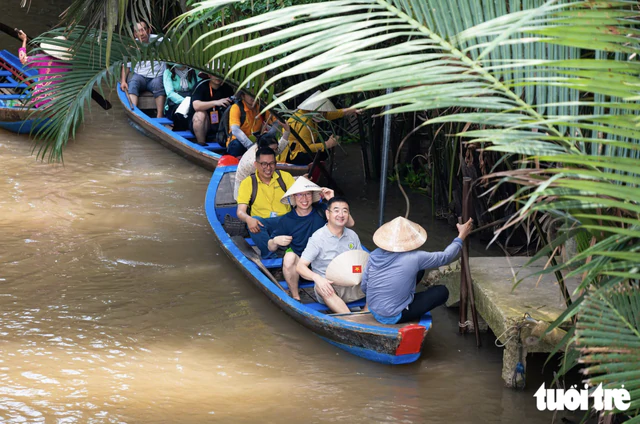
Diversifying tourism products helps encourage visitors to stay longer in Vietnam. Photo: Do Dat
There is more to tourism value than meets the eye
Tran Anh Thi, general manager of Seahorse Resort & Spa in Lam Dong Province, said accommodation providers want visitor numbers that match their capacity while attracting guests with higher spending power.
However, businesses have not paid enough attention to how they can increase the amount each visitor spends, he said.
The first step is investment in the tourism product, with people playing a particularly important role.
“Labor costs are very high, but if you invest properly in intangible products, the brand value created can be enormous,” Thi said.
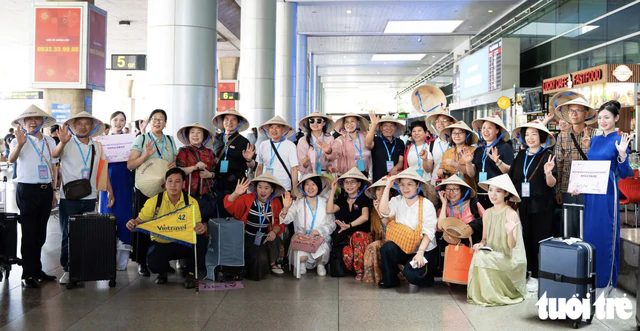
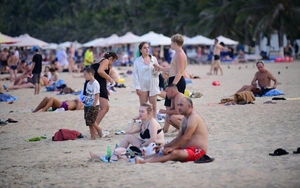
Foreigners visit Vietnam. Photo: Do Dat
In his view, international visitors’ short stays and relatively modest spending do not necessarily mean Vietnam lacks tourism products.
Rather, existing products may not be meeting travelers’ needs.
When an experience fails to resonate with visitors, they have little reason to stay longer or return.
Thi said tourists do not necessarily need large-scale entertainment programs, live music or standardized buffets.
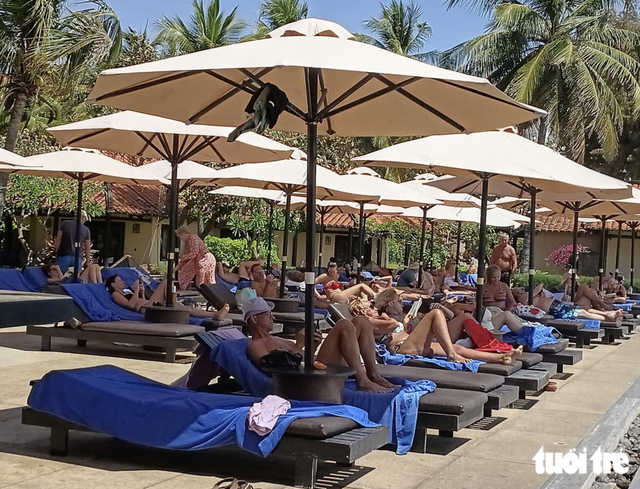
Intangible products add value to the tourism experience in Vietnam. Photo: Do Dat
What they may value more are experiences rooted in local culture, stories about the destination, and the distinctive ways local people create those experiences.
“It is not about giving tourists a presentation, but about telling the story of the land,” he said.
Thi estimates that roughly 50-55 percent of a tourism product consists of tangible elements such as accommodation, food, and physical facilities.
The remaining 45-50 percent is intangible, including service and people.
As such, those working in tourism need knowledge, passion, enthusiasm, and an appropriate mindset.
He also supports the development of the night-time economy, which can stimulate a wide range of related services, citing Thailand as an example.
However, he cautioned that night-time tourism must be developed with careful consideration of sensitive services so that Vietnam does not undermine its cultural identity or tourism image.
Moving from price-based competition to value-based competition cannot depend on a handful of businesses, Thi said.
“Destinations need to add intangible, human-created value to the assets already provided by nature,” he said.
Vietnam is home to 54 ethnic groups, while each of its regions offer distinctive cultural traditions, cuisine, and ways of life.
If these assets can be connected into complete tourism products, Vietnam will have far more for visitors to experience and spend money on.
He likened the tourism industry to an orchestra, requiring a ‘conductor’ with expertise, understanding, and commitment to coordinate its various components.
Building an ecosystem that encourages spending
Beyond individual businesses’ efforts, the Vietravel representative said that moving from price competition to value competition requires an environment that allows companies to invest for the long term.
This includes synchronized infrastructure, better transport links to destinations, entertainment and shopping venues, and sites providing night-time economic activities and supporting services.
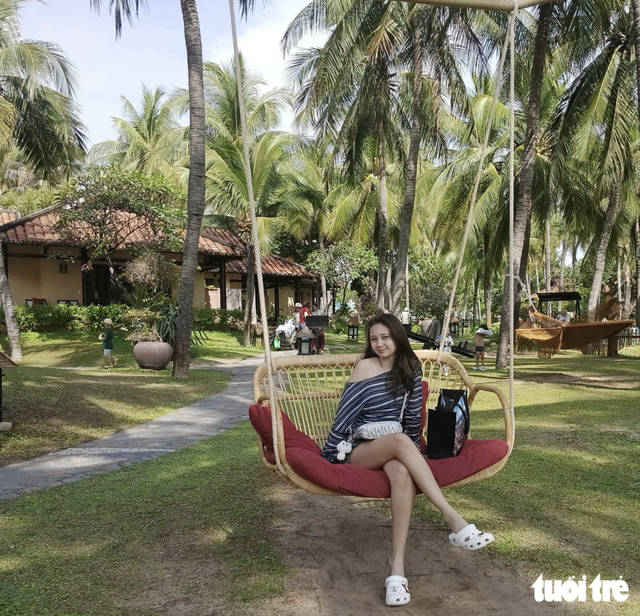
Tourism should tell the story of the land. Photo: Do Dat
Local tour operators also need stronger cooperation to develop interregional tourism products.
Marketing and promotion should be sustained over the long term and tailored to the needs of individual international markets.
Shifting from ‘more tourists’ to ‘higher-spending tourists’ is not simply about targeting travelers with greater purchasing power.
The more fundamental challenge is to create destinations with enough products and services to persuade visitors to stay longer, use more services, and find compelling reasons to return.
Tieu Bac - Do Dat / Tuoi Tre News
Link nội dung: https://news.tuoitre.vn/intl-arrivals-surge-in-vietnam-but-longer-stays-remain-elusive-103260906144632648.htm