
Nearly 1,600-year-old brick tombs in Vietnam yield pottery, swords, jewelry
An emergency excavation of two brick tombs nearly 1,600 years old in Nghe An Province, north-central Vietnam, has uncovered pottery, swords, jewelry and other metal artifacts, offering rare evidence of how burial objects were arranged in ancient tombs.
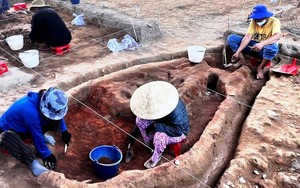
After nearly two months of excavation, the Nghe An-Soviet Nghe Tinh Museum and the University of Social Sciences and Humanities under Vietnam National University, Hanoi, on Wednesday reported preliminary findings from the emergency excavation of the Ru But brick tomb site in Kim Lien Commune, Nghe An Province.
In April 2026, a local resident, Tran Dinh Tuan, discovered the vaulted remains of a brick tomb while digging soil to plant trees in the Ru But area.
According to Dr. Nguyen Van Anh, head of the Department of History and Culture at the University of Social Sciences and Humanities, the emergency excavation identified and exposed the remains of two brick tombs facing the same direction.
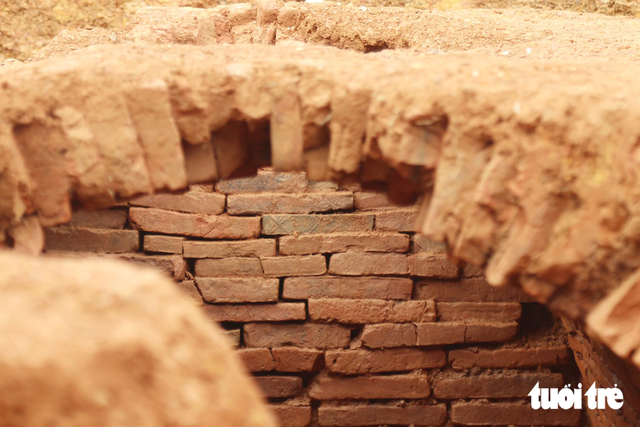
The burial chambers were built of bricks, most of which were low-fired red or gray rectangular bricks of various sizes. Photo: Doan Hoa / Tuoi Tre
Tomb 1, or M1, was discovered while a local resident was digging the soil, whereas Tomb 2, or M2, was discovered and exposed during the excavation.
Both tombs consist of three parts: a burial pit, an entrance passage and a burial chamber.
Most of the bricks used in the two tombs are low-fired red or gray rectangular bricks of various sizes. Most are undecorated red bricks, while a small number feature checkerboard patterns.
The patterns are found on the narrow edges of the bricks and include checkerboard, rosette and X-shaped designs.
The burial objects in M1 fall into three main material groups: pottery, glass and metal.
The burial objects in M2 remained undisturbed, with the artifacts still in their original positions. They comprise four main material groups: pottery, stoneware, glass and metal.
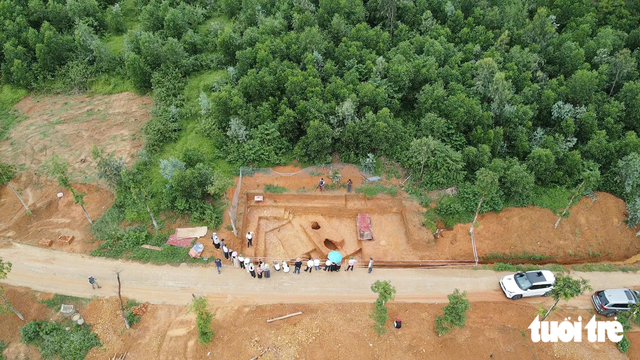
A local resident discovered the vaulted remains of a brick tomb while digging soil to plant trees in the Ru But area in April 2026. Photo: Doan Hoa / Tuoi Tre
Based on the tomb structures, construction techniques and artifacts found at the site, archaeologists identified the two structures as brick-built burial chambers.
Such tombs, commonly known as brick tombs or Han tombs, were relatively common in areas along major rivers and waterways, including the Luc Dau Giang, Bach Dang, Y Bich and Lam rivers, which served as links between settlements and the sea.
In Nghe An, archaeologists have recorded similar sites in the former Nam Loc area, now Van An Commune; the former Nam Kim area, now Thien Nhan Commune; and the former Kim Lien area, now Kim Lien Commune.
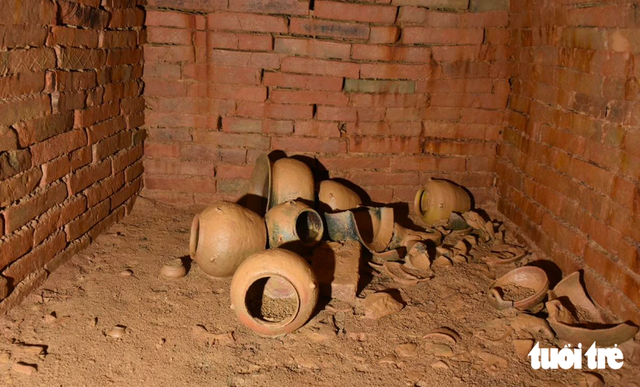
With approval from the authorities, the Nghe An-Soviet Nghe Tinh Museum and the University of Social Sciences and Humanities under Vietnam National University, Hanoi, conducted an emergency excavation of the Ru But brick tomb site in August 2026. Archaeologists found numerous burial objects inside the chamber. Photo: Doan Hoa / Tuoi Tre
Compared with previously studied brick tombs, particularly the Nam Loc tomb in Van An and the Nui Chung tomb in Kim Lien, the two Ru But tombs share similarities in their layouts, excavation methods and construction of the burial chambers.
“These are among the few brick tombs that had not been disturbed before being exposed. This provides accurate information about how burial objects were arranged inside the burial chambers,” Anh said.
Based on the stratigraphy, location, structure, construction techniques and artifacts recovered, the excavation team initially determined that the two brick tombs were built during the Six Dynasties period, between the fourth and sixth centuries.
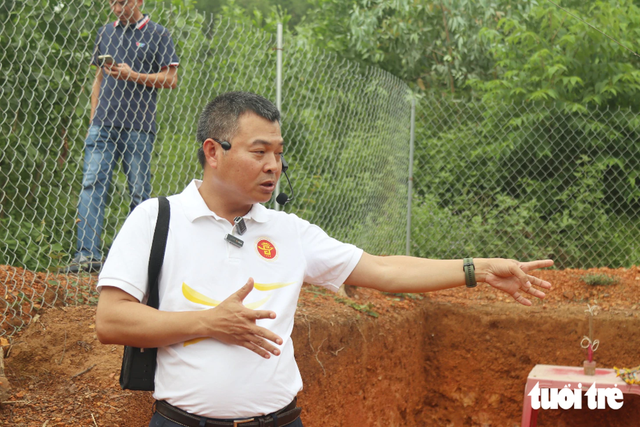
Dr. Nguyen Van Anh, head of the Department of History and Culture at the University of Social Sciences and Humanities, said the two tombs are among the few brick tombs that had not been disturbed before being exposed. Photo: Doan Hoa / Tuoi Tre
The excavation team recommended temporarily covering and backfilling the site to protect it from environmental impacts and human activity.
Researchers also recommended that Nghe An authorities develop a comprehensive research, investigation and survey program for archaeological sites in the area.
The study should not be limited to the Ru But brick tomb site and its surroundings but should cover related archaeological, historical and cultural sites throughout the Lam River basin.
Depending on research findings and practical conditions, authorities could consider re-exposing the site in the future, together with appropriate measures for conservation, protective roofing and promotion of its heritage value in connection with the local community.
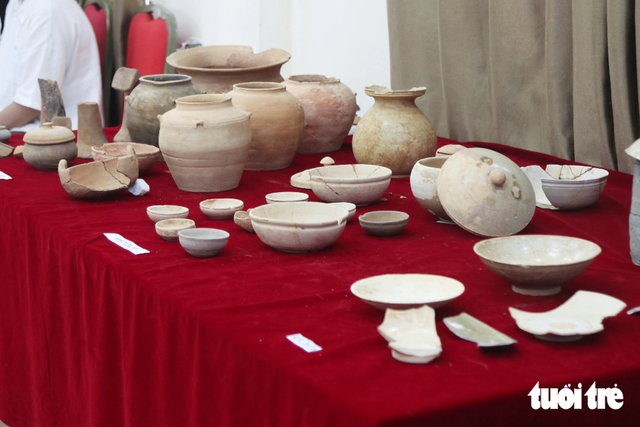
Artifacts recovered during the excavation include pottery, stoneware, glass and metal objects. Photo: Doan Hoa / Tuoi Tre
What was found inside the two brick tombs?
M1 contained pottery from two groups: glazed pottery and earthenware. The glazed pottery included four types of vessels: bowls, lids, cups and dishes. One earthenware artifact may have been a lamp stand.
Metal artifacts included Wuzhu coins and weapons and tools such as pointed objects, knife blades, knife handles, swords, cleavers and knives. Most of the artifacts were broken, oxidized and no longer intact.
When the burial chamber was exposed, the swords and cleavers were found crossed over each other to form a pointed shape facing the head of the tomb.
A wooden-handled artifact covered with iron was also found and may have been a type of knife.
M2 contained pottery concentrated at the head of the tomb and on both sides of the entrance. The pottery included glazed items such as jars and lids. The glaze had flaked off many of the artifacts.
The earthenware included pots, jars, bottles, spindle whorls and cups. Stoneware artifacts included jars, lids and cups.
Among the metal artifacts, archaeologists found a bronze ladle on the brick floor near the tomb entrance and another bronze artifact at the head of the tomb that had deteriorated to the point that it could no longer be identified.
Iron artifacts included bracelets and knives.
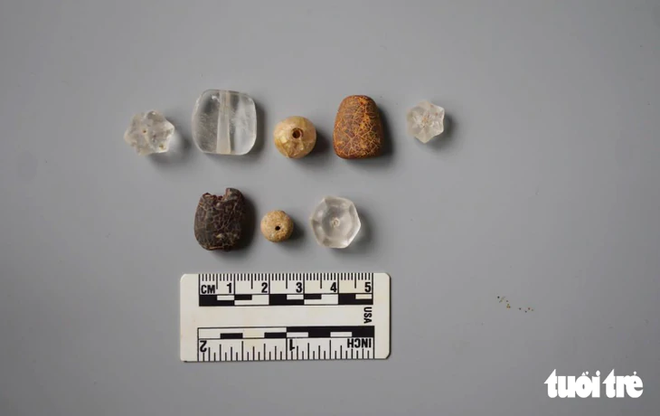
Yellow metal artifacts included small beads, polygonal beads and leaf- or petal-shaped pieces, as well as glass covered with metal.
Glass artifacts included polygonal crystal beads.
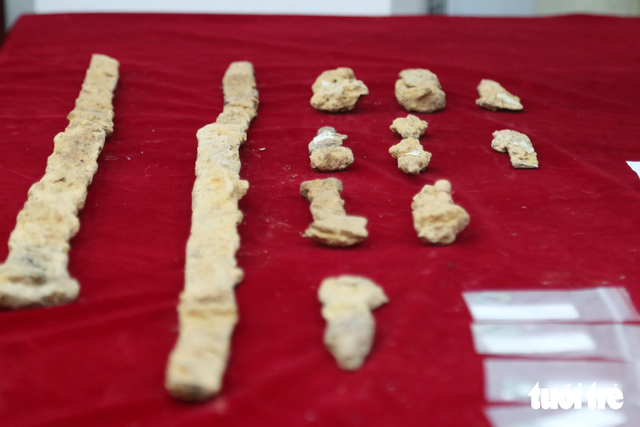
Metal artifacts include pointed objects, knife blades, knife handles and swords. Most were broken, oxidized and no longer intact. Photo: Doan Hoa / Tuoi Tre
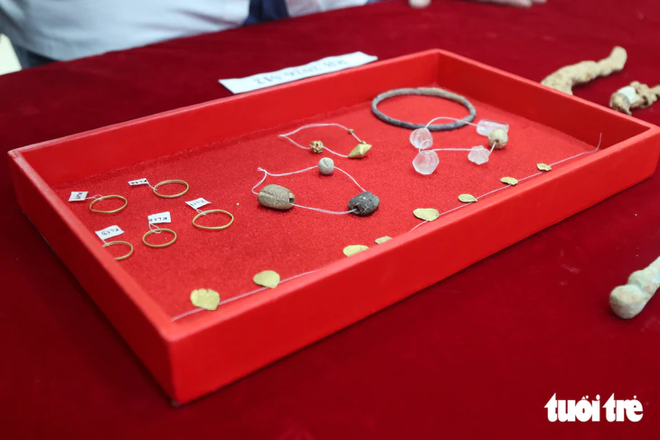
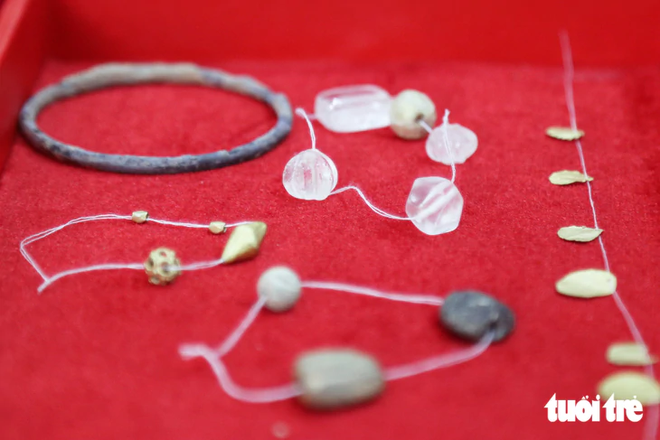
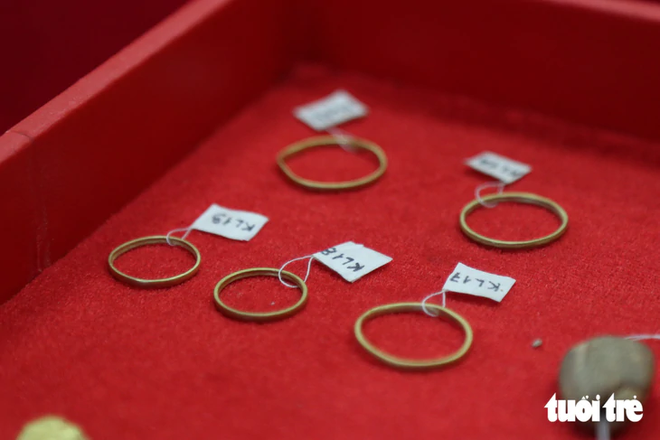
Yellow metal objects, small beads and glass objects covered with metal were found in the two brick tombs. Photo: Doan Hoa / Tuoi Tre
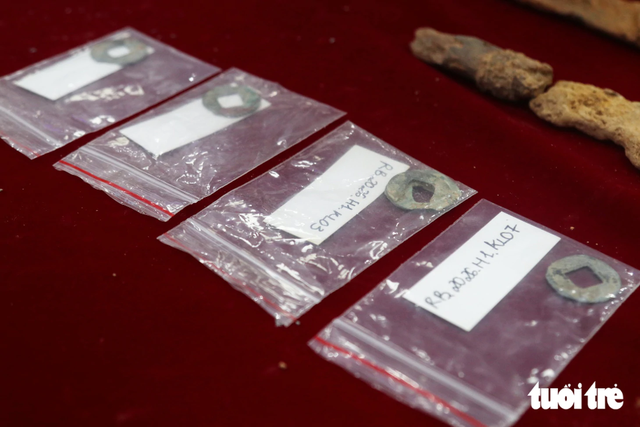
Ancient coins found inside one of the brick tombs. Photo: Doan Hoa / Tuoi Tre
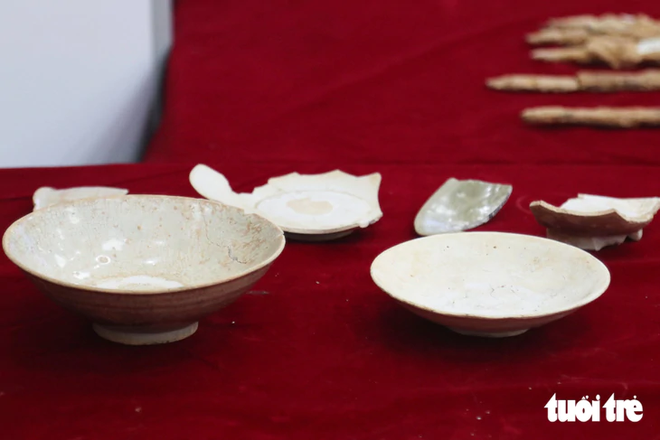
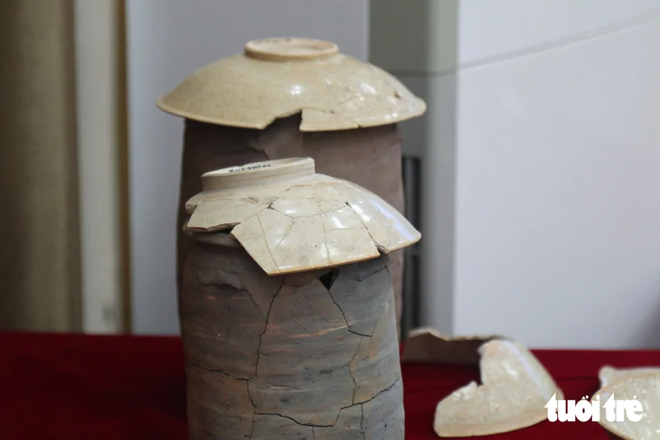
Based on the stratigraphy, location, structure, construction techniques and artifacts recovered, the excavation team initially determined that the two brick tombs were built during the Six Dynasties period, between the fourth and sixth centuries. Photo: Doan Hoa / Tuoi Tre
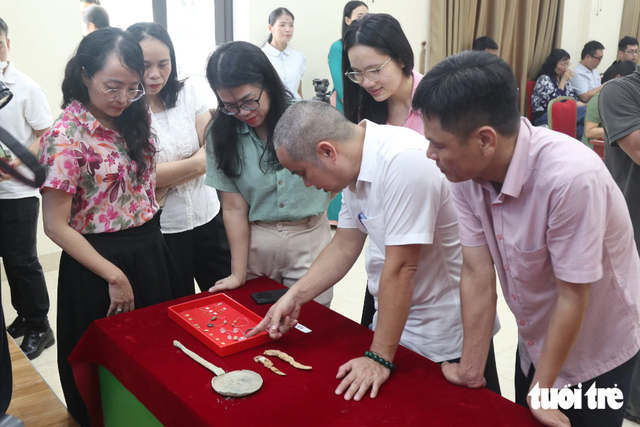
Based on the excavation findings, researchers recommended developing appropriate conservation measures and promoting the site’s heritage value in connection with the local community. Photo: Doan Hoa / Tuoi Tre
- REFERENCE MORE
- REFERENCE MORE
- REFERENCE MORE


Thanh Ha - Doan Hoa / Tuoi Tre News
Link nội dung: https://news.tuoitre.vn/nearly-1600-year-old-brick-tombs-in-vietnam-yield-pottery-swords-jewelry-10326091715052428.htm