
PM orders Vietnam IFC launch in Ho Chi Minh City by February 9
Vietnam International Financial Center (IFC) must open its Ho Chi Minh City facility by February 9, a deadline set by Prime Minister Pham Minh Chinh, who also urged ministries and local authorities to act decisively, assign clear responsibility, and avoid fragmented implementation as Vietnam moves to build a dual-location financial hub.
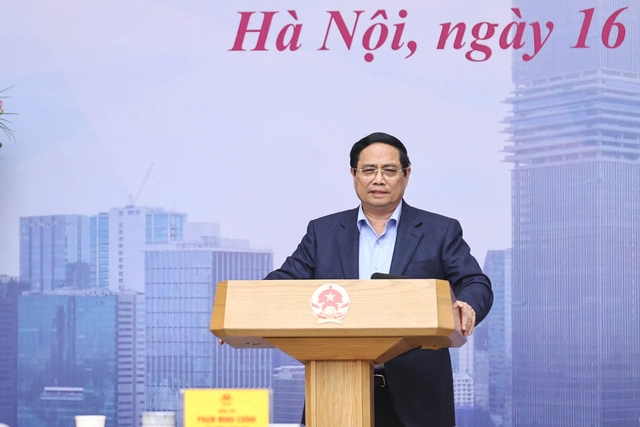
Vietnamese Prime Minister Pham Minh Chinh speaks at the first meeting of the Steering Committee for the Vietnam International Financial Center in Hanoi, January 16, 2026. Photo: Nhat Bac / Tuoi Tre
The prime minister, who also heads the Steering Committee for the Vietnam International Financial Center, issued the directive while chairing the committee’s first meeting in Hanoi on Friday.
The meeting followed the launch of the IFC’s Da Nang facility on January 9 and reviewed the implementation of the Politburo’s conclusions, along with plans to build, operate, and develop the center under a ‘one center, two destinations’ model.
Discussions covered proposed special mechanisms and policies, working regulations for the IFC Executive Council, and operational rules for the center, whose establishment was announced on December 21, 2025 pursuant to National Assembly Resolution No. 222/2025.
PM urges decisive action, sets February 9 deadline for Ho Chi Minh City IFC
Opening the meeting, PM Chinh said that amid global economic uncertainty, Vietnam’s participation in the international financial network is intended to contribute to regional and global stability.
He stressed the need to move away from fragmented efforts toward a comprehensive ecosystem built on strong institutions, professional governance, high-quality human resources, synchronized infrastructure, and competitive services.
PM Chinh noted broad consensus within the steering committee, with responsibilities, timelines, and accountability clearly defined, calling for a proactive and responsible approach while avoiding haste or mechanical replication of foreign models.
He affirmed February 9 as the deadline for the official launch of the IFC facility in Ho Chi Minh City, along with the inauguration of an international center and a specialized court.
Although Vietnam is a latecomer, PM Chinh said the country must selectively adopt global best practices and focus on effective implementation.
He instructed the chairpersons of the Ho Chi Minh City and Da Nang People’s Committees to assign a vice-chairperson to take direct responsibility, stressing that legal frameworks, infrastructure development, and personnel recruitment must be advanced in parallel under a ‘learning by doing’ approach.
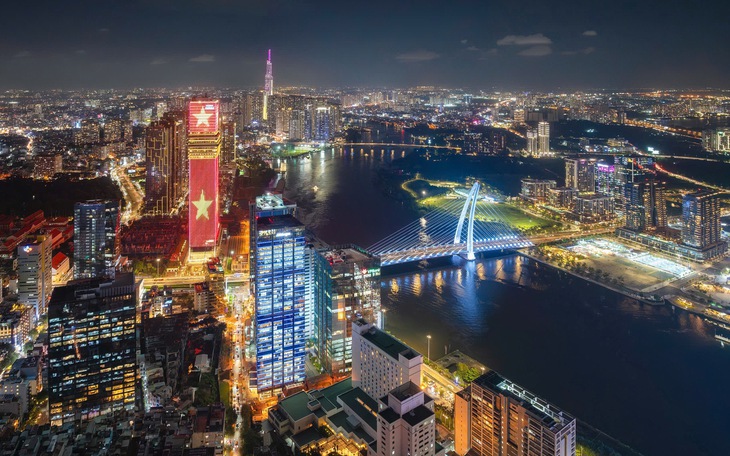
PM Chinh identified key challenges, including competition among regional and international financial centers, shortages of high-quality human resources, and the need for mechanisms to attract international experts in finance and technology.
He also called for clearer planning of urban infrastructure, public services, and international-standard living and working spaces within IFC facilities, while ensuring that risk management, compliance control, data sharing, and supervision align with international standards.
Accordingly, he requested that the Ministry of Home Affairs review relevant policies and submit a decree on appropriate regimes and incentives, and urged the early issuance of operating regulations for the IFC Executive Council.
On technology, he asked Ho Chi Minh City to coordinate with Da Nang and Vietnamese military-run telecom company Viettel to integrate unified, real-time, and interoperable management systems.
Regarding personnel matters, PM Chinh said a support office must be established for the council, recruitment policies finalized, and arrangements for operational headquarters completed urgently.
Institutional reform, role clarity, complementarity urged for dual-location IFC
PM Chinh highlighted institutional reform as a breakthrough and a core competitive advantage for the international financial center, stressing that the framework must align with international practices while remaining suited to Vietnam’s conditions and safeguarding sovereignty, financial security, and data safety.
He said people must be placed at the center of development, noting that building an international financial center requires a strong pool of managers, operators, and experts, as well as financial, technological, legal, and auditing professionals who meet international standards.
This, he said, involves both training domestic personnel and attracting international talent.
Infrastructure development, the prime minister added, goes beyond transport and utilities to include digital infrastructure, data systems, cybersecurity, data centers, and trading platforms.
Markets and products should serve as benchmarks to determine which institutions and customer segments to attract, and to assess the center’s contribution to growth, employment, and broader spillover effects.
Operationally, he underscored the need for a clear division of roles and strong complementarity between the Ho Chi Minh City and Da Nang IFC facilities to avoid overlap and internal competition.
While the central government provides unified orientation, local authorities must take the initiative in implementation, closely coordinating and sharing data, resources, and experience, while strengthening international cooperation.
To ensure effective execution, PM Chinh urged ministries, sectors, and localities to act proactively, fulfill commitments, accelerate decentralization and delegation of authority, and issue necessary mechanisms and policies.
He called for expanded cooperation with domestic and international partners, stronger investment promotion, and greater efforts to attract financial institutions and investors to build a robust international financial center ecosystem while safeguarding monetary and financial security.
Vinh Tho - Ngoc An / Tuoi Tre News
Link nội dung: https://news.tuoitre.vn/pm-orders-vietnam-ifc-launch-in-ho-chi-minh-city-by-february-9-103260117135907098.htm