
Stuck on royal burial grounds of Vietnam's last dynasty, Hue residents push for relocation
Dozens of families have spent decades living in cramped, dilapidated homes within the tomb complexes of three Nguyen dynasty emperors who ruled Vietnam in the late 19th and early 20th centuries, hoping to be relocated to better housing.
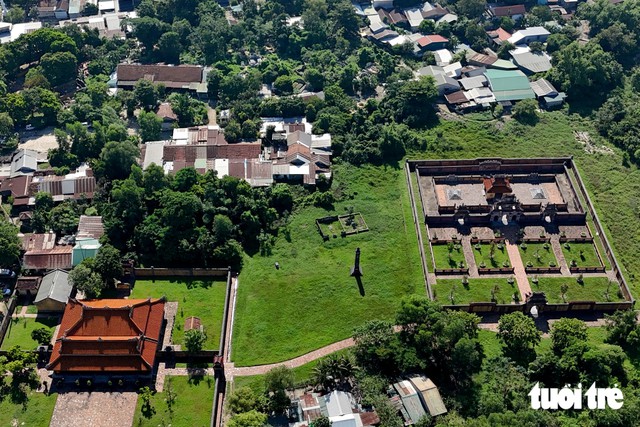
Several homes stand within An Lang, the burial complex of Nguyen dynasty emperors Duc Duc, Thanh Thai and Duy Tan. Photo: Nguyen Do / Tuoi Tre
An Lang is located in An Cuu Ward, Hue City, central Vietnam. Within the tomb complex's Zone I protection area are aging apartment blocks and private homes.
Some residents moved in after 1975 as government employees and workers. Now elderly, they are still waiting to learn when they can move to new homes.
Half a century living in Nguyen emperor’s tomb complex
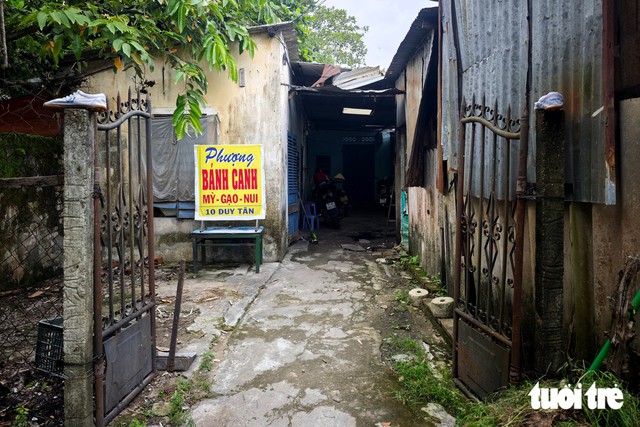
Hoang Van Phi, 83, a former official with the provincial industry department, has lived in the apartment complex for more than 45 years. He and three family members have spent years sharing a cramped, 30-square-meter apartment at 10 Duy Tan Street.
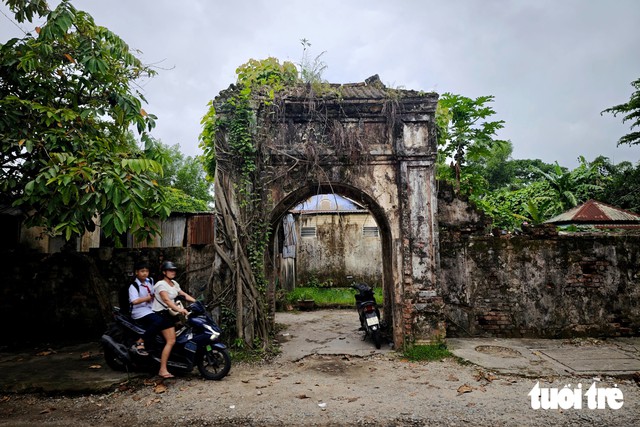
An old fortified gate on Duy Tan Street also serves as an entrance to the residential complex. Photo: Nguyen Do / Tuoi Tre
Over time, the homes have deteriorated. Roofs leak during rain, while indoor spaces become stiflingly hot on sunny days, making daily life difficult for residents.
"Like many other households here, my family hopes to be relocated to new housing as soon as possible," Phi said.
Along the apartment blocks, many households have added corrugated metal roofs to create more living space. The makeshift coverings and tarpaulins overlap, leaving the area looking cluttered and run-down.
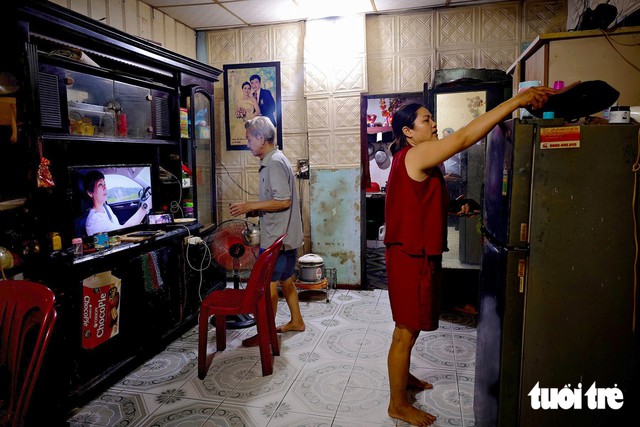
Phi with his daughter-in-law, Tran Thi Tho, 45, at their home in the Nguyen dynasty royal tomb complex. Photo: Nguyen Do / Tuoi Tre
Not far from Phi’s apartment complex, Cao Xuan Hoi, 66, lives with dozens of other households in two aging residential blocks. His home is about 20 meters from the royal tomb, which he can see by simply opening the kitchen door.
Hoi said the two blocks were originally provided as housing for workers of a local livestock breeding and animal feed company. He and other residents later purchased their homes under a state asset sale scheme and have lived there ever since.
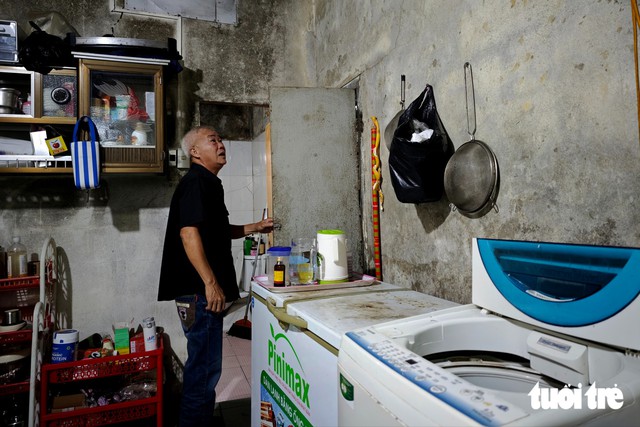
Cao Xuan Hoi in his run-down kitchen, from which he can see the royal tomb. Photo: Nguyen Do / Tuoi Tre
“The homes were purchased a long time ago, and some have changed hands several times. Some households still have purchase receipts, while others no longer have the paperwork,” Hoi said.
Like many other residents, Hoi hopes to be relocated soon. He also wants fair compensation, assistance and resettlement policies that would allow his family to rebuild their lives.
Compensation and resettlement hurdles
Le Thang Long, vice chairman of An Cuu Ward, said local authorities are working with relevant agencies to clear the An Lang site.
A land recovery notice covering more than 4.4 hectares was issued in August 2025, with the city initially targeting completion of site clearance by the end of that year. However, the process continues to face significant obstacles.
The apartment blocks have deteriorated after years of use. Photo: Nguyen Do / Tuoi Tre
Long said all 148 cases have been inventoried, with compensation and assistance plans approved for 68 and the remaining 80 still awaiting approval.
Of the approved cases, only 29 households have received resettlement approval, but none has handed over their land or been allocated a resettlement plot. The remaining cases are still being processed.
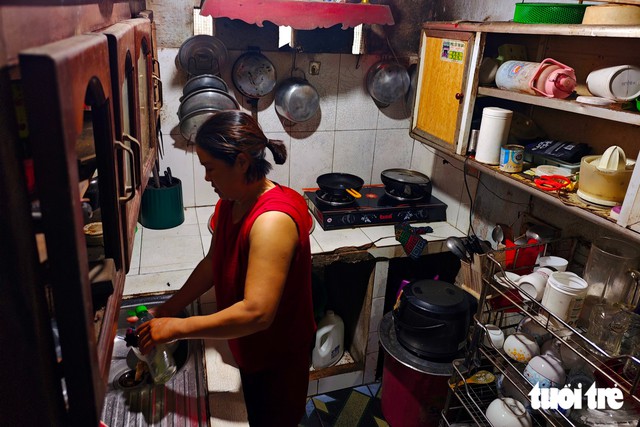
Tran Thi Tho in the cramped kitchen. Photo: Nguyen Do / Tuoi Tre
Long said the main obstacles are verifying land origins and determining eligibility for compensation, assistance and resettlement, as properties have been used and transferred over several periods.
Outstanding cases include properties transferred after July 1, 2014, and land encroached on after the heritage protection zone was established in 1991, among other cases.
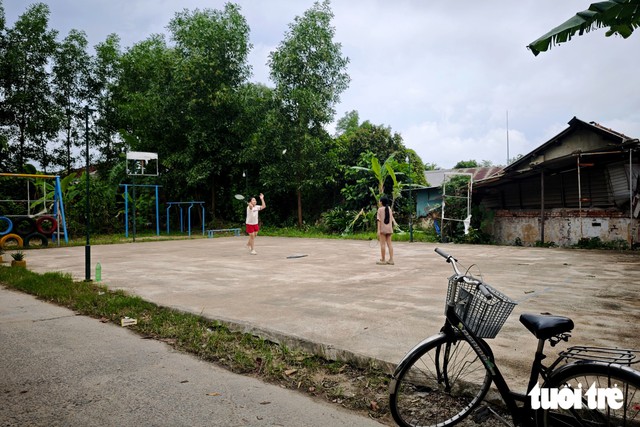
Residents use the former factory site as an exercise area after the buildings were demolished. Photo: Nguyen Do / Tuoi Tre
Hoang Viet Trung, director of the Hue Monuments Conservation Centre, said residents living within the protected heritage zone affect the landscape of An Lang.
However, site management must balance heritage preservation with residents’ legitimate rights and interests.
Once the households have been relocated, the centre will landscape the area to support the preservation and promotion of An Lang’s heritage value.
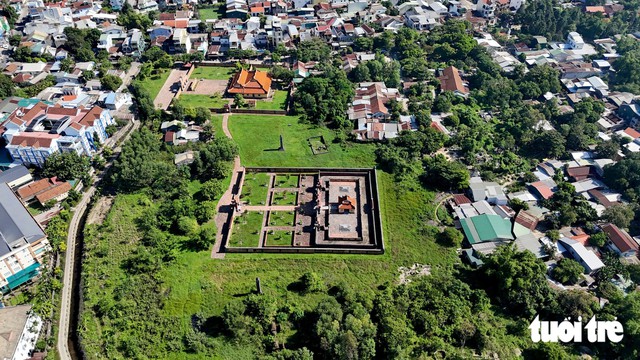
A view of An Lang, the burial complex of three Nguyen dynasty emperors: Duc Duc, Thanh Thai and Duy Tan. Photo: Nguyen Do / Tuoi Tre
Residents to be relocated from 16 heritage sites
The relocation of households from Zone I of An Lang is part of the second phase of a project to preserve, restore and upgrade Hue’s imperial citadel complex.
The project involves clearing about 44.4 hectares across 16 heritage sites, affecting 517 households. So far, only 27 households have handed over their land, while 490 have yet to do so.


Van Giang - Nguyen Do / Tuoi Tre News
Link nội dung: https://news.tuoitre.vn/stuck-on-royal-burial-grounds-of-vietnams-last-dynasty-hue-residents-push-for-relocation-103261001174831129.htm