
Vietnam becomes 2nd home for int’l students
From small acts of trust to shared meals and holiday rituals, international students in Vietnam say everyday kindness has turned a once-unfamiliar country into a place they now call home.

Matteo Losito practices archery with friends in Ho Chi Minh City. Photo: Supplied
For many foreign students, their first memories of Vietnam are not classrooms or campuses, but simple encounters: being allowed to pay later at a shop after forgetting cash, or receiving a warm smile instead of suspicion.
Those moments, students say, often shape their earliest and most enduring impressions as they begin academic lives far from home.
Italian student embraces Tet
Matteo Losito, a 37-year-old student from Turin, Italy, is preparing to celebrate his third Lunar New Year holiday, or Tet, in Vietnam.
Now studying at International University under Vietnam National University-Ho Chi Minh City, Losito first visited Vietnam as a tourist 11 years ago and decided to return for his studies after being drawn by the country’s hospitality and food.
During his first year, Losito spent Tet in Bao Loc, Lam Dong Province after being invited by a friend he met through a local archery club.
He stayed for nearly a week with the friend’s family, an experience he described as exceptionally warm and welcoming, and the friendship has endured.
“Even now we are still very close friends, and this year my wife and I will attend his wedding,” Losito said.
In his second year, he celebrated Tet in Vietnam’s Mekong Delta, joining a friend to visit relatives and neighbors, sometimes traveling by boat along canals.
Despite language barriers, Losito said conversations and shared meals helped bridge gaps, and Vietnamese cuisine became a lasting passion.
“They were extremely friendly and hospitable, and we were treated to so much food. Every dish was delicious,” he recalled.
Among his favorites are ‘banh xeo’ (Vietnamese sizzling cake), ‘mi Quang’ (Quang noodles), and ‘pha lau’ (Vietnamese offal stew).
“If I ever had to leave Vietnam, what I would miss most would be the food and the warmth of the people here,” Losito said.
Returning to roots from Laos
Chu Dinh Kham Minh, a 20-year-old student at the University of Economics and Law in Ho Chi Minh City, was born and raised in Laos and has Vietnamese ancestry but only visited Vietnam briefly as a child.
“I only came to Vietnam twice when I was very young, so I was too small to really remember anything,” Minh said.
His decision to study in Vietnam was driven by a desire to reconnect with his roots, though it came with anxiety about adapting to life without his parents.
Minh said his early days in Ho Chi Minh City were challenging, citing differences in daily pace, traffic, and communication.
Language proved to be one of the biggest hurdles, as the Vietnamese classroom differed from what he had learned in preparatory courses.
While he understood lessons in general, he was sometimes unsure whether he fully grasped lecturers’ intended meaning.
“I can speak Vietnamese, but sometimes I use words in the wrong context or with the wrong nuance, which leads to awkward situations,” he explained.
“In preparatory classes we learned a lot of basic vocabulary and sentence structures, but daily life and university classes use language differently.”
To cope, Minh spent additional time preparing before classes, expanding his vocabulary and relying on classmates for clarification.
“Luckily, my classmates were always there and willing to explain when I had questions,” he added.
Over time, frequent interaction helped his Vietnamese improve faster than classroom study alone.
“At first I was often hesitant when starting conversations, but now I can talk just like a local,” he said with a laugh.
Alongside his studies, he has worked as a Vietnamese–Lao interpreter, which he said allowed him to meet new people and visit historical sites, deepening his attachment to Vietnam.
“Through my work as a Vietnamese–Lao interpreter, I have met many new people,” Minh said.
“The more I travel and introduce places in Vietnam to others, the more attached I become to the country and its people.”
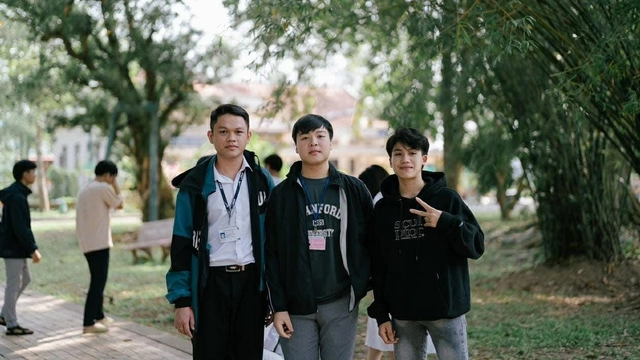
Yokoh Vanhnasouk (R) poses for a photo with friends in Vietnam. Photo: Supplied
Second family abroad
Yokoh Vanhnasouk, a 20-year-old student from Houa Phan Province in Laos, has studied at the Ho Chi Minh City University of Technology and Education for nearly three years.
He said he remains surprised by the generosity he encounters, recalling an incident when a canteen vendor let him take a meal despite his inability to pay at the time due to a mobile network outage.
“Once I went to get a meal at the dormitory, but I had no cash and my phone had no signal, so I couldn’t transfer money,” Vanhnasouk said.
“I was panicking, but the woman selling the food just smiled and told me to take it and pay later.”
As the only foreign student in his class, Vanhnasouk initially worried about fitting in, particularly after realizing that the southern Vietnamese accent differed from what he had learned.
“But in my very first month at university, I already had many friends,” he recalled.
He said classmates and lecturers actively helped him understand lessons and unfamiliar words, easing his transition.
Vanhnasouk also recalled visiting a Vietnamese friend’s home, where the friend’s mother prepared a large meal.
“That was the first time I tried ‘banh xeo’ and banana ice cream,” he said.
“Even now, ‘banh xeo’ and banana ice cream are still among my favorite foods in Vietnam.”
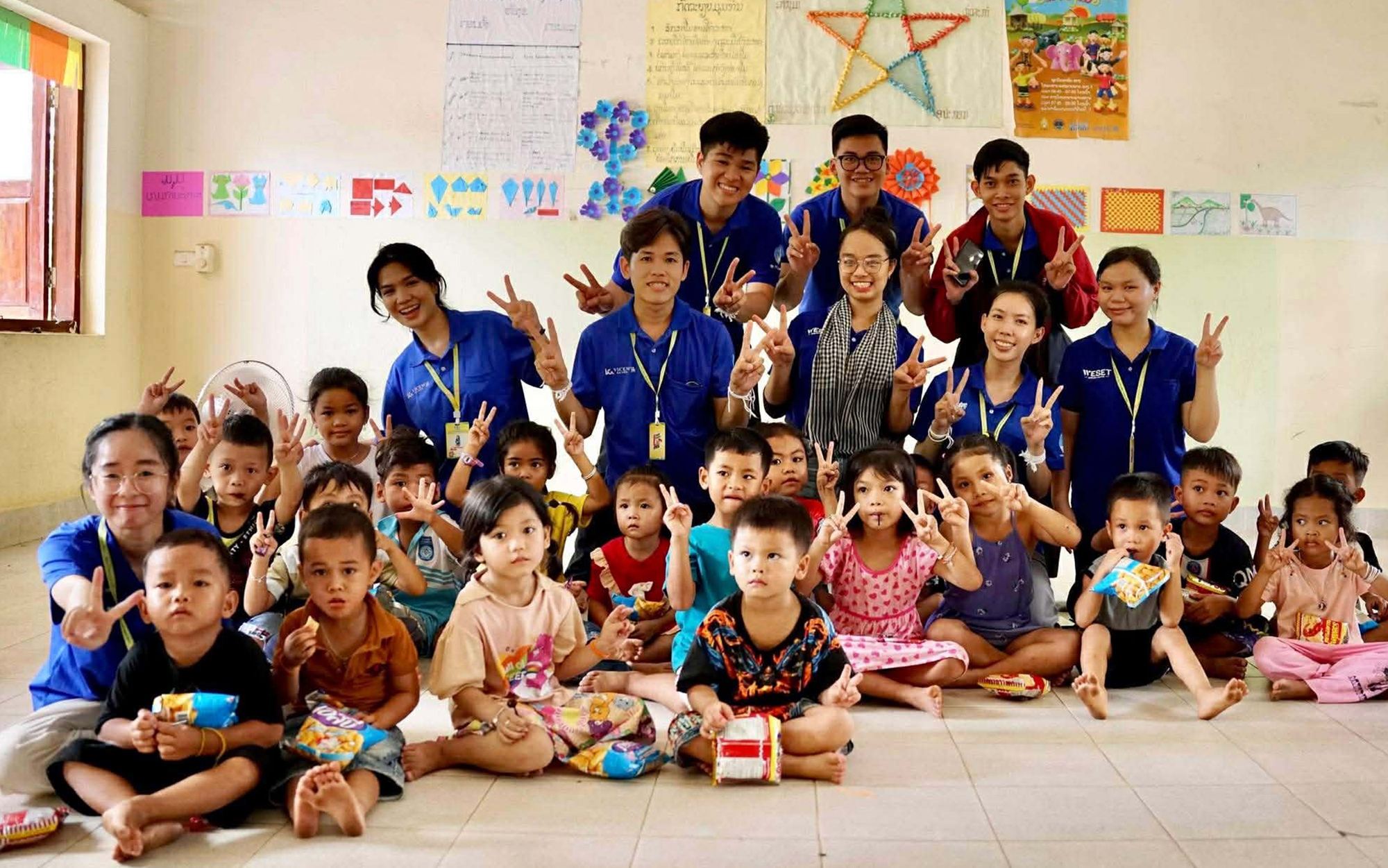
Conversations with the family, he said, made him feel as though he had found a second home.
“His father asked me whether I had adapted well to life in Vietnam and showed me places to visit,” the foreign student recalled.
“That atmosphere made me feel like I had a second family in Vietnam.”
Playing football further expanded his social circle, helping him become more outgoing.
For many international students, whether newly arrived or long settled, occasional misunderstandings in Vietnamese remain part of their daily life, but they are often met with patience and kindness -- another reason, students say, that a foreign land has become familiar.
Bao Anh - Xuan Huong / Tuoi Tre News
Link nội dung: https://news.tuoitre.vn/vietnam-becomes-2nd-home-for-intl-students-10326020415080151.htm