
Vietnam braces for rising heat, lower storm count in 2026
Vietnam will see fewer storms over the East Vietnam Sea making landfall this year compared with previous years, while extreme heat is expected to become more frequent, said a forecaster.
Hoang Phuc Lam, deputy head of the national weather center, said that over the next three months, the ENSO phenomenon is likely to shift to a neutral state, with a probability of 75-85 percent.
La Nina conditions have dropped to 15-25 percent, lower than in previous forecasts.
From May to July, ENSO conditions are expected to remain neutral, with a 55-65 percent probability.
The El Nino episode is projected to increase gradually to 35-45 percent during the period.
By late summer and early autumn 2026, or from August to October, ENSO is forecast to remain neutral, but lean toward its warm phase, with a 55-65 percent probability.
Also, the El Nino phase could continue in late 2026 and early 2027.
Under warmer ENSO conditions, trade winds across the Pacific are expected to weaken, while the convection activity may intensify near the central Pacific, and decline in the western Pacific.
As a result, rainfall across Southeast Asia, including southern Vietnam, is likely to trend below average in the final months of 2026.
From now through July, the number of storms and tropical depressions over the East Vietnam Sea affecting Vietnam is forecast to remain close to the figures recorded in previous years, at roughly 3.8 storms, with about 1.2 making landfall.
However, between August and December, the number of storms and tropical depressions over the maritime region and affecting Vietnam’s mainland is likely to fall below the long-term average.
Typically, some 9.6 storms hit the East Vietnam Sea during this period, with nearly 3.8 making landfall.
Potential for record-breaking heat
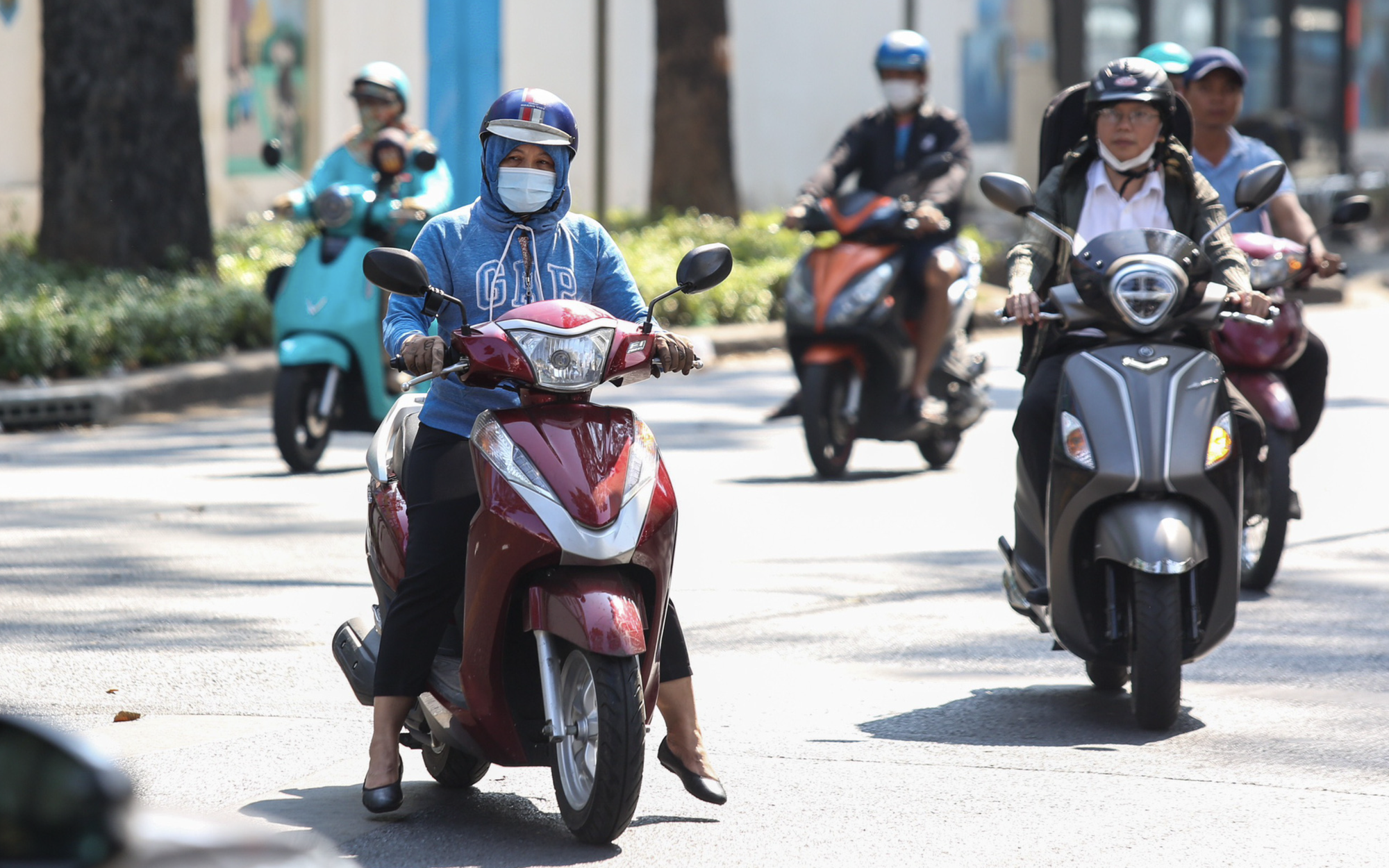
Heatwaves are expected to begin in southern Vietnam as early as late February or early March 2026, initially affecting the southeastern provinces before expanding into the southwestern region.
In the northwestern region, localized heat may emerge from March.
Hot conditions are likely to hit many provinces from Thanh Hoa to Hue in central Vietnam from April, before spreading across the northern and central regions by late April.
From May onward, heat intensity is expected to ease gradually in the south, while the north and central regions could see intensifying heat through August.
From September, heatwaves are forecast to subside.
Overall, the frequency of extreme heat is expected to exceed levels recorded in 2025.
The rainy season nationwide is projected to align broadly with long-term averages.
Rainfall may hit the Central Highlands region in late April or early May, while the southern region will see rains during the second half of May.
Northern Vietnam may experience rainfall in May, said Lam.
The number of widespread heavy rainfall events in 2026 is expected to be near or slightly below average.
Heavy rain spells could begin in northern Vietnam in June, gradually shifting southward and ending around November in the central provinces.
Hoang Duc Cuong, deputy head of the Vietnam Meteorological and Hydrological Administration, emphasized that fewer storms do not equate to reduced risk, particularly amid accelerating climate change.
“Extremes may not be as severe as in 2025,” Cuong noted.
However, in 2026, record-breaking heat and drought are possible, alongside unusual patterns of heavy rainfall, thunderstorms, and more stable hydrological flows, he added.
ENSO, or El Nino-Southern Oscillation, refers to fluctuations between El Nino and La Nina phases.
El Nino years typically bring prolonged heat and drought, delayed rainy seasons, reduced flood, and storm activity.
In contrast, La Nina events are associated with strong and persistent monsoon winds, abundant rainfall, and more frequent storms and tropical depressions.
Tieu Bac - Chi Tue / Tuoi Tre News
Link nội dung: https://news.tuoitre.vn/vietnam-braces-for-rising-heat-lower-storm-count-in-2026-103260223162447663.htm