
Vietnam, Netherlands discuss unlocking value in aquaculture toward sustainability
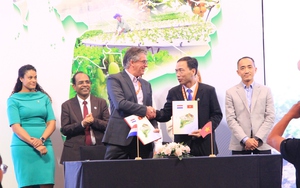
Vietnamese and Dutch aquaculture stakeholders on Wednesday joined a workshop in Ho Chi Minh City to share ideas and explore cooperation models for a more sustainable and resilient aquaculture sector.
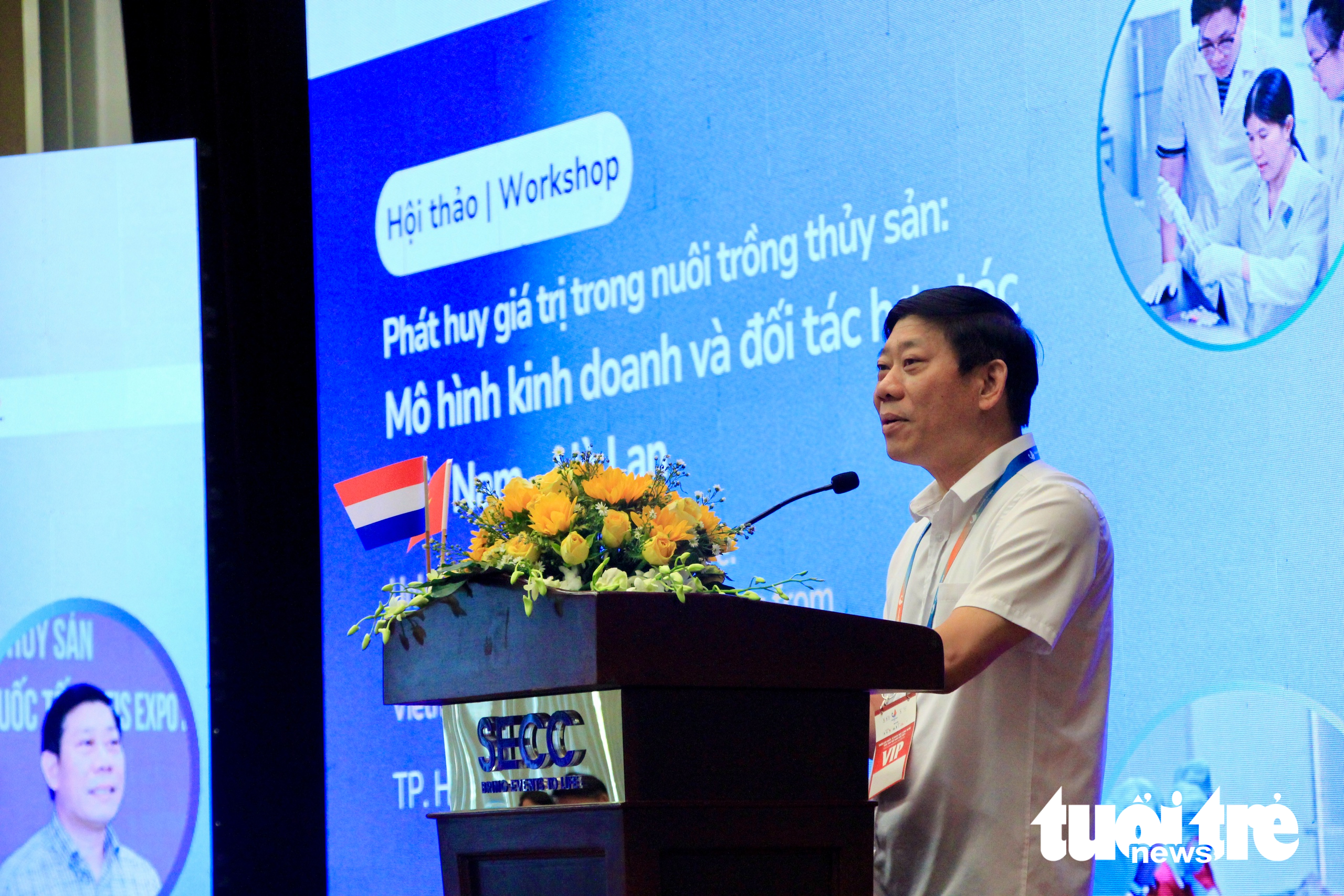
Tran Quang Hung, deputy director general of the Directorate of Fisheries and Fisheries Surveillance under the Ministry of Agriculture and Environment, delivers his remarks at the workshop 'Unlocking Value in Aquaculture: Business Models and Partnerships from Vietnam–Netherlands Cooperation,' in Ho Chi Minh City on April 29, 2026. Photo: Dong Nguyen / Tuoi Tre News
The workshop, titled “Unlocking Value in Aquaculture: Business Models and Partnerships from Vietnam–Netherlands Cooperation,” was held as part of the VinaFIS TechExpo.
The expo from April 28 to 30 is Vietnam's first international exhibition on fisheries science and technology organized by the Vietnam Fisheries Society under the auspices of the Ministry of Agriculture and Environment.
According to Raïssa Marteaux, Consul General of the Kingdom of the Netherlands in Ho Chi Minh City, the event brought together the four essential pillars of progress: businesses that invest and innovate; policymakers who provide direction; knowledge institutions that generate insights and build capacity; and the farmers and producers who drive the sector forward every day.
Vietnam eyes sustainable aquaculture growth
At the workshop, Ngo The Anh, head of the Aquaculture Division at the Directorate of Fisheries and Fisheries Surveillance under the Ministry of Agriculture and Environment, presented an overview of Vietnam’s aquaculture sector, as well as the orientation and development plan for sustainable aquaculture in Vietnam.
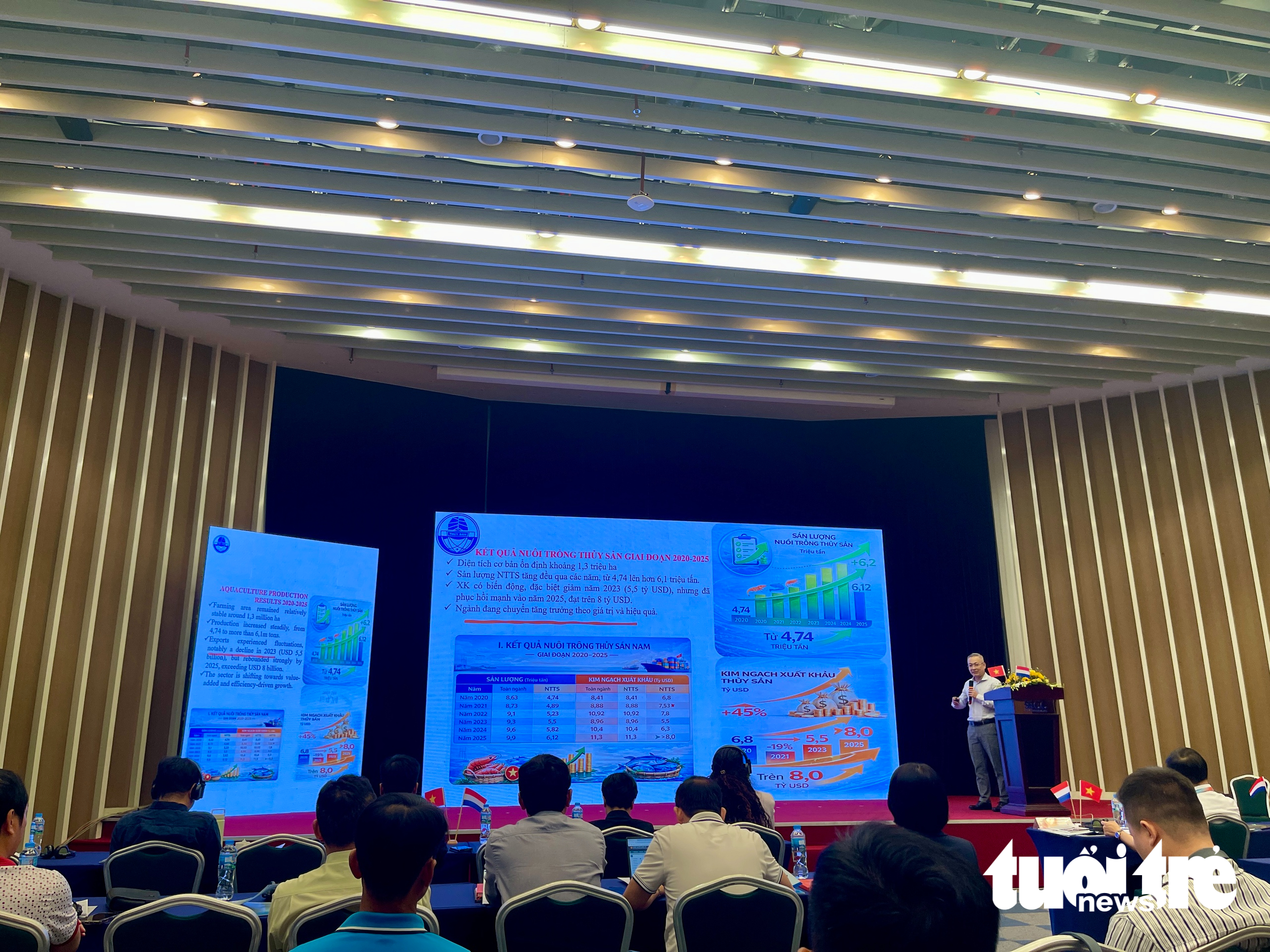
Ngo The Anh, head of the Aquaculture Division at the Directorate of Fisheries and Fisheries Surveillance under the Ministry of Agriculture and Environment, presents an overview of Vietnam’s aquaculture sector at the workshop 'Unlocking Value in Aquaculture: Business Models and Partnerships from Vietnam–Netherlands Cooperation,' in Ho Chi Minh City on April 29, 2026. Photo: Dong Nguyen / Tuoi Tre News
According to him, Vietnam ranks among the top 10 globally in aquaculture production and is among the top three seafood exporters worldwide, after China and Norway.
Vietnam has a coastline of 3,260 kilometers and around 1 million square kilometers of marine area, along with a dense network of rivers, estuaries, canals, and the Red River and Mekong River basins.
The country is also home to 1,055 lakes, about 4,000 islands and archipelagos, and diverse water types including freshwater, brackish, and marine environments.
Its aquaculture sector features a wide range of species such as shrimp, fish, mollusks, as well as seaweed and cold-water fish.
Aquaculture production results for 2020-25 show that farming area remained relatively stable at around 1.3 million hectares, while production increased steadily from 4.74 million to more than 6.1 million metric tons.
Exports performance fluctuated, with a notable decline in 2023 to US$5.5 billion, but rebounded strongly by 2025 to exceed $8 billion.
Overall, the sector is shifting toward value-added and efficiency-driven growth.
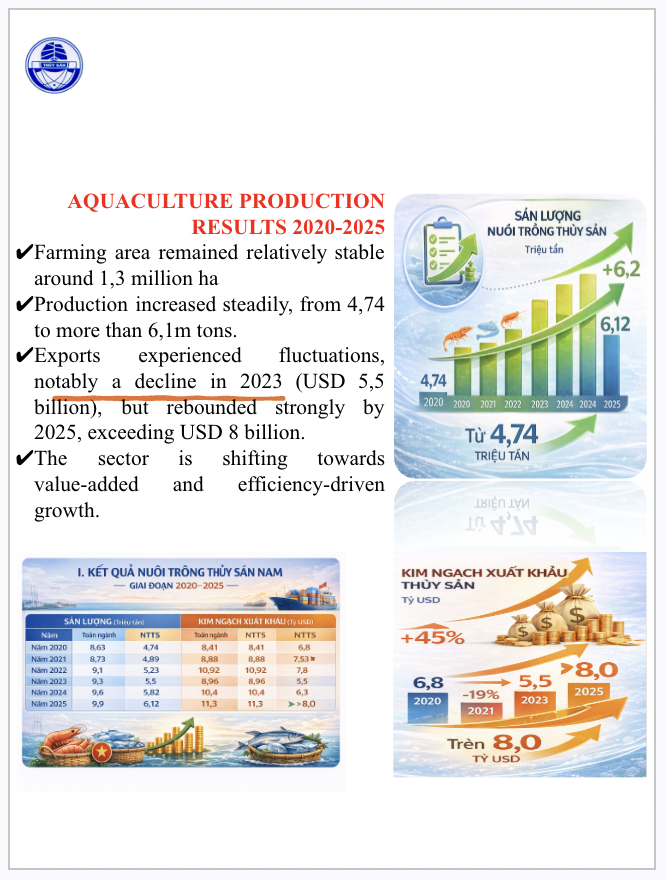
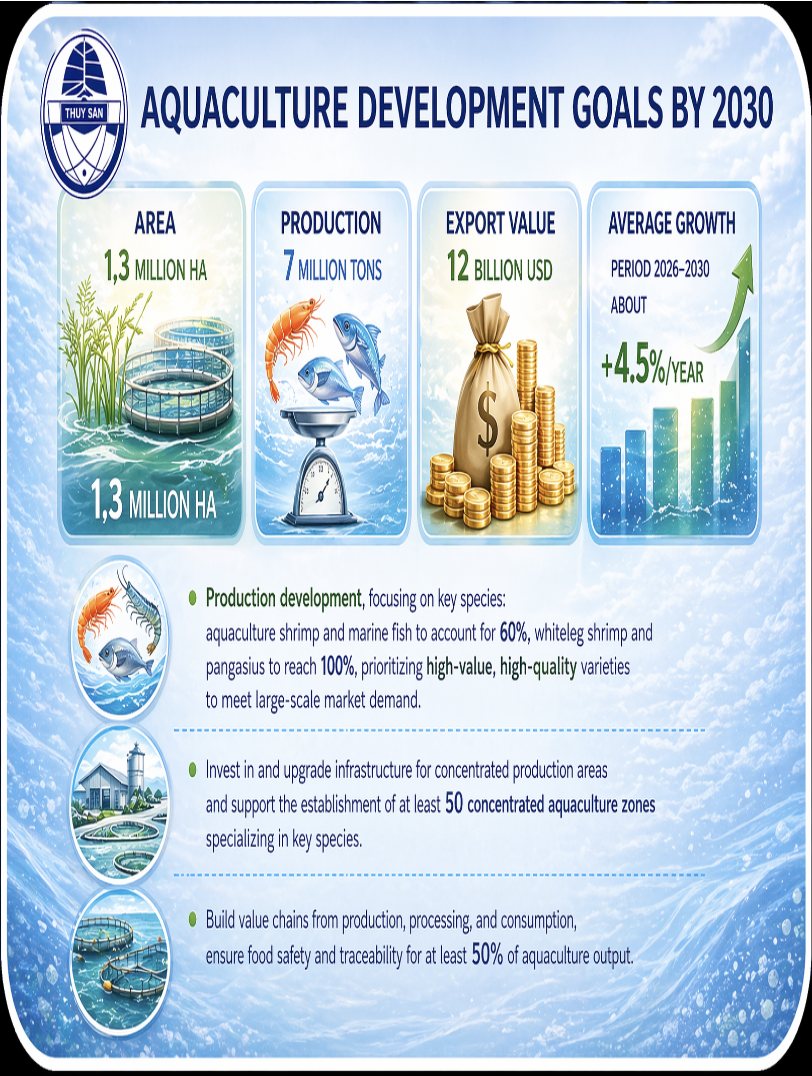
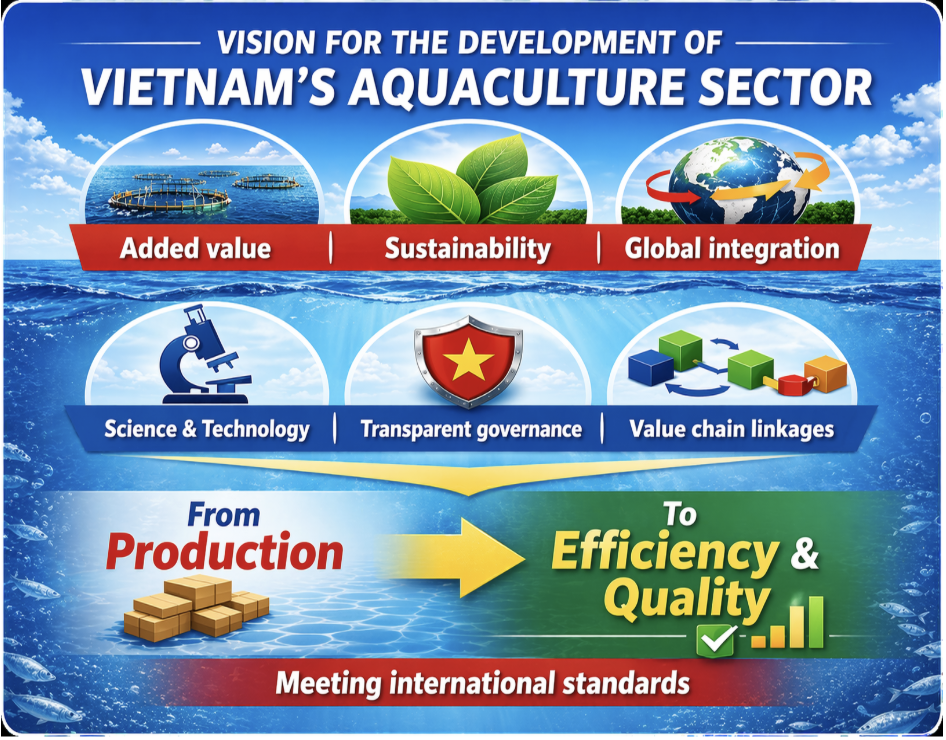
Images excerpt from Ngo The Anh’s presentation illustrates the current prodution as well as the vision for aquaculture in Vietnam.
However, Vietnam’s aquaculture sector is facing several challenges, including environmental pressures such as climate change, pollution, and disease risks.
Meanwhile, production is still largely small-scale and low in quality, with shortages of breed and feed sources for formulated feeds, along with high costs, low productivity, and weak price competitiveness.
In addition, export markets impose strict requirements on quality, food safety standards such as GAP and HACCP, traceability, as well as environmental and social responsibility, while competition among aquaculture-exporting countries remains intense.
According to Anh, Vietnam aims to maintain its aquaculture farming area at around 1.3 million hectares by 2030, with total production reaching about 7 million metric tons and export value rising to approximately $12 billion, alongside an average annual growth rate of around 4.5 percent during the 2026-30 period.
Vietnam also has a vision to develop its aquaculture sector based on added value, sustainability, and global integration, supported by science and technology, transparent governance, and strong value chain linkages.
The sector is expected to shift from production-driven growth to efficiency and quality, meeting international standards.
'A true partnership'
In her remarks at the event, Consul General Raïssa Marteaux stressed that sustainable aquaculture in the Mekong Delta is one of the key priorities in the bilateral agenda between the Netherlands and Vietnam.
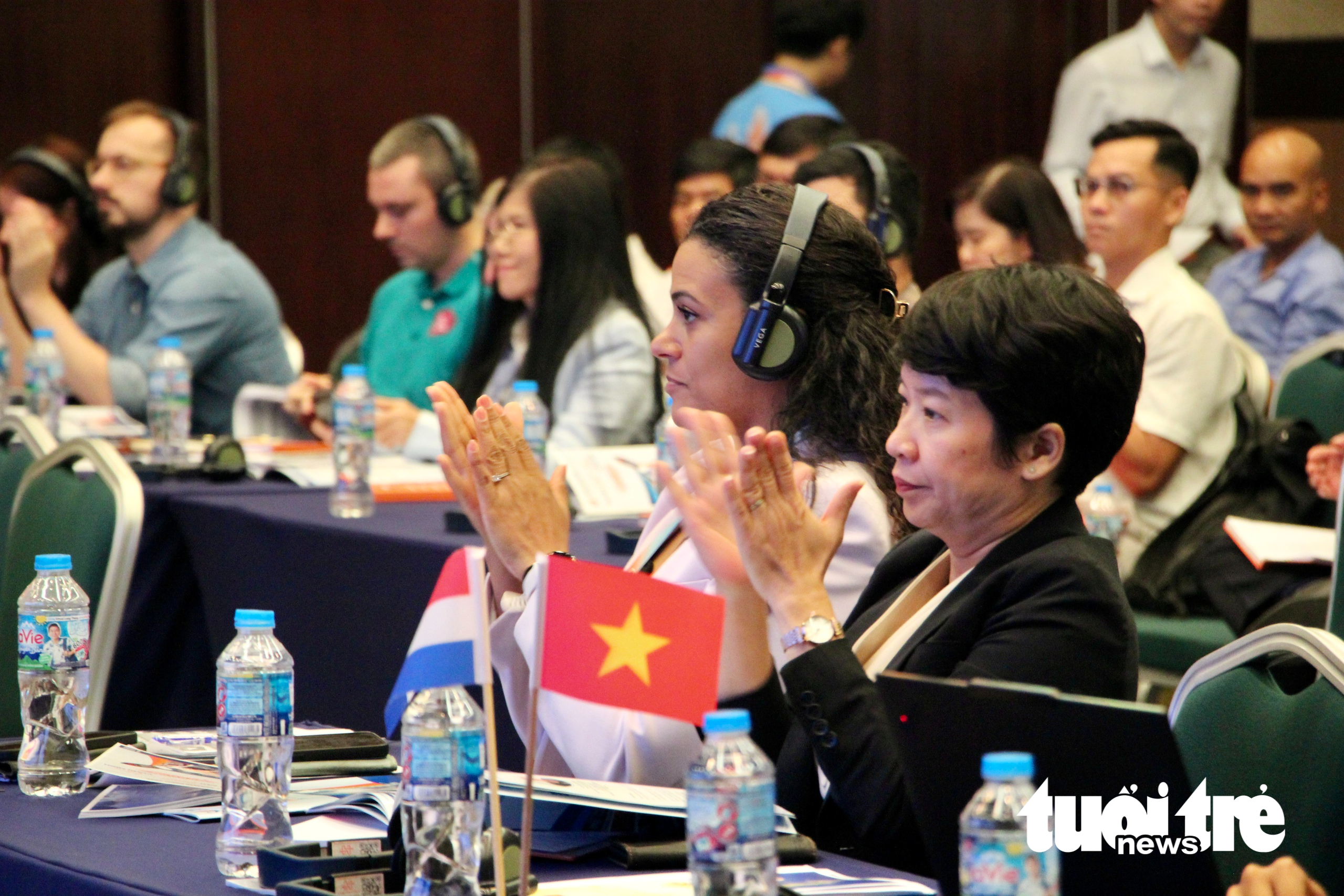
Raïssa Marteaux (2nd from right), Consul General of the Kingdom of the Netherlands in Ho Chi Minh City, attends the workshop 'Unlocking Value in Aquaculture: Business Models and Partnerships from Vietnam–Netherlands Cooperation,' in Ho Chi Minh City on April 29, 2026. Photo: Dong Nguyen / Tuoi Tre News
As the Netherlands has long been recognized for its expertise in sustainable aquaculture, grounded in research, innovation, and practical application, the country takes pride in offering tailor-made solutions that address the unique challenges faced by aquaculture practitioners in Vietnam, Marteaux stated.
These solutions include, but are not limited to, animal welfare, food safety, reducing disease and use of antibiotics.
“Through various projects, Dutch businesses work closely with Vietnamese partners, learning from their local insights and farming experience to better adapt Dutch expertise to the local context,” she said.
“It is a true partnership based on mutual learning, shared experiences, and joint problem-solving.”
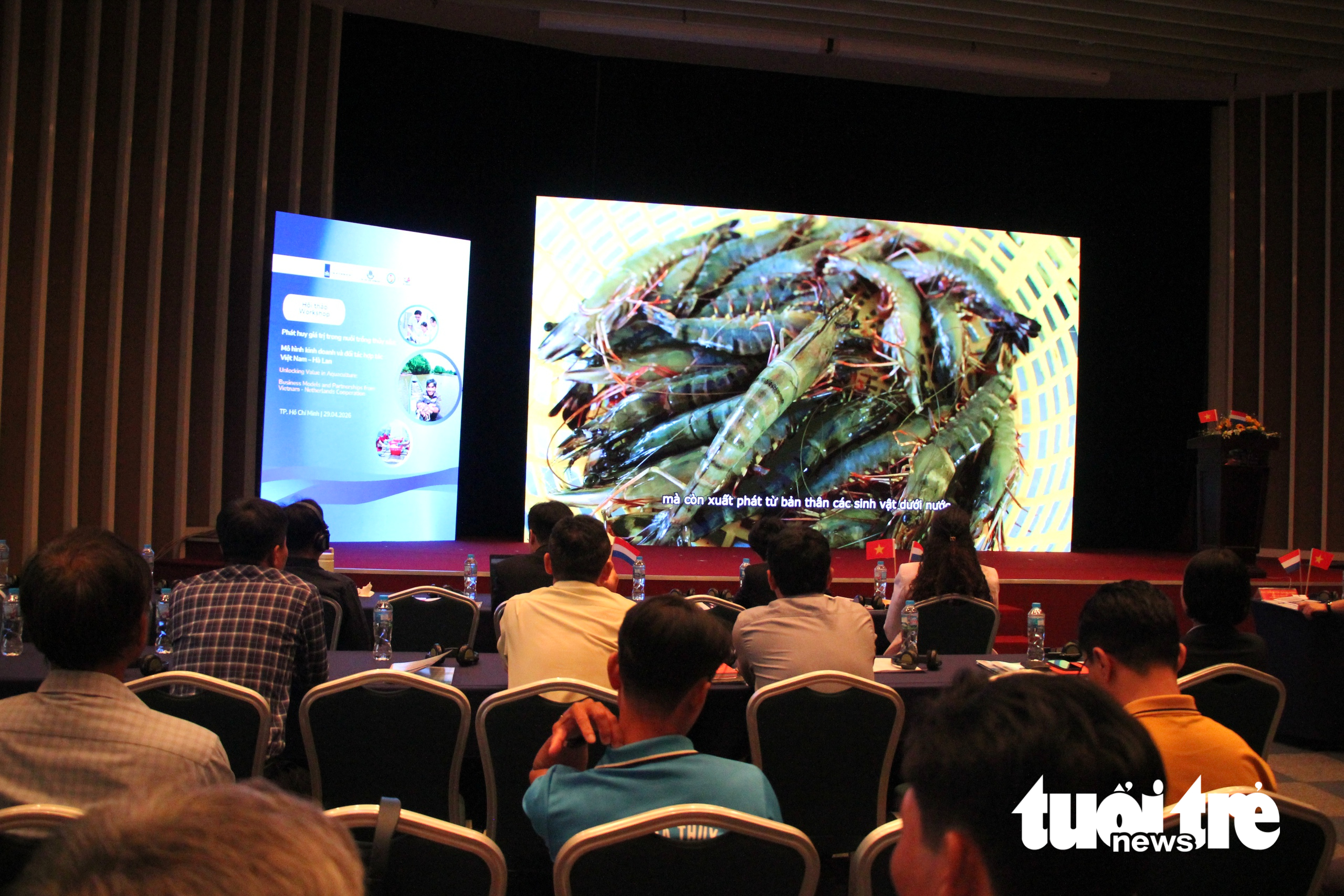
Workshop participants watched a video about the Combi-Track program, a sustainable aquaculture partnership between the Vietnamese and Dutch governments, screened at the workshop 'Unlocking Value in Aquaculture: Business Models and Partnerships from Vietnam–Netherlands Cooperation,' in Ho Chi Minh City on April 29, 2026. Photo: Dong Nguyen / Tuoi Tre News
The Wednesday workshop also featured a panel discussion themed “Vietnam-Netherlands Aquaculture Cooperation in Practice,” which introduced flagship sustainable aquaculture projects in the Mekong Delta under the Combi-Track program, a sustainable aquaculture partnership between the Vietnamese and Dutch governments.
Panelists discussed how innovations are reshaping farm-level practices; shed light on genetics, animal health, and disease prevention as the foundation of productivity and resilience; as well as examined the competitiveness of Vietnam’s aquaculture sector in a changing global market.
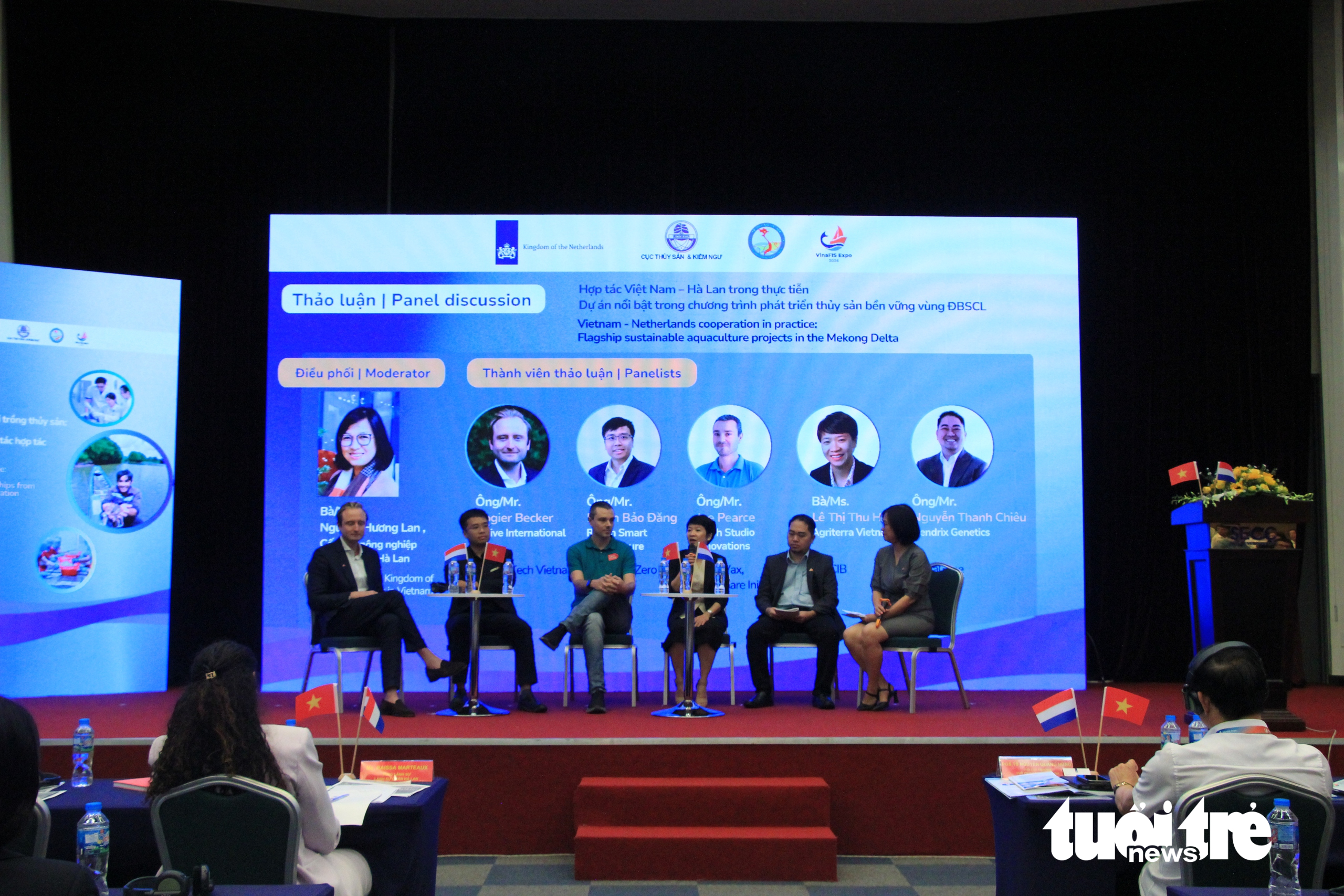
Panelists attend a discussion session at the workshop 'Unlocking Value in Aquaculture: Business Models and Partnerships from Vietnam–Netherlands Cooperation,' in Ho Chi Minh City on April 29, 2026. Photo: Dong Nguyen / Tuoi Tre News
In his closing remarks, Tran Quang Hung, deputy director general of the Directorate of Fisheries and Fisheries Surveillance, outlined several key priorities for the sector in the coming time, including shifting growth toward higher value, lower costs, and sustainability; and strengthening value chain linkages.
He also emphasized adaptation of technology; improving policies to support public-private partnerships and international innovation; and deepening international cooperation toward co-investment, co-development and shared benefits.
“We recognize that the future of Vietnam's aquaculture industry does not lie in producing more, but in producing smarter, more sustainably, and with higher value,” said Hung.
“To achieve this, we need an ecosystem of close cooperation between the state, businesses, scientists, farmers, and international partners,” he stated.
“This is one of the major orientations for the industry in the near future.”
Dong Nguyen / Tuoi Tre News
Link nội dung: https://news.tuoitre.vn/vietnam-netherlands-discuss-unlocking-value-in-aquaculture-toward-sustainability-103260430141636244.htm