
Vietnam proposes exit bans for workers violating laws abroad
A Vietnamese lawmaker has proposed barring workers who violate the law while working overseas from leaving Vietnam again.
Vietnam’s National Assembly discussed amendments to the Law on Vietnamese Workers Going to Work Abroad under Contract on Monday, with lawmakers raising concerns over illegal employment, high recruitment costs and the protection of Vietnamese workers overseas.
National Assembly deputy Tran Dinh Gia of Ha Tinh Province in north-central Vietnam said the province has a large number of residents working abroad, but some leave their authorized jobs after only a few months and take up unauthorized employment.
Such violations have prompted some stricter labor markets to stop accepting workers from certain areas of Ha Tinh and other central Vietnamese provinces, affecting workers who comply with the law.
Gia also raised concerns about recruitment costs.
Although some overseas labor markets charge little or no recruitment fees, Vietnamese workers sometimes have to pay VND300-400 million (US$11,480-15,300), with some cases involving billions of Vietnam dong (VND1 billion = $38,260), he said.
"Where does this money go?" Gia asked, calling for the revised law to address both illegal employment abroad and excessive recruitment costs.
He said a national database of Vietnamese workers overseas, along with data sharing among government agencies, ministries and local authorities, would be important for addressing these problems.
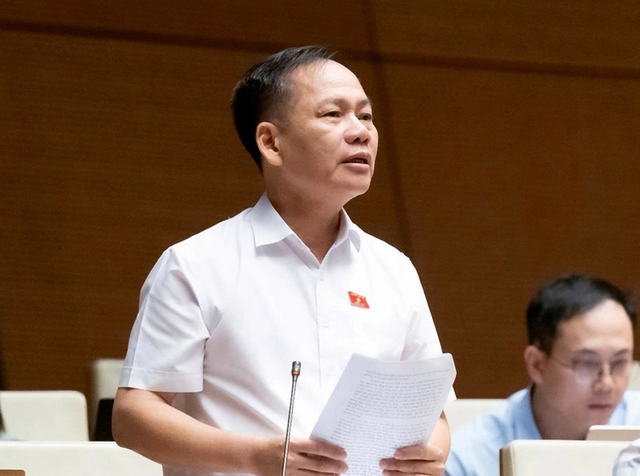
National Assembly deputy Tran Dinh Gia of Ha Tinh Province. Photo: National Assembly Media
Gia also called for tougher measures against workers who violate labor laws in host countries.
He proposed allowing authorities to impose an exit ban on people who violate the law while working abroad, arguing that someone who breaks the law in one country should not simply be allowed to return and leave Vietnam to work in another country.
He said stricter regulations would encourage Vietnamese workers to respect and comply with local laws, improve Vietnam's image overseas and protect those who legitimately seek employment abroad.
Proposal for extradition in serious cases
National Assembly deputy Chu Luong Tri of Quang Ninh Province, northern Vietnam, highlighted serious offenses committed by some Vietnamese workers abroad, including theft, drug-related offenses, gambling, prostitution, and illegal trading and business activities.
Such violations can damage not only the offenders themselves but also the image of Vietnamese people overseas, he said.
He therefore proposed stronger judicial cooperation and compatible legal mechanisms between Vietnam and host countries for handling Vietnamese workers who commit serious offenses.
Offenders should generally be dealt with under the law, and cases falling under the jurisdiction of the host country should be handled there, Tri said.


Where Vietnamese and foreign laws, treaties or bilateral agreements permit, authorities should consider mechanisms for extradition or the transfer and repatriation of offenders to Vietnam for prosecution under Vietnamese jurisdiction, he said.
Tri said some Vietnamese workers are sent abroad as interns even though their actual duties, working hours and responsibilities are no different from those of regular employees.
If their rights and benefits do not match their actual work, the issue should be viewed not only from a legal perspective but also as a matter of citizen protection, Tri said.
He called for clearer responsibilities for government agencies, companies and organizations sending workers abroad, as well as Vietnamese diplomatic missions, for monitoring workers and protecting their legitimate rights and interests.

Vietnam’s Minister of Home Affairs Nguyen Tien Hai. Photo: National Assembly Media
Responding to the lawmakers, Minister of Home Affairs Nguyen Tien Hai said the draft law aims to cut requirements related to the scale of facilities for companies providing overseas labor services by up to 50 percent.
The amendments are intended to make it easier for businesses to operate, reduce unnecessary barriers while maintaining state management and protecting workers' legitimate rights, Hai said.
The draft also introduces a mandatory requirement for companies to appoint representatives overseas.
These representatives would be responsible for providing timely support and dealing with problems faced by Vietnamese workers in host countries, helping prevent situations in which workers are left without assistance after going abroad.
Thanh Ha - Thanh Chung / Tuoi Tre News
Link nội dung: https://news.tuoitre.vn/vietnam-proposes-exit-bans-for-workers-violating-laws-abroad-103260811141205799.htm