
Vietnam to tighten controls on low-cost imported meat nearing expiry
Vietnam will step up controls on imported meat to address concerns over quality, origin and suspicions that discarded or near-expiry products are entering the market at low prices, an official from the Department of Livestock Production and Animal Health has responded.
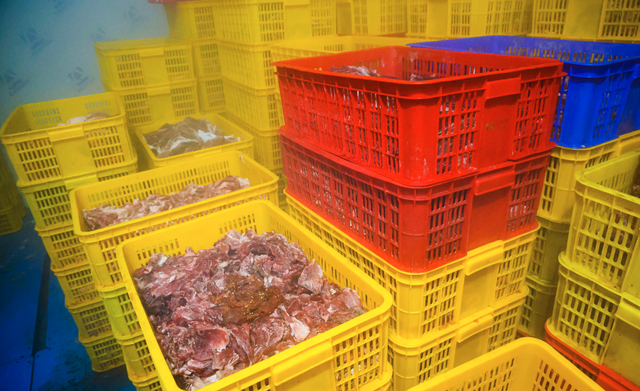
A cold storage facility for buffalo meat imported from India. Photo: A. Chung / Tuoi Tre
Phan Quang Minh, deputy director of the Department of Livestock Production and Animal Health under the Ministry of Agriculture and Environment, spoke to Tuoi Tre (Youth) online newspaper about the inspection procedures for imported meat and measures planned to strengthen oversight.
How does Vietnam ensure the quality and safety of imported meat? Can current inspections rule out meat containing chemical residues, disease agents or harmful bacteria, given concerns that imported buffalo, chicken and pork may be close to or past their expiry dates or consist of discarded products?
Phan Quang Minh, deputy director of the Department of Livestock Production and Animal Health under the Ministry of Agriculture and Environment: Meat products must first come from establishments registered with the competent authorities of the exporting countries and included on the list of establishments approved to export meat to Vietnam under current regulations.
These establishments apply quality management systems such as Hazard Analysis and Critical Control Points (HACCP), ISO 22000, International Featured Standards (IFS) and British Retail Consortium (BRC) standards.
The competent authorities in exporting countries inspect and supervise products destined for Vietnam.
Each shipment must be accompanied by an export veterinary health certificate issued by the competent authority of the exporting country.
Upon arrival in Vietnam, meat shipments undergo document checks and visual inspections.
Samples are also collected from each shipment for testing against prescribed criteria.
Only shipments that meet the requirements are allowed to enter the country.
As such, meat products exported to Vietnam must be subject to control procedures from the exporting country through to their arrival in Vietnam to ensure animal health and food safety.
Have inspections uncovered imported meat shipments that failed to meet requirements and had to be returned or destroyed?
During import quarantine inspections, border animal quarantine authorities have detected shipments that did not meet requirements.
Depending on the severity of the violations, administrative penalties are imposed in accordance with regulations.
More imported meat is being used as an ingredient in products such as sausages, processed foods and industrial catering meals. Consumers are concerned about a lack of transparent information to help them make informed choices. What measures are being taken to improve transparency and prevent imported products from being advertised as local specialties, as in the Hai Sapa case?
Within the department's management remit, we are strengthening controls over imported meat and stepping up the detection and strict handling of violations involving imported shipments.
We have also recommended that domestic market surveillance forces intensify inspections and monitoring of food production, distribution and advertising.
Food producers must fully comply with regulations, including product quality declarations and labeling requirements, and provide accurate information about their products.
Consumers must have access to reliable product information.
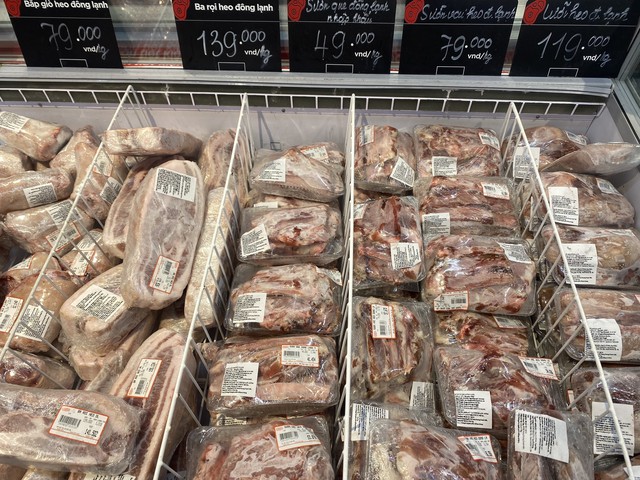
Imported frozen pork and chicken on sale at a supermarket in Phu Tho in 2025. Photo: C. Tue / Tuoi Tre
As the government calls for a review and tighter control of imports, what measures will help ensure animal health and food safety while preventing substandard imported meat from gaining an unfair advantage over domestic livestock products?
Vietnam is deeply integrated into the global economy and has signed numerous free trade agreements with trading partners.
As a result, imports of meat and meat products from other countries are inevitable.
To tighten controls over imported meat and meat products, the department will advise the Ministry of Agriculture and Environment on reviewing and amending quarantine and import control regulations.
The aim is to streamline administrative procedures while retaining technical measures to control quality and ensure animal health and food safety.
The department will review all import risk assessment procedures as a basis for veterinary consultations and reaching agreements with exporting countries, with particular attention to product quality, animal health, food safety and traceability.
It will regularly review testing procedures to ensure they meet standards and produce accurate results for quarantine purposes.
Inspections will also be strengthened, with violations of import quarantine regulations subject to enforcement.
The department will also focus on improving the professional knowledge and expertise of animal quarantine officers and enhancing laboratory testing capacity to ensure more effective inspections and controls of imported meat.
In August, police in Lao Cai Province, northern Vietnam prosecuted and detained Vu Hoang Hai, known as Hai Sapa TV, and two others for allegedly deceiving customers and violating accounting regulations.
According to police officers, Hai used his social media influence to direct his wife to distribute dried buffalo meat made from frozen buffalo meat imported from India, which was allegedly marketed as a specialty from northwestern Vietnam popular with foreign tourists.
The popularity of imported buffalo meat has drawn renewed attention following the case, raising questions over why imported meats are so cheap and how they are being used in Vietnam.
The Ky - Chi Tue / Tuoi Tre News
Link nội dung: https://news.tuoitre.vn/vietnam-to-tighten-controls-on-low-cost-imported-meat-nearing-expiry-103261010085435681.htm