
Vietnamese exporters should prepare for stricter EU pesticide residue rules: insider
Vietnamese farmers and agricultural exporters need to prepare for stricter EU food-safety requirements as the bloc moves to lower maximum residue limits for a range of pesticides.
Ngo Xuan Nam, deputy director of the Vietnam Sanitary and Phytosanitary Notification Authority and Enquiry Point (Vietnam SPS Office), under the Ministry of Agriculture and Environment, urged farmers and businesses to proactively adapt to the EU’s increasingly stringent standards when exporting agricultural products and fruits to the market.
Vietnamese agricultural and food products shipped to the EU, including rice, coffee, most fresh fruits, seafood and processed foods, have generally complied well with the bloc’s sanitary and phytosanitary (SPS) requirements since the beginning of 2026, Nam said.
However, some isolated violations have occurred because businesses did not fully understand EU regulations.
For example, some mixed products such as dumplings and ravioli have been found to contain undeclared allergens, particularly eggs.
Under EU rules, eggs used in such products must come from establishments approved by the EU. As Vietnam currently has no such approved establishments, businesses seeking to use eggs in products such as dumplings must source them from countries with EU-approved establishments. Otherwise, the products could be recalled or destroyed.
The EU assesses risks by product category rather than solely by individual businesses. A violation by just one company can result in more frequent border inspections for the entire product category, slowing customs clearance, increasing testing costs and affecting the reputation of Vietnamese agricultural products.
Individual companies also face strict measures when shipments violate EU requirements, including destruction at the border or recalls from the market, potentially causing significant financial and handling costs.
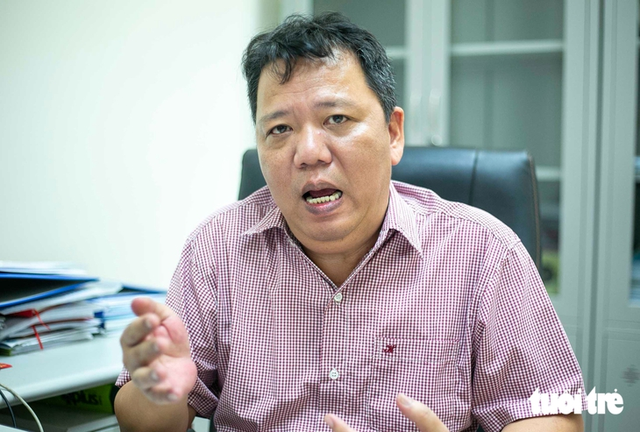
Ngo Xuan Nam, deputy director of the Vietnam Sanitary and Phytosanitary Notification Authority and Enquiry Point under the Ministry of Agriculture and Environment. Photo: C. Tue / Tuoi Tre
The EU currently maintains enhanced controls on four Vietnamese products: durian, dragon fruit, chili and okra.
Under EU regulations, border checks are conducted on 20 percent of Vietnamese durian shipments, 30 percent of dragon fruit shipments and 50 percent of chili and okra shipments. Dragon fruit, chili and okra shipments must also be accompanied by certificates.
The EU reviews border inspection frequencies every six months. If violation rates remain low, inspection frequencies can be reduced.
At a meeting with the European Commission’s Directorate-General for Health and Food Safety in June, Vietnam’s SPS Office proposed that the EU consider reducing inspection rates for dragon fruit, citing only one violation in the first half of 2026, fewer than in previous periods.
The EU has also added new plant-quarantine pests to its controls, including fruit borers. Some of these pests have been detected on citrus trees such as pomelos, oranges and mandarins in the Mekong Delta.
Local authorities and businesses need to update their monitoring and control measures in growing areas accordingly, Nam said.
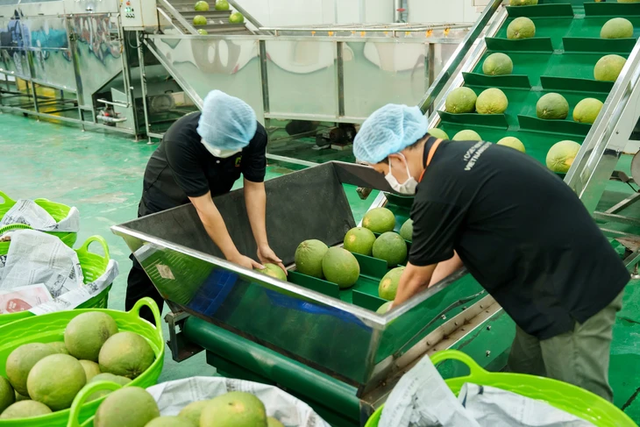
Vietnamese workers clean and prepare pomelos for export. Photo: Chanh Thu / Tuoi Tre
New rules could affect many Vietnamese agricultural exports
The EU issued 74 notifications on changes to SPS measures in the first half of 2026, up nearly 14 percent from the same period last year, mainly concerning maximum residue limits for pesticides, food additives and plant quarantine.
The bloc is continuing to lower maximum residue limits for various pesticide active substances.
Under new EU regulation, notified on August 4, the maximum residue limits for benomyl, carbendazim and thiophanate-methyl will be reduced to 0.01 mg/kg for most agricultural products. Tea, spices, coffee and some other products will be subject to a limit of 0.05 mg/kg.
The maximum residue limits for several fruits and vegetables, including pomelos, oranges, mangoes, papayas and okra, are also being significantly reduced. The new rules are expected to take effect in January 2027.
Farmers, agricultural producers and exporters therefore need to prepare now to comply with the new requirements, Nam said, following the principle of using the right pesticide at the right time, in the right dosage and with the right application method.
The EU is also expanding controls on contaminants that may arise during production and processing or from the environment, while tightening requirements for food additives and food-contact materials.
The bloc is increasingly moving from simply raising standards to managing risks throughout the entire production chain.
Because the new rules will directly affect many Vietnamese agricultural products exported to the EU, businesses need to monitor regulatory changes regularly rather than waiting until they take effect.
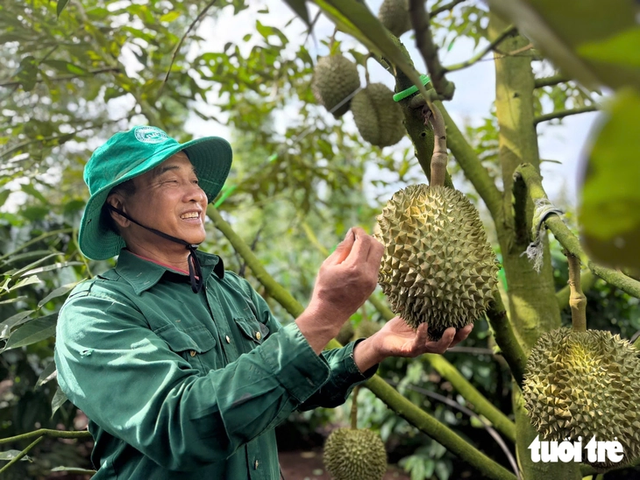
A durian farmer in Dak Lak Province, Vietnam’s Central Highlands region. Photo: Minh Phuong / Tuoi Tre
Businesses urged to shift from compliance to proactive adaptation
Farmers and producers need to closely control growing areas, farming inputs and raw materials and use pesticides in accordance with regulations. They should also avoid using substances subject to the strictest restrictions, Nam said.
Businesses must also observe pre-harvest intervals and maintain proper hygiene during harvesting, preliminary processing and storage to minimize pesticide residues and microbial contamination.
For processors and exporters, Nam urged a shift from simply meeting requirements when required to proactively adapting to the EU’s stringent standards.
This means managing quality from raw-material production areas and closely monitoring pesticide use through processing, labeling and traceability.
Businesses should not falsify labels, particularly information on irradiation and allergens. For vegan products, they should put measures in place to prevent cross-contamination with animal DNA during production.

On August 3, the Government Office sent an official document to ministries and localities conveying Deputy Prime Minister Ho Quoc Dung’s instructions on food-safety management for plant-based agricultural products exported to the EU.
The deputy prime minister asked the Ministry of Agriculture and Environment to implement effective food-safety controls for plant-based agricultural exports to ensure compliance with import-market requirements and protect the reputation of Vietnamese agricultural products.
The ministry was also instructed to proactively work with EU authorities on technical negotiations and provide sufficient technical evidence to seek reduced inspection frequencies for products that have demonstrated good compliance with EU requirements.
It was also asked to clearly define the responsibilities of relevant agencies in ensuring the food safety of Vietnamese agricultural exports to the EU.
Thanh Ha - Chi Tue / Tuoi Tre News
Link nội dung: https://news.tuoitre.vn/vietnamese-exporters-should-prepare-for-stricter-eu-pesticide-residue-rules-insider-103260815144120695.htm