
Vietnam’s Mekong Delta residents hunt rice field rats during harvest season
As the rice harvest nears its end in Vietnam’s Mekong Delta, residents are heading into the fields to catch rice field rats, which are at their fattest after feeding on ripening rice.
During the floating season, residents in upstream Dong Thap Province can earn extra income by catching and selling rice field rats.
Besides digging out their burrows and setting traps, one of the more interesting methods is using nets to catch rats hiding in bushes on higher ground.
Nguyen Thanh Tung, a resident of Thuong Phuoc Commune, Dong Thap Province, said floodwaters cover much of the fields during the floating season, forcing rats to seek shelter in bushes on higher ground.
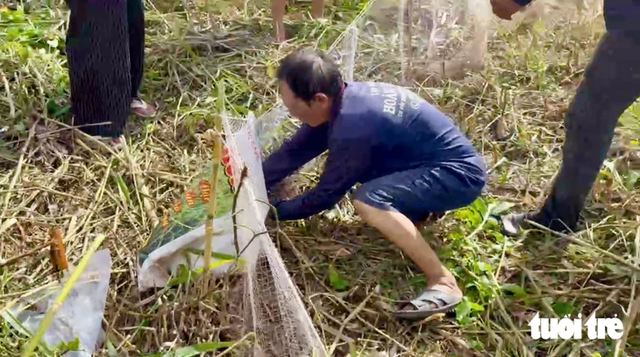
Rats run out of the bushes and become caught in a net. Photo: Dang Tuyet / Tuoi Tre
Hunters first surround the bushes with nets before cutting back and clearing the vegetation. Startled by the disturbance, the rats run out and become caught in the nets.
“Before catching rats, we row boats around the fields the night before to scout for suitable spots. When we shine lights into the bushes, we can see the rats running in groups,” Tung said.
The next morning, a group of five to seven neighbors heads out to catch them. On some days, they catch more than 30kg, selling the rats to traders for VND70,000-100,000 (US$2.7-3.8) per kilogram and earning about VND300,000 ($11.6) each per day, he said.
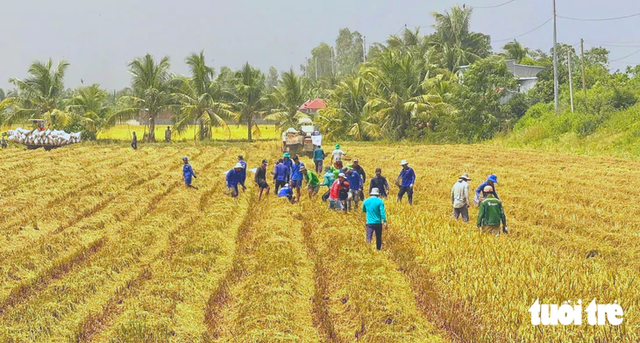
Farmers harvest rice as others catch rats in the fields. Photo: Dang Tuyet / Tuoi Tre
At the same time, farmers in a 2,600-hectare enclosed flood-control area in Thuong Phuoc Commune are harvesting their early autumn-winter rice crop before the arrival of the annual floating season.
As farmers harvest the ripe rice, others take the opportunity to catch rats, creating a lively scene across the fields.
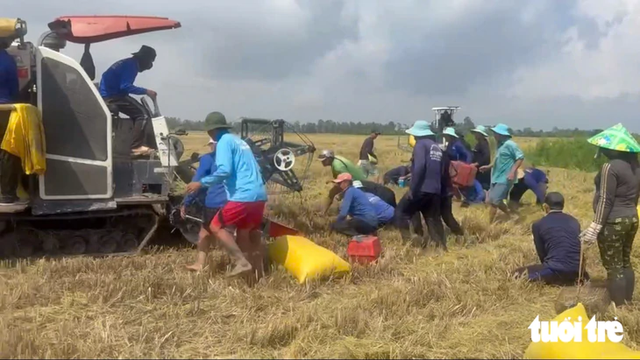
Residents catch rats in a lively scene in the rice fields. Photo: Dang Tuyet / Tuoi Tre
Nguyen Minh Duong, another resident of Thuong Phuoc Commune, said floodwater has been drained from the fields in the area, while rice remains in the enclosed area in Thuong Thoi Hamlet, attracting large numbers of rats.
As farmers harvest their crops, local residents often form groups to catch rats for extra income.
One method is to surround the area around a combine harvester with nets. As the machine cuts the rice, startled rats rush out, allowing the hunters to catch them. They can bring home dozens of kilograms in a day.
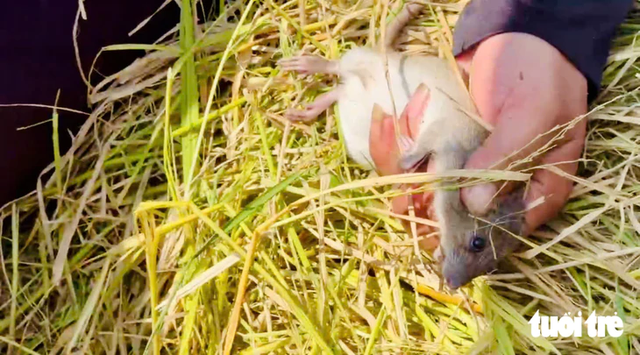
Rice field rats are plump after feeding on rice at this time of year. Photo: Dang Tuyet / Tuoi Tre
“Yesterday, I caught 22kg with some friends. We shared one or two kilograms with our neighbors and sold the rest. This is when the rats are at their best because they have been feeding on rice,” Duong said.
“If we cannot eat them all, we sell them to earn some extra income. Yesterday alone, I made VND800,000 [$30.8] from selling them,” he added.
Residents also set traps along dikes surrounding flooded fields. Traders are currently paying more than VND100,000 ($3.8) per kilogram for rice field rats, providing farmers with an additional income.
Many farmers say catching rats also helps protect the next crop after the annual floods recede.
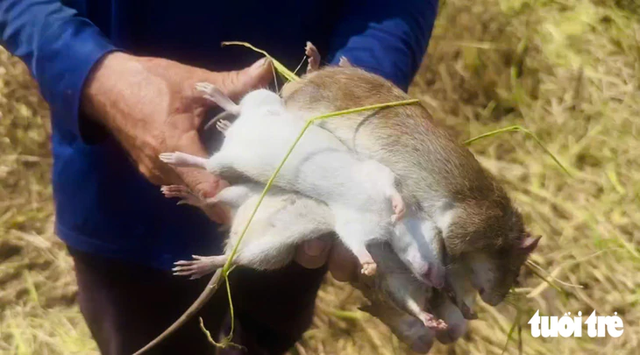
Rice field rats are a specialty of the Mekong Delta. Photo: Dang Tuyet / Tuoi Tre
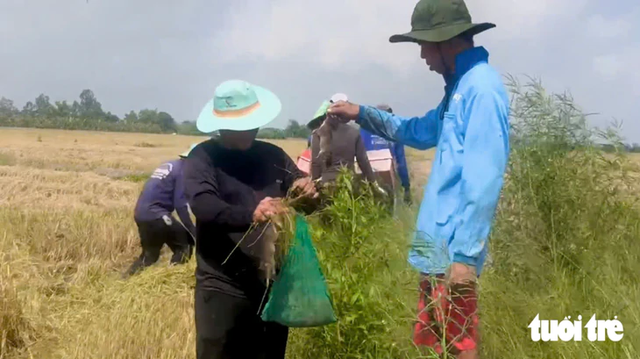
Residents put the rats they catch into mesh bags or cages. Photo: Dang Tuyet / Tuoi Tre
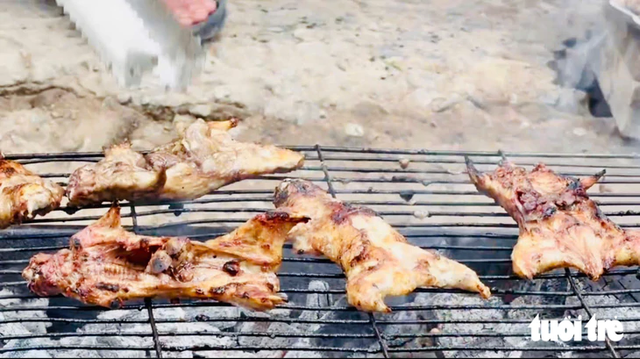
Grilled rice field rats. Photo: Dang Tuyet / Tuoi Tre
Thanh Ha - Dang Tuyet / Tuoi Tre News
Link nội dung: https://news.tuoitre.vn/vietnams-mekong-delta-residents-hunt-rice-field-rats-during-harvest-season-103261001140832576.htm