
What should int’l travelers do if they are denied entry to Vietnam?
A U.S. passenger’s lawsuit against Asiana Airlines seeking US$100 million after she was denied entry to Vietnam for not having a visa has highlighted a question many international travelers may overlook: who is responsible for checking entry requirements, and what should passengers do when something goes wrong?
Dr. Nguyen Thi Hai Hang, former director of the Vietnam Aviation Academy and head of the Trainair Plus-ICAO program, explained the issue in an interview with Tuoi Tre (Youth) online newspaper.
Who is responsible for checking visas?
Under international aviation rules and industry standards set by the International Civil Aviation Organization (ICAO) and the International Air Transport Association, airlines must check a passenger’s nationality, passport, visa and transit itinerary when processing passengers for international flights.
However, these checks are intended to determine whether an airline can accept a passenger for carriage. The final decision on whether that passenger is allowed to enter a country rests with the destination country’s immigration authorities.
Being allowed to board a flight does not guarantee entry. An airline’s document checks do not replace border control at the destination.
Passengers are responsible for ensuring that they have all valid personal travel documents.
Airlines, meanwhile, are responsible for properly checking whether passengers meet the documentation requirements before accepting them for carriage. The final decision on entry remains with immigration authorities.

Dr. Nguyen Thi Hai Hang, former director of the Vietnam Aviation Academy and head of the Trainair Plus-ICAO program. Photo: Supplied
The recent case involving a U.S. passenger who was denied entry to Vietnam for not having the required visa, and who is suing the airline for having accepted her for the flight, is unusual but could happen again, Hang said.
The incident likely points to a gap in the travel-document verification process, Hang said.
Several scenarios could lead to such a gap.
An airline employee could incorrectly determine a passenger’s entry eligibility, such as mistakenly believing that a particular nationality is exempt from Vietnam’s visa requirements, misunderstanding the duration or scope of a visa exemption, or confusing different types of travel documents.
Errors could also occur when employees enter passenger information into the check-in system, such as nationality, passport type, final destination or residency status. Incorrect input can lead to incorrect results from automated checks.
In some cases, a system may issue a warning that is then manually overridden or an exception may be handled without proper authorization.
Another possibility is that a passenger is checked through at a transit airport, particularly on an interline or codeshare journey, resulting in gaps between the responsibilities of the operating airline and ground-handling staff.
Online check-in could also create problems if travel documents are not properly checked in person at the check-in counter or boarding gate.
“If all procedures are strictly followed, airline staff should in principle identify the problem and prevent the passenger from boarding the flight,” Hang said.
Can passengers sue an airline?
In principle, passengers can file a complaint or lawsuit against an airline if they can show that the carrier was negligent or made an error during the document-checking process and that the error caused them harm.
However, an airline’s decision to accept a passenger for carriage does not, by itself, establish liability for compensation.
If the passenger was required to have a visa but did not obtain one, the passenger’s own fault could reduce or even eliminate the airline’s liability for damages.
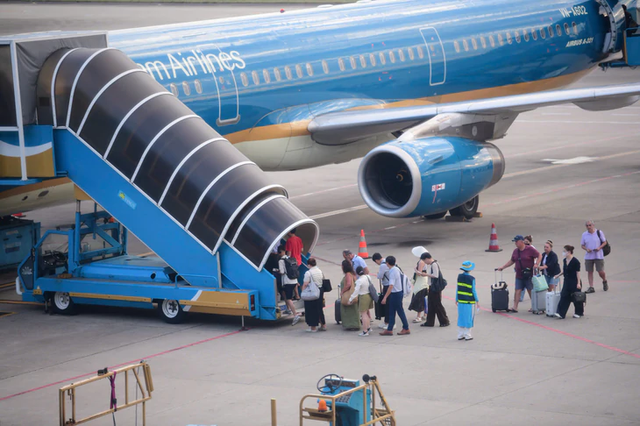
Passengers should proactively prepare all required travel documents before departure. Photo: Quang Dinh / Tuoi Tre
For each individual case, the entire check-in process would need to be traced, including the check-in systems at the departure and transit airports, the travel documents presented by the passenger, communications with check-in staff and the airline’s conditions of carriage.
Only after reviewing these details can the relevant authorities determine which party bears responsibility and to what extent.
What should foreign travelers do if they are denied entry?
The best way to avoid being denied entry for missing or invalid documents is to understand the destination country’s immigration requirements before traveling.
Passengers should not simply wait until check-in and expect the airline to verify everything for them. Entry and transit requirements vary from country to country and can change frequently.

Travelers should therefore check more than whether they have a visa.
They should make sure the visa is issued to the correct person, linked to the correct passport, valid for the intended dates, allows the required number of entries and covers the entire itinerary, including any transit points.
If a visa has expired or contains incorrect information, travelers should not go to the airport hoping that airline staff will find a way to let them board. Instead, they should immediately contact the visa-issuing authority and the airline to resolve the problem before departure.
If travelers have already arrived in a country and are denied entry, they should cooperate with local immigration authorities, ask for clarification and, where possible, request a written explanation of the refusal.
They should also contact the airline to arrange their return journey and, if necessary, seek assistance from the Vietnamese diplomatic mission in the country concerned.
Most importantly, travelers should keep all relevant documents, boarding passes, communications with airline representatives and receipts for additional expenses.
These records can be crucial if travelers later need to file a complaint or establish responsibility among the passenger, the airline and other parties involved.
Thanh Ha - Nghi Vu / Tuoi Tre News
Link nội dung: https://news.tuoitre.vn/what-should-intl-travelers-do-if-they-are-denied-entry-to-vietnam-103260829143641741.htm