
When AI cameras reshape public conduct in Vietnam
Arriving in Hanoi last week, I noticed something quietly striking as lines of vehicles waited neatly behind stop lines.
There were no impatient horns, no jockeying for position, no familiar rush to ‘steal a second’ at the lights.
At a crowded intersection during rush hour, the orderliness made me look up at the traffic pole.
There was an AI-powered camera.
When the watchful eye of the law is clearly present, people behave more civilly, not only out of fear of fines, but because something more positive begins to take shape.
We often speak at length about public awareness and civic consciousness.
Yet awareness does not arise naturally from slogans or appeals alone.
It must be nurtured by the environment, standards, and signals strong enough to remind us that individual behavior always affects the collective.
AI cameras are not merely tools for punishment, but they also function as mirrors placed in the middle of the street.
The AI camera system can detect drivers running a red light, stopping beyond the line, reflecting no favoritism and no leniency.
When technology is applied to traffic management, the most meaningful outcome is not a spike in penalties, but the emergence of new habits.
When motorbikes stop riding on sidewalks, pedestrians walk with less anxiety.
Intersections flow more smoothly as conflicts diminish.
There may be encouraging declines in accident statistics, but the sense of safety on the road seems to be more important.
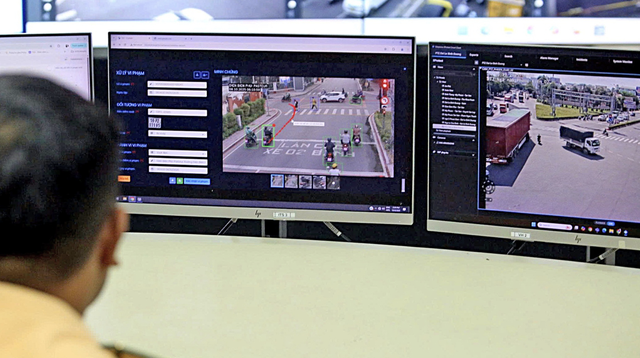
Traffic police monitor AI camera feeds at the Urban Traffic Operation and Management Center in Ho Chi Minh City. Photo: Minh Hoa / Tuoi Tre
Some violations still occur, but they only underscore the system’s value, exposing the gap between aspiration and practice, and between standards and habits.
Once that gap is visible, adjustment becomes possible.
Effective social governance cannot rely solely on perfect self-discipline.
In every society, laws exist because human beings are imperfect.
When awareness alone is insufficient to protect the common good, supervision becomes necessary to safeguard it.
If the supervision is transparent and consistent, it gradually gives rise to awareness.
The face of a society – its culture and civic character – is shaped by countless small behavioral adjustments.
In this sense, the camera resembles a hall monitor in a very large school: society itself.
What makes AI cameras noteworthy is their fairness.
When enforcement is applied evenly, social trust has room to grow.
Law-abiding citizens no longer feel alone, while those accustomed to breaking rules learn that violations are still recorded.
Of course, AI cameras must be accompanied by clear regulations on privacy, data storage and use, and mechanisms for appeal and correction.
Only then will citizens feel that technology serves them, rather than controls them.
When children see orderliness at intersections, and witness vehicles stopping at the line, civic consciousness forms more naturally than through any lecture.
A civilized city is not measured by the number of cameras it installs, but by how people behave when the cameras are no longer there.
When the law is present clearly and fairly, people are willing to cooperate.
This is what I witnessed in Hanoi.
We do not lack good people; we lack structures good enough for goodness to flourish.
Used properly, AI cameras can be one such structure – a small but necessary step from ‘aspiring to civility’ to ‘practicing civility.’
AI in governance is not meant to watch forever.
In time, it should step back as norms solidify into habits.
When that moment comes, cameras can shift from punishment to intelligent coordination: optimizing traffic lights, easing congestion, giving priority to ambulances, and protecting pedestrians.
The Hanoi Smart Traffic Control Center officially began operations on December 13, marking the start of large-scale electronic traffic enforcement across the city.
The center serves as the command hub for 1,837 cameras of various types, all directly connected to traffic signal controllers and integrated with AI.
The automated control system is built on a comprehensive traffic flow database and adapts in real time using camera data from 195 signalized intersections, out of a total of 564 traffic light junctions transferred from the municipal Department of Construction in early October.
In addition, pan-tilt-zoom cameras capable of panning, tilting, and zooming expand monitoring coverage to support security and public order operations.
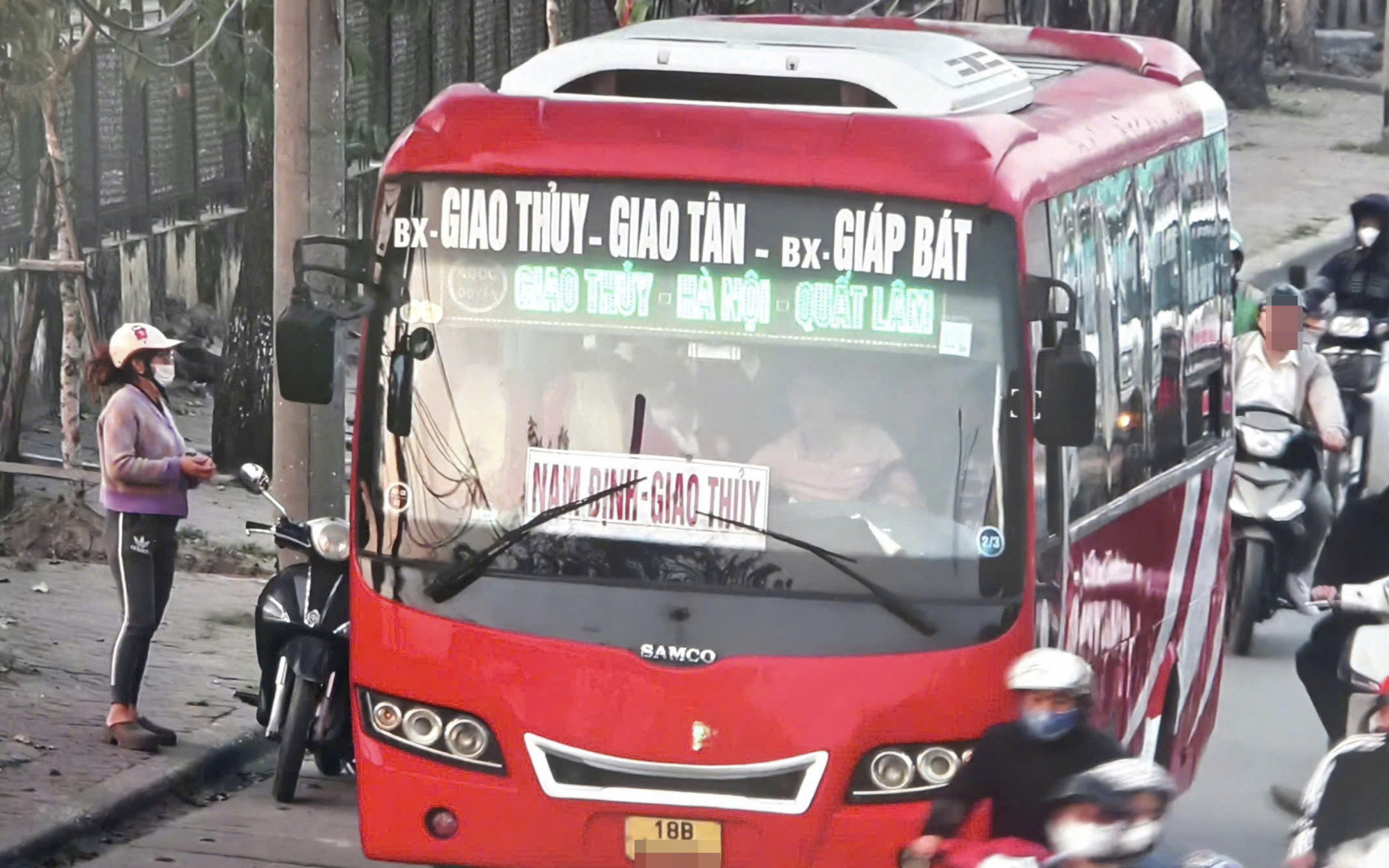
The city’s AI-integrated traffic surveillance camera system detected 1,020 traffic violations after one week of its full-scale operation in mid-December.
* This article was originally written in Vietnamese by environmental engineer Nguyen Ba Hoi and translated by Tuoi Tre News.
Tuoi Tre News
Link nội dung: https://news.tuoitre.vn/when-ai-cameras-reshape-public-conduct-in-vietnam-103251224143233346.htm