
Work starts on Vietnam’s largest brackish water treatment plant
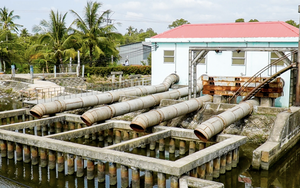
Can Tho City has broken ground on Vietnam’s largest saline water treatment facility, which will use modern technology to turn saline water into clean water, with a designed capacity of 29,500 cubic meters per day.
The project is slated for completion in April 2027.
The People’s Committee of Tan Thanh Commune, in coordination with Cuu Long Capital Infrastructure Investment and Development JSC, on Sunday held a groundbreaking ceremony for the Chau Khanh Water Plant project.
The plant will be built on an area of more than 10,000 square meters.
Under the investment policy approved by the Can Tho People’s Committee, the facility will treat saline water into clean water for supply to Soc Trang Water Supply JSC.
The project is projected to carry a price tag of some VND420 billion (US$16 million).
A representative from Soc Trang Water Supply JSC said the project is expected to strengthen the water supply for daily life and production to residents in Tan Thanh Commune, Soc Trang Ward, Phu Loi Ward, and surrounding areas.
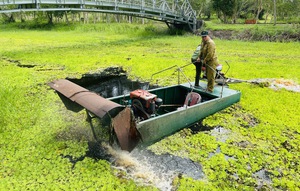
Saltwater intrusion in the Mekong Delta city has become increasingly severe during the dry season, at times arriving earlier and lasting longer, posing challenges to agricultural production and domestic water supplies.
Saline intrusion could penetrate deep into Mekong Delta
El Nino is one of the large-scale factors expected to influence hydrometeorological conditions in Vietnam in the second half of 2026 and early 2027, according to the Meteorological and Hydrological Administration under the Ministry of Agriculture and Environment.
The prevailing trends are higher-than-average temperatures, uneven rainfall with seasonal deficits, declining flows in many river basins, and an increased risk of drought, water shortages and, particularly, saltwater intrusion, according to the Vietnam News Agency.
Phung Tien Dung, head of the Hydrological Forecasting Department under the National Center for Hydro-Meteorological Forecasting, said the risk of saltwater intrusion in the Mekong Delta is expected to increase due to a combination of declining flows from the upper Mekong River, high tides, and water demand during the dry season.
The delta is expected to be among the areas most clearly affected in the coming period, particularly as the 2026-27 dry season coincides with high water demand for domestic use, agricultural production, fruit cultivation, and aquaculture.
According to forecasts, from January 2027, areas with salinity levels exceeding four grams per liter could extend to locations about 25-30 kilometers inland from the coast.
From February to April next year, during periods of high tides, the four-gram-per-liter salinity boundary could penetrate farther inland, with the extent varying by river mouth and river system.
Tieu Bac - Khac Tam / Tuoi Tre News
Link nội dung: https://news.tuoitre.vn/work-starts-on-vietnams-largest-brackish-water-treatment-plant-103260809142921983.htm