


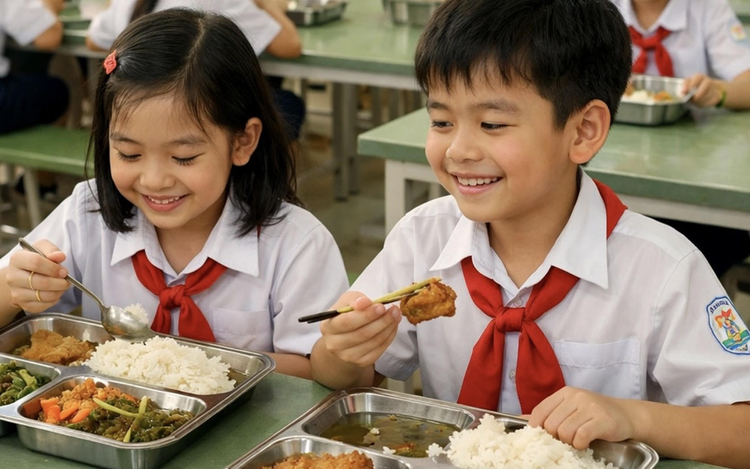
Meals at several schools in Ho Chi Minh City linked to Sago Food have now been suspended due to concerns over unsafe food. Photo: AI
Many readers of Tuoi Tre (Youth) newspaper have voiced concern about meals at semi-boarding schools and are calling on authorities to take tougher action against violations related to unsafe food.
An Phuoc Thang SG Trading Co Ltd, known as Sago Food, which supplies about 10,000 meals daily to kindergarten, elementary and lower secondary students in Ho Chi Minh City, has come under scrutiny over suspected use of unsafe food products.
Following recent remarks by the director of the municipal department that responsibility in the Sago Food case lies with many parties, many readers have questioned where the department’s own responsibility stands.
Public opinion reflects unease that the issue of food safety, especially for schoolchildren, may be slipping through gaps in oversight.
Reader Lam argued that if responsibility truly belongs to multiple parties, then the department itself must clearly define and accept its share of that responsibility.
Another reader placed primary accountability on the department’s leadership.
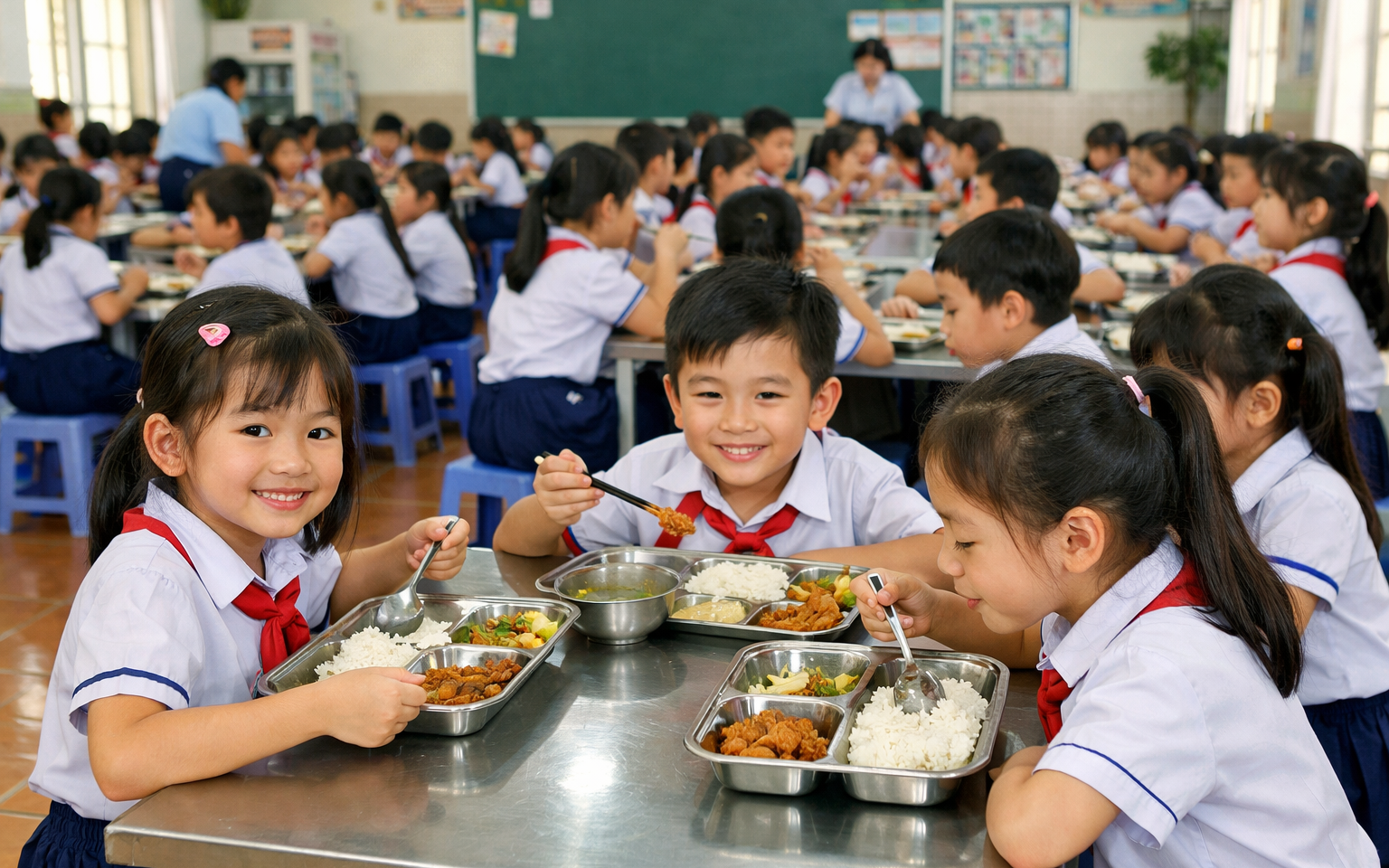
Schools lack the capacity to adequately supervise food safety on their own, and oversight should fall squarely on state regulators.
“When food safety dossiers are properly completed, violations often happen later during operations. That is a failure of supervision,” the reader stressed.
Reader Hoang Quynh Quy emphasized that while food safety may involve many stakeholders, there must be one entity that bears primary responsibility when incidents occur.
“Why is it that so many cases of unsafe food are uncovered by the police? Where are the specialized agencies that are supposed to be in charge?” the reader asked.
Another reader Nhat noted that Ho Chi Minh City is the only locality in the country with a dedicated Food Safety Department, asking whether food in the city is safer than in provinces without such a department.
Calls for accountability in bidding and school leadership
From a different perspective, reader Hoang Xich Lo said that a single department cannot possibly supervise every school kitchen.
Responsibility for food safety should rest primarily with school management boards.
Some readers chose not to debate primary versus secondary responsibility, instead urging strict punishment for all individuals found accountable, stressing that failures in food safety threaten the health of a generation of students.
Reader Lao Dai echoed this opinion, calling for comprehensive inspections and a thorough review of bidding processes, as well as clear accountability for school principals.
“Imposing heavy penalties on violators is a need,” the reader wrote.
Others pointed out the practical challenges facing the Food Safety Department.
With more than 3,500 schools under its purview, comprehensive inspection and supervision are no simple tasks.
These readers argued that, alongside coordination with the education sector, responsibility should first be assigned to school principals in cases involving unsafe food or food poisoning.
“The department’s manpower is limited.
“How can it inspect more than 3,000 kitchens in a single day, while the city has countless other areas requiring oversight?”
“Does the school itself bear no responsibility at all?,” one reader asked.
On January 28, following the publication of an investigative report at Sago Food’s facility that documented meat products past their expiration dates still being processed for use, multiple schools in Ho Chi Minh City announced the suspension of semi-boarding meal services starting the next day, according to notices issued by the schools.
A day later, the Department of Education and Training requested schools to coordinate with the Food Safety Department and other relevant agencies to carry out thorough, on-site inspections and strengthen monitoring of school meal providers.
For schools using products supplied by Sago Food, the municipal Department of Education and Training ordered the immediate suspension of services provided by the supplier, including industrial and pre-prepared meals that have drawn complaints from parents, the media or other information channels.








Max: 1500 characters
There are no comments yet. Be the first to comment.