


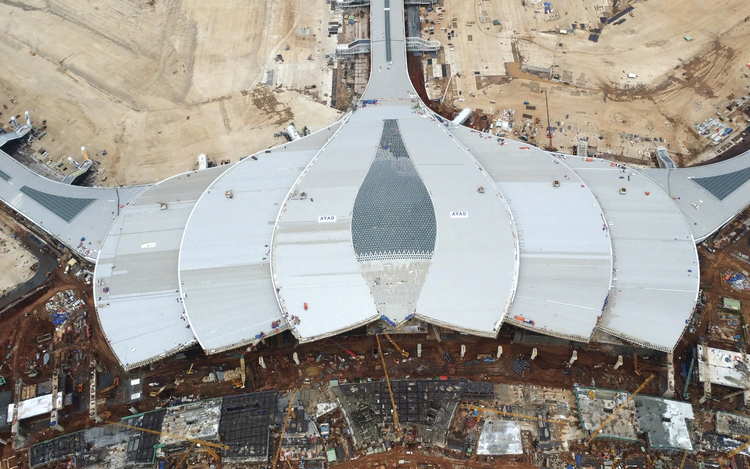
The lotus-shaped passenger terminal of Long Thanh International Airport in Dong Nai Province, southern Vietnam is ready to welcome its first flight. Photo: A Loc / Tuoi Tre
Beyond enhancing regional connectivity, the mammoth airport is poised to become a powerful magnet for business investment, job creation, and socio-economic growth for both residents and enterprises.
Nguyen Kim Long, standing vice-chairman of the provincial People’s Committee, told Tuoi Tre (Youth) newspaper that the Long Thanh International Airport project is a nationally key undertaking and ranks among the world’s 16 most anticipated airport developments.
“It is not merely a modern airport, but also a strategic lever, a breakthrough source of momentum, and a symbol of Dong Nai Province’s international integration in a new phase of development,” Long said.
As planned, technical test flights from Tan Son Nhat International Airport in Ho Chi Minh City to Long Thanh and back takes place on Monday afternoon, with a flight time of about 40 minutes.
On Friday, another special flight will depart from Noi Bai International Airport in Hanoi and land at Long Thanh.
Key measures to attract investment to Long Thanh
Long revealed that the province is implementing a comprehensive strategy to ensure that investment attraction goes hand in hand with sustainable growth.
Dong Nai Province aims to build a robust platform that allows enterprises to thrive and scale up.
Accordingly, the province is rolling out three key pillars simultaneously, including developing satellite cities, establishing large-scale service and logistics hubs, and creating a highly competitive, investor-friendly ecosystem capable of attracting both domestic and international capital.
Besides, Dong Nai is accelerating foundational projects for an aviation-logistics ecosystem in line with the master plan for satellite urban development around Long Thanh International Airport.
These include an airport city, aviation industrial zones, a free trade zone, and airline operation centers.
Notably, the province is studying to develop a free trade zone associated with Long Thanh on an area of more than 8,500 hectares, he shared.
The zone would integrate four functional areas: manufacturing, logistics, finance–trade–services, and research, innovation, and the digital economy, he elaborated.
“Total investment is estimated at no less than US$16 billion,” he said.
Architect Ngo Viet Nam Son believes Dong Nai holds a unique advantage with the country’s largest airport, which also ranks among the biggest in Asia.
He noted that the future free trade zone would be closely linked to the airport and Phuoc An Port, while also leveraging cooperation with Ho Chi Minh City to connect with the Thi Vai - Cai Mep - Can Gio port cluster for logistics development.
According to Son, once in place, the free trade zone will help complete a multimodal infrastructure network encompassing roads, expressways, waterways, aviation, and metro lines.
Beyond facilitating trade and cargo flows, it is expected to spur urban development and tourism across the region.
“I believe success is assured,” he said.
Building high-quality workforce
Workforce preparation is one of the province’s key priorities before the airport is officially put into service.
Dong Nai has recently approved a scheme titled ‘Training and Development of Local Human Resources Serving Long Thanh International Airport for the 2024-26 period, with a Vision to 2030.”
The provincial Department of Education and Training reported that seven aviation companies have announced recruitment needs totaling 4,000 positions at the airport.
Joint recruitment efforts by the department and the Airports Corporation of Vietnam attracted some 9,480 applicants, with Dong Nai residents accounting for about 63 percent and the remainder coming from neighboring localities.
Aviation companies are processing applications, conducting recruitment, and providing training tailored to specific job positions, including mandatory skill certifications regulated by the Civil Aviation Authority of Vietnam.
The department is also facilitating partnerships between educational institutions and aviation enterprises to place targeted orders for high-quality workforce training aligned with real business needs and the long-term vision of the airport-centered economic zone.
Also, the department plans to expand international cooperation and form education and training complexes linked to industrial parks, free trade zones, and the airport, said Do Dang Bao Linh, deputy director of the department.
Lower logistics costs, faster trade flows
Nguyen Ngoc Tuan, vice-president of the Dong Nai Import and Export Association and director of Nai House Co., said the airport’s operation will bring clear benefits to transport and logistics businesses.
With ring roads and expressways converging on Long Thanh, logistics costs are expected to fall significantly.
Currently, many enterprises in industrial parks must transport goods to and from Ho Chi Minh City for customs procedures, often facing long distances and traffic congestion.
Once the airport and surrounding cargo facilities, and ports are operational, businesses will save substantially on costs and time, while cargo handling procedures will become much more efficient.
He also highlighted the acceleration of key infrastructure projects such as Cat Lai Bridge, Dong Nai 2 Bridge, and Phu My 2 Bridge, which will facilitate cargo movement between Ho Chi Minh City and Dong Nai.
Alongside this, commercial and service activities around Long Thanh International Airport are expected to attract a large labor force.
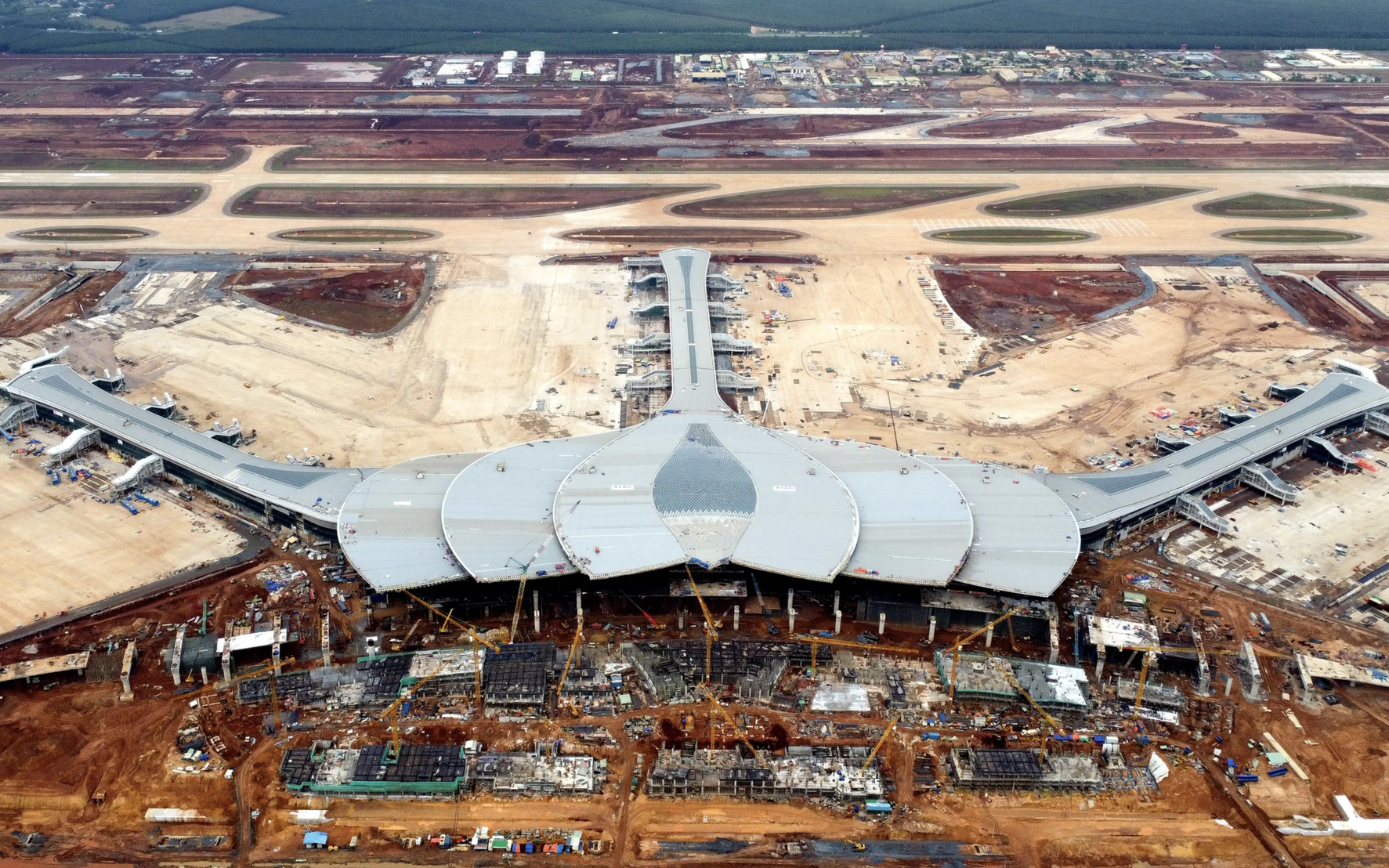
3 new industrial parks to set to launch
To capitalize on the advantages of Long Thanh International Airport and nearby ports, Dong Nai Province is preparing to launch three industrial parks spanning over 2,200 hectares, with total investment exceeding VND22 trillion ($835 million).
These include Bau Can - Tan Hiep Industrial Park (Phase 1) covering 1,000 hectares, Long Duc 3 Industrial Park spanning 244.5 hectares, and Xuan Que - Song Nhan Industrial Park (Phase 1) covering 1,000 hectares.
The parks are designed to draw major investors by leveraging strong transport connectivity to Long Thanh, Phuoc An Port, and Cai Mep Ha Port in Ho Chi Minh City.
The province also plans to develop strategic logistics-service clusters such as the southern logistics center within Bau Can-Tan Hiệp Industrial Park, the northeastern logistics center within Xuan Que - Song Nhan Industrial Park, and the Phuoc An logistics hub.
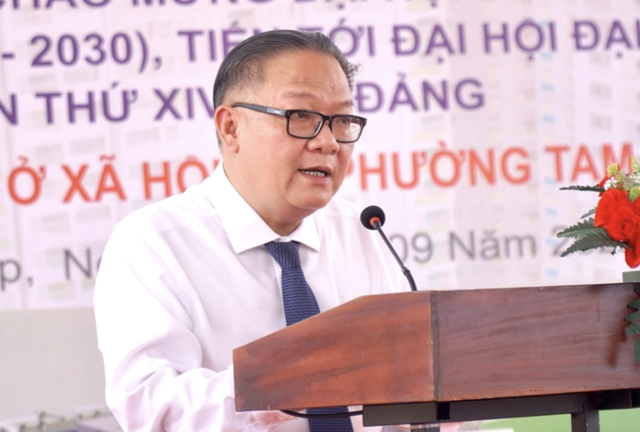
Nguyen Kim Long, standing vice-chairman of Dong Nai Province
Industry and logistics poised for boost
Dong Nai vice-chairman Long emphasized that the province will continue to maintain its position as one of Vietnam’s leading industrial provinces, with 81 industrial parks and one planned hi-tech park covering a combined area of 39,000 hectares, along with 63 industrial clusters spanning over 3,700 hectares.
Industry and logistics are expected to be the fastest-growing sectors, supported by abundant industrial land and competitive rental prices, he said.
In addition, the province also boasts a comprehensive transport infrastructure network, with all five modes of transportation: road, air, rail, maritime, and inland waterways.
Anchored by Long Thanh International Airport and 10 expressways stretching nearly 400 kilometers, the province is well positioned to reduce logistics costs and enhance business competitiveness.
Long Thanh International Airport is projected to require an investment of VND336.63 trillion ($13 billion).
The project is being developed in three phases.
Phase 1 is scheduled for inauguration in December and commercial operations are set to begin in 2026.
Once phase 1 becomes operational, the airport, with one runway and one terminal, will be able to serve 25 million passengers and handle 1.2 million metric tons of cargo annually.
When all three phases are finished, likely after 2035, the airport will be the largest in Vietnam with an annual capacity of 100 million passengers and five million metric tons of cargo.








Max: 1500 characters
There are no comments yet. Be the first to comment.