


A resident cycles in a dedicated bike lane along Mai Chi Tho Boulevard in Ho Chi Minh City on the first day of 2026. Photo: Tri Duc / Tuoi Tre
The 5.8km lane runs parallel to the sidewalk of Mai Chi Tho Boulevard, extending from Nguyen Co Thach Street to D1 Street, and allows for easy access to Thu Thiem Bridge and then into the central city area.
On the surface, it seems like a great idea, but residents, commuters, and expats have been less than complimentary about this new access for bicycles.
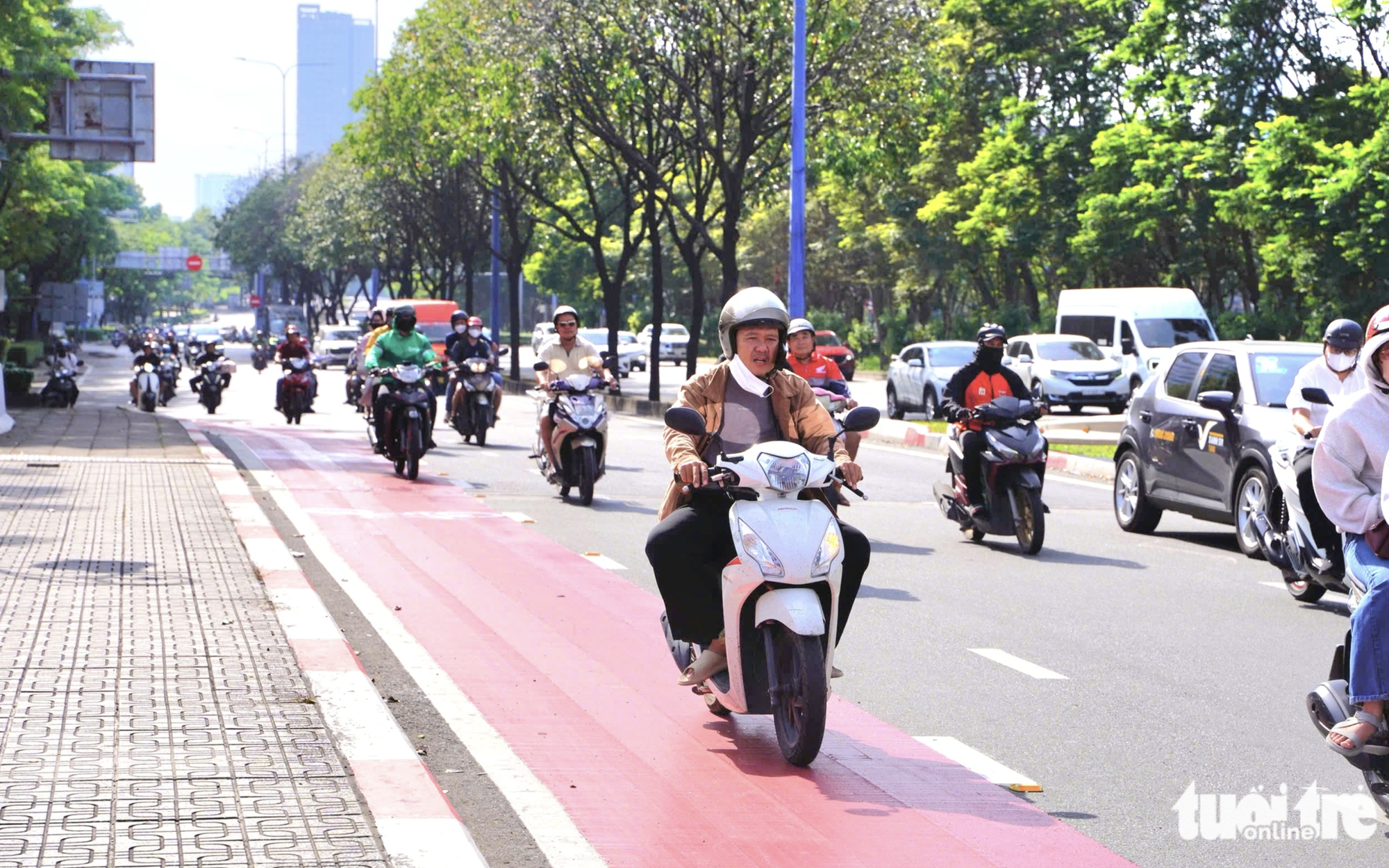
At the forefront of complaints is the belief that it is robbing desperate commuters of valuable road space, especially during peak hours. Part of the new cycleway falls onto public roads and can be identified by the red coloring. It is against the law for motorbikes and other motorized vehicles to use this roadway for any reason.
In addition, commuters stuck in long lines of traffic during peak periods become rather irate when they see these bicycle lanes barely being used. It is widely considered a waste of time, money, and space.
However, around the world there are well-developed bicycle networks in cities that also endured anger and rejection from the community when they were first introduced.
One such example is in my hometown of Sydney, Australia. Around 20 years ago, the local government at the time, led by Mayor Clover Moore, came up with an idea to remove parking along the streets, restrict access to key CBD streets, and set up a bicycle network in the city.
The anger and aggressive reaction from the community were intense. In a country where every tradesperson has a car, she took away the ability for many to drive into the city for meetings and reduced access for cars in some areas.
At that time, bicycles were far from a logical commuting tool. Before the days of app-based delivery services and e-bikes, these bicycle paths sat empty. From news agencies to social media, everyone had an opinion, and many believed it would kill the city.
Fast forward 20 years and the city has never been stronger. The bicycle lanes are now a central feature of major streets, supported by a new public transport network that makes it illogical to drive your car into the city.
When I look at the Mai Chi Tho bicycle way, I see similarities to the streets of Sydney 20 years ago. This decision by the government of Ho Chi Minh City is a bold move, but with the current planning shaping the southwest of the city, it is a visionary step that will result in many positive opportunities in the near future.
Unlike the example in Australia, Ho Chi Minh City is opening a new airport in Long Thanh, some 35km from the cycle path. Construction of apartments has continued along this corridor, with more and more people moving into the southeast sector of the city.
Further, Nhon Trach Bridge opened in 2025, with plans to also construct a bridge at Cat Lai, both of which will eventually connect to this cycleway.
Highways and roads are also taking massive steps forward in the immediate vicinity. The Long Thanh Expressway intersection is well underway and will be completed in the coming months.
This whole region, from Thu Duc to Cat Lai, Dai Phuoc to Long Thanh, and Bien Hoa (in Dong Nai Province) uses Mai Chi Tho to access the center of Ho Chi Minh City. So why not give commuters options to get off their motorbikes and cars and get to work in a more sustainable way?

People cycle along a dedicated bike lane on Mai Chi Tho Boulevard in An Khanh Ward, Ho Chi Minh City, Vietnam. Photo: Tri Duc / Tuoi Tre
Like most things in Vietnam, they start slowly. This cycleway is far from the final product. It is the pilot for a new way of living in Ho Chi Minh City, and there is no doubt other cycleways will continue to open over the coming years as e-bikes and technology make it better, in some cases, to ride a bicycle to work rather than a fuel-powered vehicle.
As a resident of Dong Nai, I sit firmly in the middle of this issue. The current 5.8km strip is too far from my home and too short to have any effect on my ride to work, so I continue to ride my motorbike.
But I support the concept and watch with eagerness as the 5.8km pathway expands into a network that will allow people to ride a comfortable and safe 10km or 20km from their homes to reach the city.
Safety and convenience are the key issues. This project is the first step toward creating both for commuters. However, we also need additional support such as safe parking for bicycles in the city, sun protection along the route, and even undercover sections to assist during the wet season, where it is easy to stop and safely put on your raincoat.
But like Sydney, Australia, all of this will happen in time. People will start using this pathway daily, and as more people move to the area, it will grow in popularity. It is the future of this city, and motorbike commuters need to understand that Ho Chi Minh City is a progressive city with a vision for the future.
I am excited for the day when I can ride my gravel bike or e-bike from my home and reach the city in around an hour using safe and protected cycleways. It will mark a bit of a 'back to the future' moment for Ho Chi Minh City as it returns to a focus on bicycles like it had in the past days.
This cycleway is not about today’s results or patronage. It is a future-focused plan that every major city around the world is following, for the simple fact is that fuel-powered vehicles must be reduced to create a better world for our children. I will be on the cycleway as soon as it is possible, as life is great when you are riding a bicycle in this city.










Max: 1500 characters
There are no comments yet. Be the first to comment.