


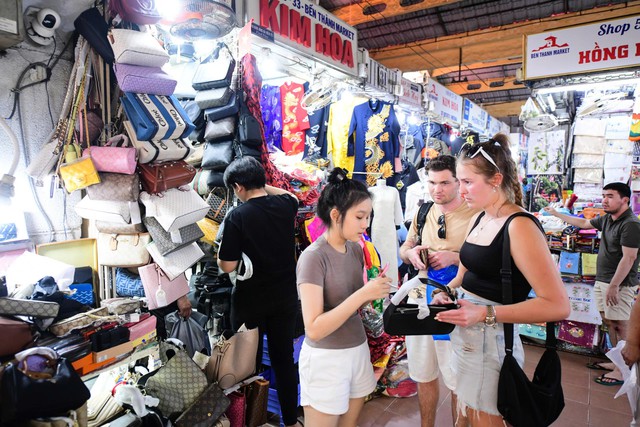
Tourists shop at Ben Thanh Market. Photo: Quang Dinh / Tuoi Tre
Traditional markets are all facing pressure from changing shopping habits, but not all of them are falling quiet.
Markets that have become part of popular tourist destinations are showing a different kind of vitality.
Many markets are must-visit destinations
Speaking to Tuoi Tre (Youth) online newspaper, George, an Indian national living and working in Vietnam, said he had visited Ben Thanh Market and Tan Dinh Market because they are considered must-visit destinations in Ho Chi Minh City.
Tourists visit traditional markets not only to buy souvenirs, local specialties and clothes, but also to experience the local atmosphere, he said.
“I also visit traditional markets when traveling to Hue and Da Nang. I usually buy something whenever I visit these places, even though I understand that prices in areas popular with tourists can sometimes be higher than at shops frequented by local residents," George said.
"For me, visiting a market is also part of experiencing a destination and learning about the local culture,” he said.
Domestic tourists are also keeping up the habit of visiting markets when they travel.
Thien Long, 26, from Binh Tri Dong Ward, said that while he rarely visits traditional markets where he lives, markets are often on his itinerary when he travels.
“I go to Da Lat several times a year, and I always visit Da Lat Market to buy gifts to take home. When I go to Mui Ne, I also make sure to visit Phan Thiet Market because I have read reviews saying it has many local specialties,” Long said.
The appeal of tourism-linked markets is also reflected on online platforms.
According to Tuoi Tre's findings, Da Lat Night Market has more than 19,000 reviews on Google Maps, with many visitors highlighting its food, local specialties, souvenirs and nighttime atmosphere.
Ben Thanh Market, one of the symbols of Ho Chi Minh City, has more than 86,000 Google Maps reviews. Many foreign visitors see it as a local market and come to experience the atmosphere and shop for a wide range of goods.
Hien, 54, a French Vietnamese, said her son also wanted to visit Ben Thanh Market and buy clothes on his first trip to Vietnam after reading about it on websites and social media platforms.
In Hue, Dong Ba Market has more than 3,500 Google Maps reviews, with many visitors describing it as one of the places worth visiting in the city.
“As soon as I arrive in Hue, I go straight to Dong Ba Market to buy a conical hat for an authentic Hue experience,” said Ngoc Anh, 25, who lives in An Hoi Dong Ward.
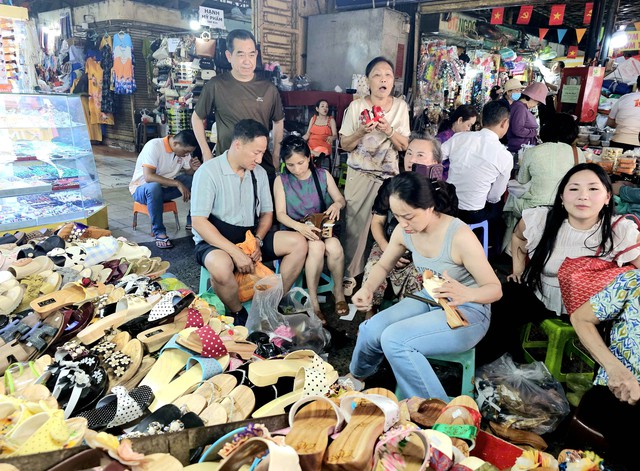
Tourists also show interest in the clog-making stall at Tan Dinh Market. Photo: Nguyen Tri
Tourist markets thrive, local markets struggle
Unlike markets that have become part of tourist destinations, many neighborhood markets are facing a different reality: local shoppers now have more options, from supermarkets and convenience stores to mini-marts and e-commerce platforms.
At Ba Chieu Market in Tan Dinh Ward, Tuoi Tre online newspaper found that about one-quarter of the stalls have stopped operating.
The market management said purchasing demand has not returned to pre-COVID-19 levels, with many vendors keeping their businesses running only on a limited basis.
A similar situation has been reported at Xom Moi Market in An Hoi Dong Ward.
Local residents still shop there, but most of them buy food and other essentials from stalls in the outer sections, while many stalls deeper inside the market see little foot traffic.
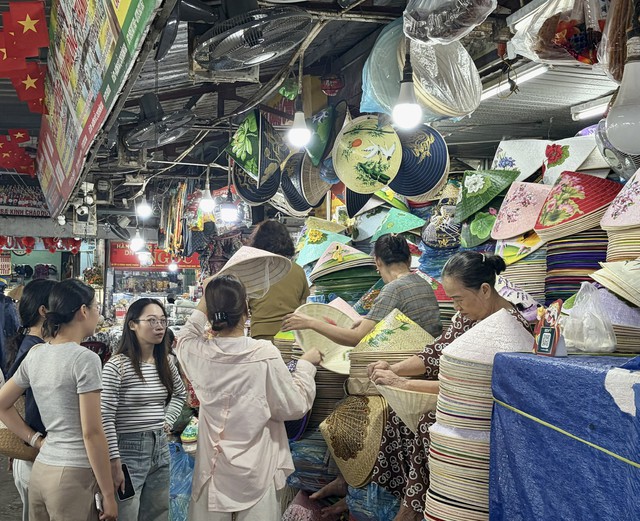
Tourists buy conical hats at Dong Ba Market. Photo: Nghi Vu / Tuoi Tre
Lan, a pork vendor at the market, said the number of customers has fallen significantly compared with the past.
Because she sells essential food items, she has managed to retain a base of regular customers and people who buy from her frequently.
She said some residents still prefer traditional markets when buying fresh food and looking for a wider range of choices. However, the growing number of mini-marts and changes in shopping habits have led to a noticeable decline in the number of people venturing deeper into the market.
“Most of my customers are regulars. I only get a few new ones here and there,” Lan said.
This reflects two contrasting sides of Vietnam’s traditional markets: those tied to tourism, food, local specialties, and cultural experiences continue to attract visitors from outside the area, while markets that mainly serve residents’ everyday shopping needs face growing competition from newer retail formats.










Max: 1500 characters
There are no comments yet. Be the first to comment.