


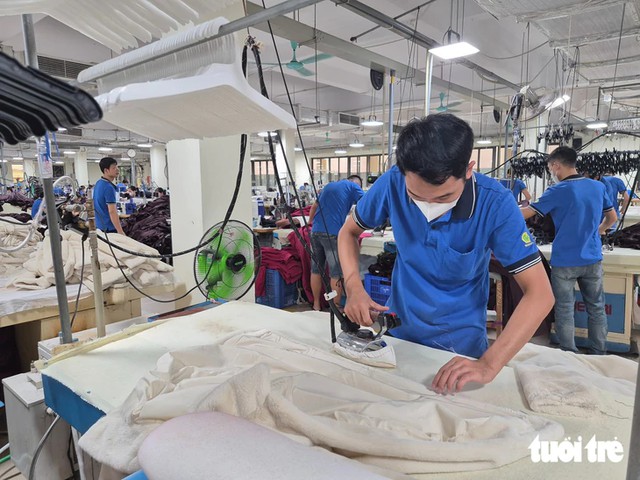
Exports of some consumer goods to the U.S. could be affected, prompting Vietnamese businesses to closely monitor the next steps and prepare appropriate responses. Photo: Ngoc An / Tuoi Tre
US-China $30 billion tariff deal
Under the so-called Board of Trade mechanism, Washington and Beijing will consider mutually agreed lists of non-sensitive goods for lower tariffs on a reciprocal basis and in line with each country’s regulations.
The U.S. list covers 77 tariff lines, largely involving consumer goods, household products, toys, sporting goods and some electrical appliances rather than strategic technology products.
Among the items are plastic tableware and kitchenware, home textiles, household appliances, children’s products and furniture, toys, sporting goods, decorative items, sleeping bags, cushions and other consumer products.
Many tariff lines in this category are designated on an “Ex-Out” basis, meaning only certain products within a broader HTS code are covered by the mechanism.
China, meanwhile, is expected to expand market access for U.S. goods ranging from agricultural products to medical equipment.
Limited direct impact on Vietnam for now
Do Ngoc Hung, commercial counselor and head of the Vietnam Trade Office in the U.S., told Tuoi Tre (Youth) online newspaper that the mechanism creates a controlled trade channel for non-strategic goods rather than marking a broad return to trade liberalization.
Sensitive areas linked to technology, economic security and national security will remain tightly managed, while consumer goods, agricultural products and other less-sensitive items may benefit from lower tariffs and expanded trade.
Vietnam’s major traditional exports to the U.S., including garments, footwear, wood and furniture, agricultural products, forestry products and seafood, are not the main focus of the first phase.
However, some of the 77 tariff lines overlap with product groups in which Vietnam is competitive, such as household goods, kitchenware, plastics, toys, children’s products, sporting goods, decorations and household appliances.
If U.S. tariffs on Chinese goods in these categories are reduced, the tariff gap between Chinese and Vietnamese products could narrow, potentially affecting the price competitiveness of Vietnamese exporters.
Vietnamese businesses should therefore closely monitor how the mechanism is implemented, which products are ultimately covered and what tariff rates apply.
Supply-chain shifts
Hung said the mechanism could also affect supply-chain relocation from China.
If certain Chinese consumer goods receive more favorable access to the U.S. market, companies may have less incentive to diversify production or sourcing to third countries.
That could, in turn, reduce some of the momentum behind supply-chain expansion into markets such as Vietnam.
The eventual impact will depend on the final tariff levels, the scope of eligible products and other trade rules applied under the mechanism.








Max: 1500 characters
There are no comments yet. Be the first to comment.