


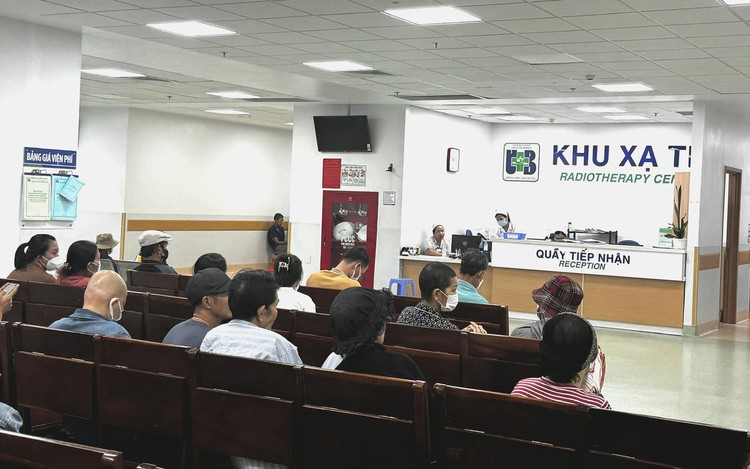
Patients wait for their turn to receive radiotherapy at Ho Chi Minh City Oncology Hospital. Photo: Thu Hien / Tuoi Tre
Dr. Nguyen Duy Anh, deputy director of the International Oncology, Radiotherapy and Nuclear Medicine Center at Phuong Dong General Hospital in Hanoi, told Tuoi Tre (Youth) online newspaper that Vietnam currently has around 84 linear accelerator radiotherapy machines, based on figures published in recent years.
Domestic analyses estimate that the country's radiotherapy capacity meets around 60-70 percent of the basic demand, while Ministry of Health documents citing International Atomic Energy Agency (IAEA) data put the figure at around 25-50 percent, depending on the calculation method and assessment period.
According to the International Agency for Research on Cancer's GLOBOCAN 2024 dataset, Vietnam has an estimated 177,404 new cancer cases annually, and demand for radiotherapy is expected to increase as the cancer burden grows, the population ages, and cancer detection and diagnosis improve, Dr. Anh said.
Dr. Dang Huy Quoc Thinh, chairman of the Vietnam Palliative Health Care Society and former deputy director of Ho Chi Minh City Oncology Hospital, said radiotherapy is one of the three main cancer treatment methods, alongside surgery and chemotherapy.
According to IAEA and World Health Organization recommendations, countries should have at least one radiotherapy machine per one million people.
With a population of around 100 million, Vietnam therefore needs at least 100 machines to meet that reference level, Dr. Thinh said.
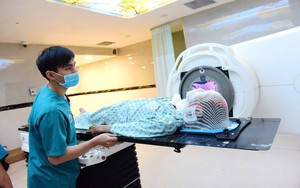
A radiotherapy machine typically treats around 20-30 patients a day, while an IAEA survey found that 21-30 patients per machine per day is common.
However, some facilities in Vietnam have to treat more than 50 patients a day, Dr. Anh said.
At Ho Chi Minh City Oncology Hospital, around 700 patients receive radiotherapy each day, while another 800-1,000 are waiting for treatment, according to the hospital.
Its radiotherapy machines currently operate in three shifts, from 5:00 am to 11:00 pm every day.
The resulting overcrowding can lead to longer waiting times, which is particularly concerning because radiotherapy is time-sensitive.
For patients receiving radiotherapy in combination with surgery or chemotherapy, delays can affect the overall treatment process, Dr. Anh said.
Some experts have proposed adding 35-40 machines, but Dr. Anh said the number should be determined through a national radiotherapy plan based on population distribution and disease patterns.
Such a plan should identify where new machines are needed, which facilities should upgrade their equipment, and where new radiotherapy centers should be established, he said.
Dr. Anh proposed establishing a regional radiotherapy referral network instead of requiring every province to have a large radiotherapy center.
Under this model, specialized centers could handle complex cases and provide professional support to satellite facilities, while teleconsultations, shared imaging data and treatment planning could help direct suitable patients to facilities closer to their homes, he said.
"Investment in additional machines is still necessary, but it must be based on proper planning," Dr. Anh said, adding that Vietnam should determine the radiotherapy capacity, technologies, number of machines and staffing needed in each region over the next five to 10 years.
Meanwhile, a leading cancer specialist said hospitals have identified the need for more radiotherapy machines, but bidding procedures, equipment price appraisal and warranties have remained major obstacles.
Some hospitals have funding but are unable to purchase machines because of procedural difficulties, while facilities lacking sufficient funding face legal and payment concerns when considering equipment rental or public-private partnerships, the specialist said.
Experts also noted that some facilities have modern machines but lack qualified staff to operate them, contributing to uneven treatment capacity and quality among hospitals.
As a result, patients may continue to seek treatment at major hospitals even when modern equipment is available at lower-level facilities because they have greater confidence in higher-level institutions.


Max: 1500 characters
There are no comments yet. Be the first to comment.