


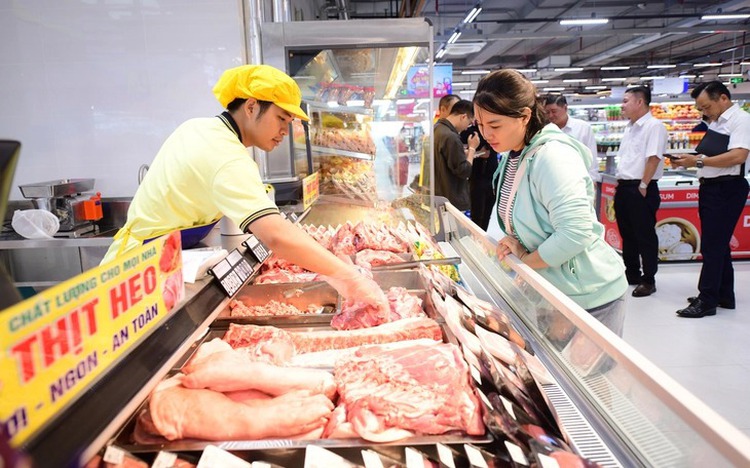
A customer shops for pork at a supermarket in Ho Chi Minh City, southern Vietnam. Photo: Quang Dinh / Tuoi Tre
Drafted by the Ministry of Health, the proposed reforms would mark a fundamental shift in Vietnam's food safety governance, introducing a more comprehensive framework to modernize the country's 15-year-old food safety law and address increasingly complex food production, distribution and consumption patterns, Nhan Dan (People) newspaper reported.
Alarming figures
Food safety remains a major public health challenge in Vietnam despite years of inspections, enforcement and public awareness efforts.
According to the ministry, the country recorded 84 food poisoning outbreaks in 2025, affecting 2,301 people and causing 16 deaths.
Although the figures declined from the previous year, several large-scale incidents linked to collective kitchens, school canteens, restaurants, household meals and street food underscored vulnerabilities in the country's food safety system.
The problem persisted in the first half of 2026, with 58 food poisoning outbreaks nationwide, affecting 1,573 people and causing 10 deaths.
Compared with the same period in 2025, 23 more outbreaks were recorded, highlighting persistent gaps in food safety oversight.
Violations also continue to be detected throughout the food supply chain, including the sale of food of unknown origin, counterfeit and substandard products, the misuse of food additives and products that fail to meet food safety standards.
In the first six months of 2026, police handled 4,688 cases involving 4,795 organizations and individuals for food safety violations, up 102 percent from a year earlier, the Ministry of Public Security reported.
They also initiated criminal proceedings in 95 cases involving 192 defendants, representing year-on-year increases of 265 percent in cases and 237 percent in defendants.
Building sustainable solutions
The Law on Food Safety established Vietnam’s first comprehensive legal framework governing food production, processing, trading and consumption, playing a crucial role in strengthening food safety governance over the past 15 years.
However, the health ministry said recurring food safety incidents have exposed shortcomings in the existing legal framework and management model, which are no longer fully suited to today's increasingly complex food system, Nhan Dan reported.
Food production has become more industrialized, while longer, more complex supply chains and Vietnam's deeper integration into regional and global markets have created new regulatory challenges.
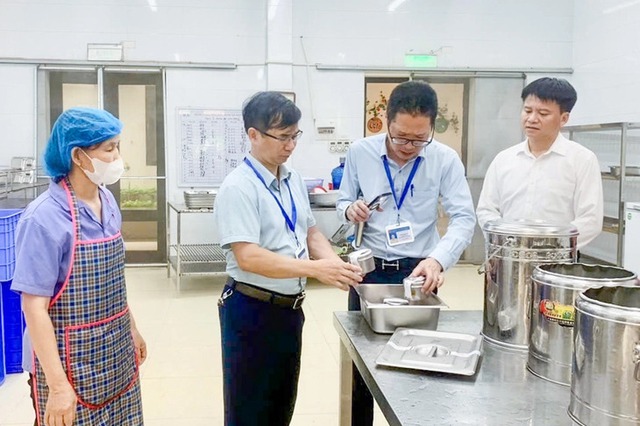
Two members (L, 2nd and 3rd) of an inter-agency food safety inspection team in Bac Ninh Province, northern Vietnam, are seen inspecting a collective kitchen. Photo: TTO
Consumers now buy food not only from traditional markets but also from supermarkets, convenience stores, e-commerce platforms and social media channels, making it more difficult for regulators to monitor food throughout the supply chain.
According to the draft revised Law on Food Safety, food safety management remains fragmented across multiple ministries, sectors and local authorities.
The existing regulatory framework largely adopts a stage-by-stage approach to the food supply chain, focusing on post-violation responses rather than proactively detecting and controlling risks throughout the entire chain.
Rather than introducing piecemeal amendments, the draft revised law would shift food safety governance toward risk-based management across the food supply chain.
The draft document is built around four major policy pillars, with risk-based food safety management across the supply chain at the core of the proposed reforms.
Instead of regulating each stage separately, authorities would oversee food safety from production and processing to transportation, distribution and consumption to identify, assess and control risks before food reaches consumers.
Higher-risk products, production facilities and supply chains would receive closer monitoring, while lower-risk activities would be subject to proportionate oversight.
Under the proposed approach, regulation would shift from responding to violations after they occur to preventing risks at their source, with greater emphasis on risk assessment and traceability.
The draft revised law also proposes expanding internationally recognized food safety management systems, including Good Manufacturing Practices and Hazard Analysis and Critical Control Points, particularly for high-risk food products and production facilities identified through risk classification.









Max: 1500 characters
There are no comments yet. Be the first to comment.