



A large number of delegates attend the forum “New Capital Flows – A New Position for Vietnam's Stock Market,” organized by Tuoi Tre online newspaper, in collaboration with the State Securities Commission of Vietnam, in Ho Chi Minh City on October 30, 2026. Photo: Quang Dinh / Tuoi Tre
Experts discussed ways to attract and retain foreign investment following FTSE Russell's upgrade of Vietnam's stock market at the 2026 Vietnam Capital Market Forum, themed “New Capital Flows – A New Position for Vietnam's Stock Market,” organized by Tuoi Tre (Youth) online newspaper, in collaboration with the State Securities Commission of Vietnam, in Ho Chi Minh City on Friday.
They said Vietnam needs to address bottlenecks in market access, information transparency, corporate quality and governance standards to ensure foreign capital flows into the market and stays.
Removing bottlenecks, raising standards to attract global capital
Vu Chi Dung, head of the Department of Legal and International Affairs at the State Securities Commission of Vietnam, said the securities regulator was prioritizing reforms to strengthen Vietnam's stock market, remove bottlenecks and work toward meeting MSCI's market upgrade criteria by 2030.
Key priorities include improving foreign investors' access to the market, enhancing transparency, completing financial market infrastructure and strengthening dialogue with the investment community.
The regulator will continue reviewing, amending and supplementing securities regulations to make the market more accessible to foreign investors.
One issue requiring attention is foreign investors’ access to certain industries and business sectors that are subject to conditional business requirements.
Improving corporate governance, the quality of listed companies and the range of securities available on the market is also a priority.
“Expanding market access must go hand in hand with stronger supervision to ensure that the market operates transparently and safely,” Dung said.
Regarding information disclosure, under a roadmap introduced in 2025, large public companies must disclose information in English.
Dung added that international experience would serve as a basis for the regulator to further develop market reform measures.
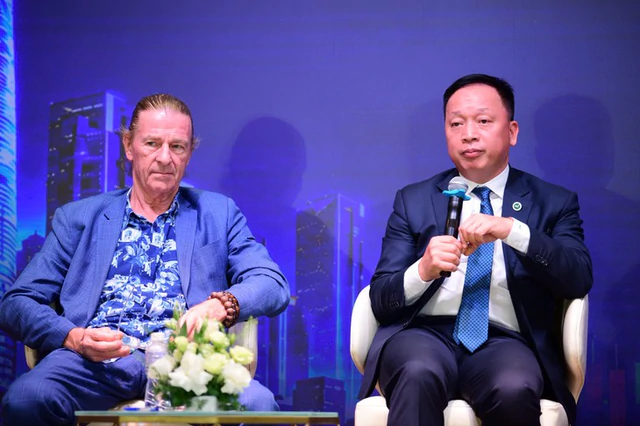
Vu Chi Dung (right), head of the Department of Legal and International Affairs at the State Securities Commission of Vietnam. Photo: Quang Dinh / Tuoi Tre
International capital eases pressure on long-term funding
Nguyen Hung, CEO of Tien Phong Commercial Joint Stock Bank (TPBank), said foreign funding played a very important role, including short-term loans, trade finance and long-term loans from international institutions and foreign banks.
He said banks had certain advantages in accessing international capital because their operations followed international standards and were audited by reputable auditing firms.
Meanwhile, raising long-term funds domestically remained difficult. Depositors generally preferred short-term savings, while the State Bank of Vietnam imposed strict limits on the use of short-term funds for medium- and long-term lending.
In addition, long-term deposit interest rates were around 2 percentage points per year higher than short-term rates.
Foreign funding therefore benefited banks by improving their medium- and long-term funding indicators while helping reduce the cost of exchange rate risk insurance.
Hung described international borrowing as a valuable funding channel, but said it also required domestic banks to build credibility and comply with international standards such as Basel and ESG.
What to expect from emerging market status
Despite the positive news from FTSE Russell about Vietnam's stock market, foreign investors have continued to be net sellers and market liquidity has declined.
Tran Hoang Son, market strategy director at VPBank Securities Joint Stock Company, said these developments should be viewed in the context of increasingly polarized international capital flows over the past two years.
In 2025, global capital flows were affected by tariff shocks and a surge in artificial intelligence (AI) stocks, he said.
Money consequently flowed into markets with fast-growing AI companies, including Japan, South Korea, Taiwan and the United States.
Vietnam's market, which had yet to be upgraded at the time, saw approximately US$5.2 billion withdrawn.
In 2026, the conflict in the Strait of Hormuz triggered an oil price shock, pushing up global interest rates and prompting capital to reverse direction and investors to take profits in markets that had surged on the AI boom.
These two macroeconomic factors partly explained why foreign investors remained net sellers of approximately $4.8 billion in January-October this year, despite Vietnam's recent upgrade to emerging market status, Son said.
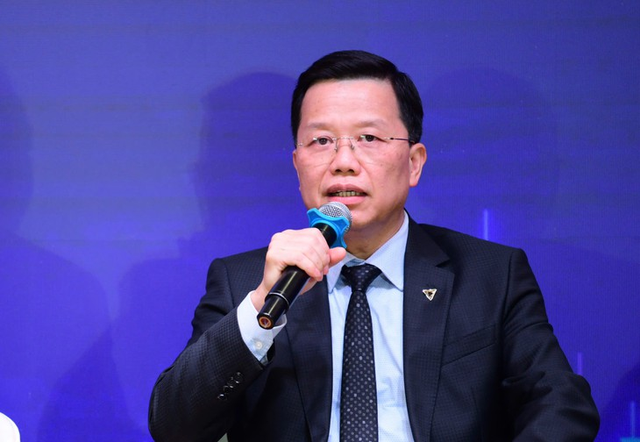
Nguyen Hung, CEO of Tien Phong Commercial Joint Stock Bank (TPBank). Photo: Quang Dinh / Tuoi Tre
Nevertheless, the VN-Index had remained resilient despite strong selling pressure over the past two years.
Son expected the upgrade to create opportunities to attract additional capital in the coming period.
However, the upgrade only opens the door to such opportunities. Whether capital actually flows into the market will also depend on global conditions, the growth of listed companies and Vietnam's macroeconomic outlook.
Building investor confidence before seeking international capital
Sharing HDBank's experience in securing a $721 million syndicated social loan, Hoang Duc Long, director of capital and money trading at HDBank, said it was the largest loan of its kind in recent years.
He said the most important factor in securing the funding was building extensive relationships with major financial institutions, enabling partners to understand and trust the bank's financial capacity, governance and ability to honor its commitments.
Such trust could not be built overnight but required sustained cooperation, transparent information and a proven track record.
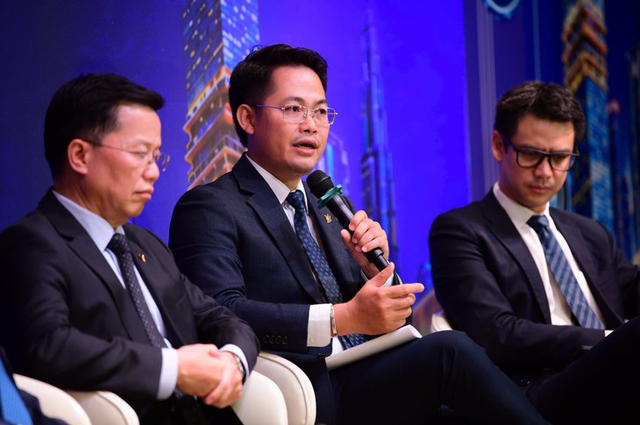
Tran Hoang Son, market strategy director at VPBank Securities Joint Stock Company. Photo: Quang Dinh / Tuoi Tre
Banks first need a sound financial foundation, compliance with safety ratios, and rigorous risk management, compliance and information disclosure practices, even going beyond the requirements set by the State Bank of Vietnam.
For funding aimed at sustainable development, commitments must be backed by the ability to deliver, from selecting the right beneficiaries and controlling the use of funds to measuring results.
HDBank's $721 million social loan was designed to support small and medium-sized enterprises, with priority given to women-owned businesses, following this approach.
Long said partnerships also needed to be nurtured continuously. HDBank's experience was to build capacity and relationships before funding was needed, so that when an opportunity arose, all parties already understood one another and were ready to move forward.
In addition to ensuring transparency about how funds are used, banks need to proactively expand their international networks.
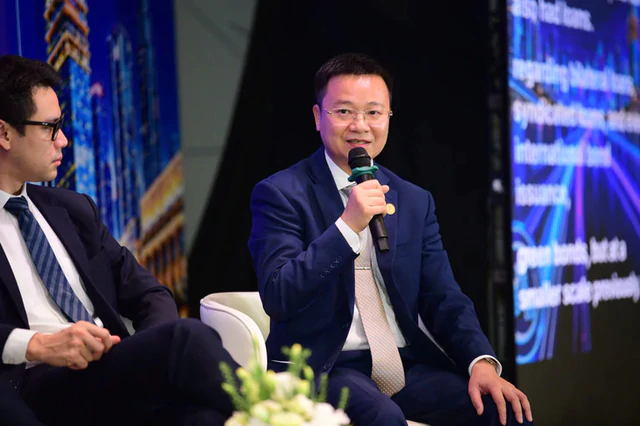
Hoang Duc Long, director of capital and money trading at HDBank. Photo: Quang Dinh / Tuoi Tre
HDBank has established a strategic partnership with the London Stock Exchange. Together with the extensive connections of its ecosystem at international gateways such as Hamburg, the bank has more opportunities to bring Vietnamese businesses closer to partners and investors.
HDBank is currently facilitating access to the London capital market for around five to six domestic companies.
To secure long-term funding, businesses need to prepare transparent financial statements, clear governance structures, convincing capital-use plans and credible cash flows for debt repayment.
They should also maintain regular dialogue with investors and make use of the expertise of international advisory organizations.
Another factor is corporate credit ratings, which are considered a ticket for businesses seeking to enter international markets.
Partnerships such as those between FiinRatings and S&P Global, and between VIS Rating and Moody's, are helping build this foundation in Vietnam.
Companies need to choose ratings appropriate to their target funding markets because domestic and international rating scales have different scopes of comparison.
Long expressed hope that the government would consider issuing international bonds at an appropriate time, taking into account funding needs, costs and public debt safety.
Issuances with suitable maturities could provide additional benchmarks for Vietnam's foreign-currency yields and gradually establish a yield curve, helping banks and businesses price their international fundraising.
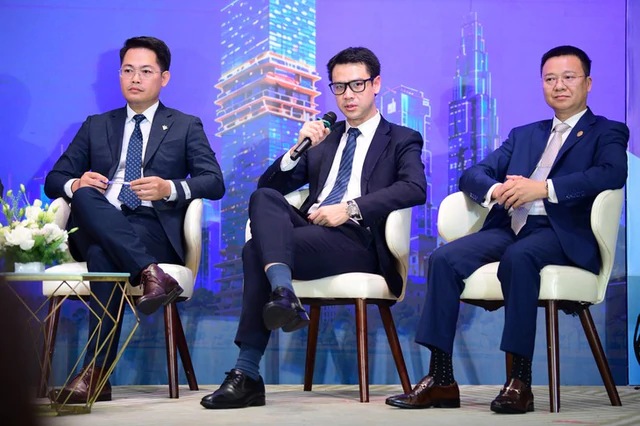
Bui Minh Tuan (center), senior director of equity capital markets at Techcom Securities Joint Stock Company. Photo: Quang Dinh / Tuoi Tre
Bui Minh Tuan, senior director of equity capital markets at Techcom Securities Joint Stock Company, said international financial institutions entering Vietnam generally expected domestic businesses to meet information disclosure standards in line with international practices.
English-language disclosure is an important requirement. Although listed companies have made positive progress, some private businesses still fall short of foreign investors' expectations, particularly regarding financial statements and related documents.
The degree of alignment between Vietnamese and international accounting standards is another factor investors consider, as it helps them assess, compare and identify risks when entering the market.
Another bottleneck is that the cost of hedging exchange rate risks in Vietnam remains higher than in some regional markets such as Thailand and Indonesia, as well as developed markets such as Japan and South Korea.
Tuan said foreign investors wanted to proactively hedge against exchange rate fluctuations affecting their investments.
If Vietnam fails to improve its foreign exchange risk-hedging mechanisms and market structure, domestic financial institutions will be at a disadvantage in accessing international capital, as investors will have to factor in additional costs and risks when entering the market.


Max: 1500 characters
There are no comments yet. Be the first to comment.