


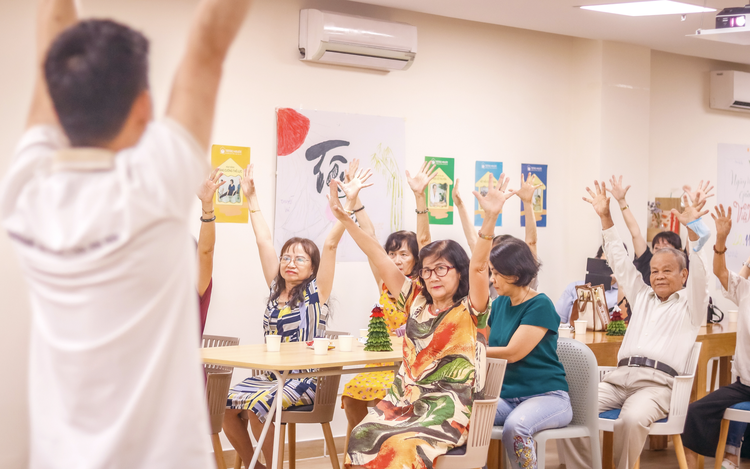
Elderly people join an activity at elderly care center Genki House in Tan My Ward, Ho Chi Minh City. Photo: H.K.
Amid an aging population, Prime Minister Pham Minh Chinh has called for a shift in perspective, meaning that seeing the elderly as an opportunity to develop the silver economy.
From burden to opportunity
Dr. Truong Xuan Cu, vice-president of the Vietnam Association of the Elderly, told Tuoi Tre (Youth) newspaper that the silver economy features three main pillars.
First, the service needs of some 17 million elderly people in Vietnam constitute a large and unique market.
Second, there is growing demand for healthcare, wellness, and mental health services, with technology playing an increasing role in delivery.
Third, elderly individuals themselves contribute significantly as active participants in the economy.
Statistics indicate that 70 percent of professors and 50 percent of associate professors in Vietnam are elderly.
Also, nine million elderly are still engaged in production, while some 400,000 are business owners, heads of production households, or farm owners.
“The elderly represent a tremendous resource. We need comprehensive policies and strategies to fully leverage their potential,” Dr. Cu said.
Currently, Vietnam has around 300 elderly care facilities serving 13,000 people, just 0.07 percent of the elderly population.
By comparison, other countries see 5-7 percent of elderly residents in care facilities.
Japan, for example, had over 30 million elderly in 2023 with 256,000 care facilities, highlighting how modest Vietnam’s infrastructure remains.
Changing perceptions, policies
Dr. Cu stressed that the most important step for developing the silver economy is a societal shift in perception, recognizing the elderly as contributors rather than burdens.
He also called for urgent government policies to support the silver economy.
Current lending rules often exclude older individuals from loans, restricting their economic participation.
Policies should also encourage retired professionals and scientists to remain engaged, especially as retirement ages rise, to avoid wasting a valuable pool of knowledge and experience.
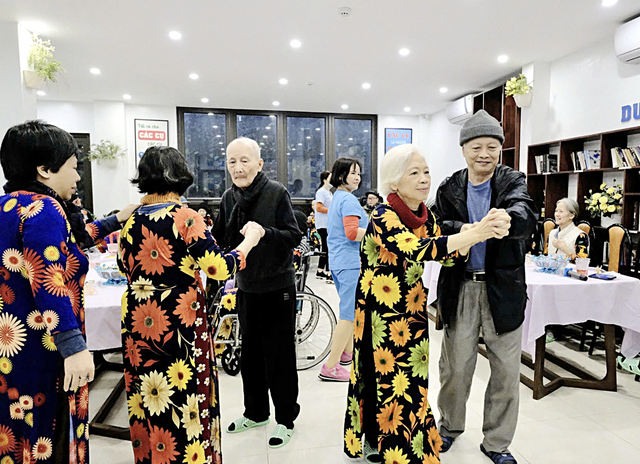
Many elderly people find friends and share their thoughts on aging at a nursing home in Hanoi. Photo: Nam Tran / Tuoi Tre
Attracting private investment, reducing taxes, revising laws
Deputy Phan Duc Hieu, member of the National Assembly’s Economic and Financial Committee, stated that policy improvements must address both supply and demand.
On the supply side, expanding opportunities for services, from healthcare to leisure and retirement funds, will attract private sector investment in elderly care.
On the demand side, he emphasized the need to strengthen the financial capacity and spending power for the elderly.
Measures could include personal income tax deductions for workers covering the costs of caring for elderly parents at care centers or nursing homes.
Besides, policies should expand economic participation opportunities for older adults, such as reducing personal income tax for those who continue working.
Labor regulations also need review and adjustment to make it easier for firms to employ older workers, removing overly strict or unnecessary rules that hinder recruitment.
Regarding social infrastructure, he highlighted the need for coordinated, easily accessible facilities for the elderly, from transportation to housing.
Hieu proposed that the government promptly review and revise the Law on the Elderly to fit the new context and develop programs to implement the National Strategy on the Elderly in the modern era, integrating it into all economic and social policies, from macro to micro levels.
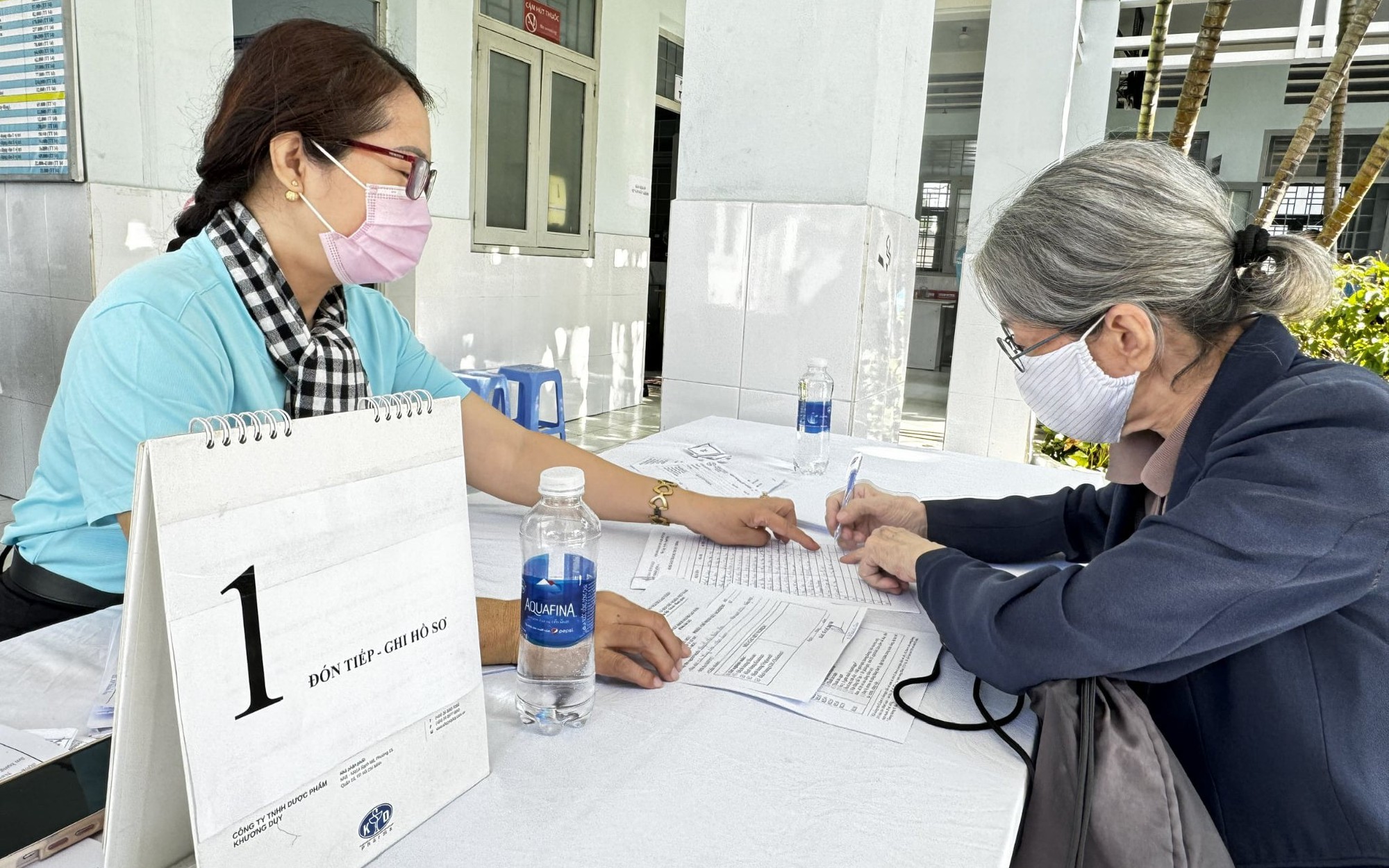
Challenges in elderly care services
In recent years, non-family elderly care models have begun emerging in Vietnam, but challenges remain.
Nguyen Thi Kieu Oanh, founder of elderly care center Genki House in Ho Chi Minh City, reported that despite no rent costs, the center, which was opened two years ago, operates at a monthly loss.
Genki House is a semi-residential elderly care complex that provides non-pharmaceutical therapeutic support, helping improve elderly physical and mental health.
Despite modern facilities, including a traditional medicine clinic and swimming pool, membership is far below the target due to social and cultural attitudes.
Many elderly prefer familiar neighborhoods, and families often do not prioritize paid care services, even though they might invest heavily in children’s education, Oanh said.
Drawing on examples from Japan and South Korea, Oanh accentuated government involvement in successfully scaling elderly care services, reducing the burden on younger generations.
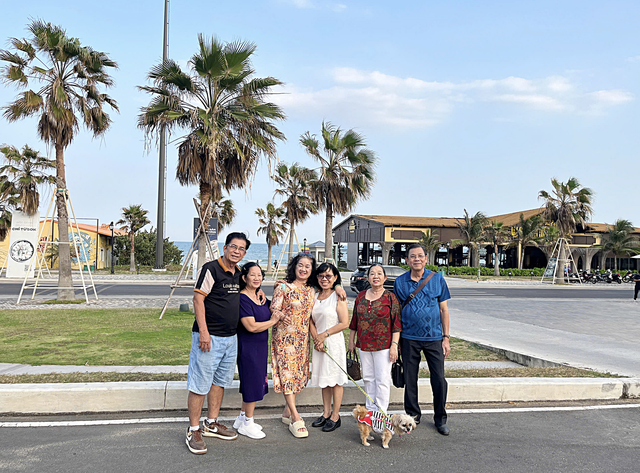
Elderly people travel together after retirement. Photo: T.D.
Ensuring ‘health security’
Professor Nguyen Anh Tri, member of the 15th National Assembly and member of the Prime Minister’s Policy Advisory Council, observed that health is central to the silver economy.
It is essential to find ways for the elderly to remain healthy and free from illness, which is also an economic matter.
He explained that there is no bed more expensive than a hospital bed.
Therefore, investing in disease prevention and proactive healthcare is an investment in the economy.
Furthermore, it is crucial to develop a healthcare service system for the elderly.
This is not only an essential need but also a potential economic sector.
Models such as nursing homes, day-care centers, and retirement communities can all be strongly developed.
International examples from Japan and Hawaii show how effective elderly care models can stimulate family engagement, tourism, and related services.
Vietnam has significant potential to develop similar models, creating both economic and social benefits.








Max: 1500 characters
There are no comments yet. Be the first to comment.