


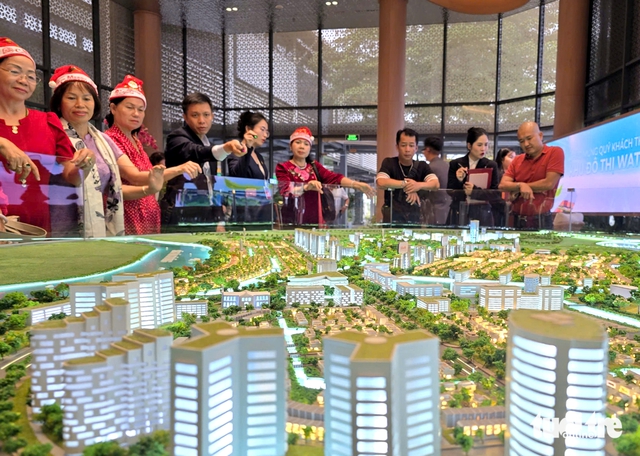
People view a scale model of a real estate project in Ho Chi Minh City, Vietnam. Photo: Cong Trieu / Tuoi Tre
The rule is set out in Decree 357 on the construction, management, and operation of a national information system and database for housing and real estate, which takes effect on that date.
Under the decree, each property, including individual homes, apartments, and floor areas within buildings, will be issued a single electronic identification code generated automatically on the national database system.
The code, consisting of letters and numbers and up to 40 characters in length, will be assigned to one property only and will remain attached to the asset throughout its existence, including during use, transactions, transfers, and mortgages.
The identification code will be created by integrating land parcel identifiers, project or building codes and location information, along with additional characters to ensure uniqueness.
Provincial and municipal construction departments will be responsible for assigning and managing the codes through the national housing and real estate database system.
Once applied, the codes will be used to link information on a property's legal status, planning, project progress, transaction price, and transaction history.
The decree also extends electronic identification requirements to entities involved in the real estate market, including apartment building management units, licensed real estate brokers, and beneficiaries of housing support policies.
Local authorities have been instructed to review, standardize, and integrate existing data into the national system ahead of the March roll-out.








Max: 1500 characters
There are no comments yet. Be the first to comment.