


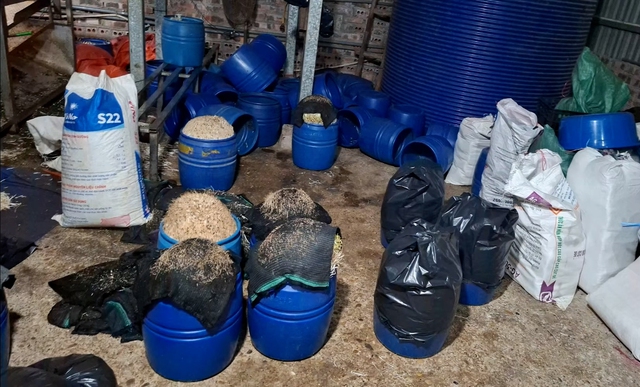
Bean sprouts, treated with a plant growth regulator not permitted in food processing, are seen at the warehouse of bean sprout producer Chu Thi Hoa in Lao Cai Province, northern Vietnam. Photo: Lao Cai Department of Public Security
Police in Lao Cai Province said on Saturday they had prosecuted Chu Thi Hoa, 36, for allegedly violating food safety regulations.
Officers seized more than four tonnes of bean sprouts ready for sale that were determined to contain 6-Benzylaminopurine (6-BAP), a plant growth regulator banned in food processing.
Investigators said Hoa produced between 700 kg and one tonne of bean sprouts per day and had distributed about 510 tonnes since early 2024 to wholesale markets in areas including Phu Tho Province, Hanoi, and Lao Cai Province.
The case is the latest in a series of similar violations uncovered across the country.
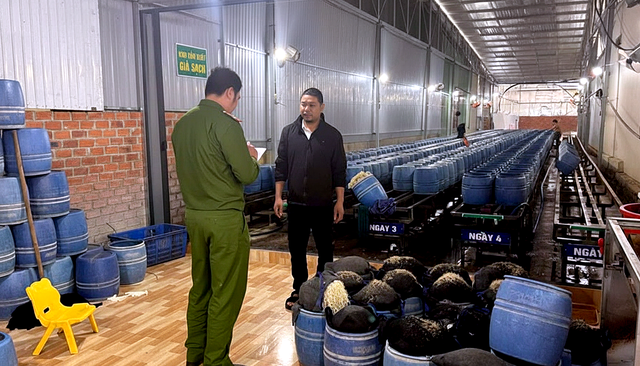
Bean sprouts, treated with a plant growth regulator not permitted in food processing, are seen at a facility in Dak Lak Province, Vietnam. Photo: Sy Duc
In Ninh Binh Province, police earlier this year detained a man accused of producing nearly 2.8 tonnes of bean sprouts using the same banned chemical, according to the Vietnam Government Portal, while authorities in Hung Yen Province prosecuted two individuals after seizing close to three tonnes of contaminated products.
In Hai Phong City, more than five tonnes of bean sprouts produced with 6-BAP were confiscated from two facilities and later destroyed, Suc Khoe & Doi Song (Health & Life) newspaper, the mouthpiece of the Ministry of Health, reported in February.
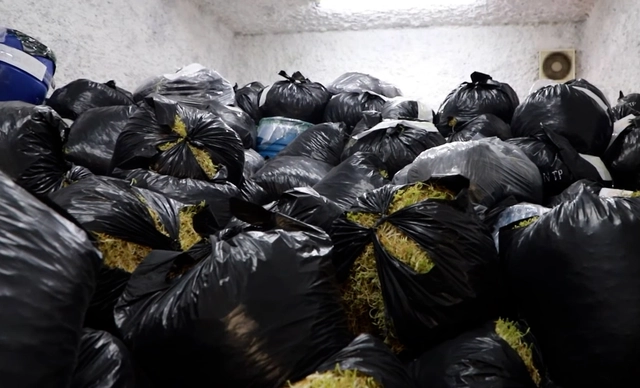
Bags of bean sprouts, treated with a plant growth regulator not permitted in food processing, are stored at the warehouse of bean sprout producer Chu Thi Hoa in Lao Cai Province, northern Vietnam. Photo: Lao Cai Department of Public Security
A major case in Dak Lak Province found a network had distributed about 2,900 tonnes of chemically treated bean sprouts to the market in 2024, with four defendants later sentenced to prison terms ranging from one to four years.
Authorities said 6-BAP is not permitted for use in food production and may pose risks to human health, including potential damage to organs if exposure is prolonged.
Investigations into the latest case are ongoing, police said.








Max: 1500 characters
There are no comments yet. Be the first to comment.