


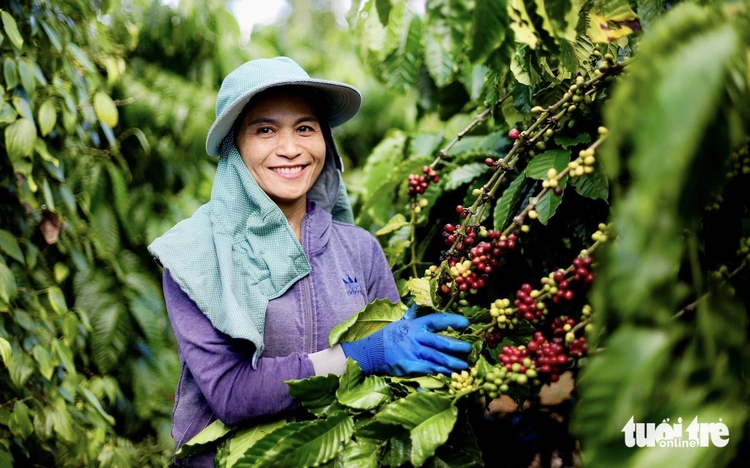
Coffee farmers work in the Central Highlands, Vietnam’s largest coffee-growing region and a key source of export supply. Photo: Nguyen Khanh / Tuoi Tre
Yet major hurdles remain, chiefly fragmented land records, conflicting forestry data, and a lack of standardized verification systems.
The compliance countdown
As one of the world's primary exporters of coffee to Europe, Vietnam's coffee industry is facing mounting pressure to meet the EU's strict sustainability standards.
Under the regulation, large and medium-sized operators must comply by December 30, 2026, while small enterprises have until June 30, 2027.
The stakes could not be higher. Data from Vietnam Customs show the country exported over 1.05 million metric tons of coffee in the first half of 2026, generating US$4.81 billion in revenue.
Europe remains Vietnam's largest export destination, with Germany, Italy, Spain, Belgium, and the Netherlands alone importing over 409,700 metric tons valued at nearly $1.74 billion during the same six-month period.
Nguyen Thanh Tai, an executive committee member of the Vietnam Coffee-Cocoa Association (VICOFA), noted that nearly half of Vietnam's coffee exports flow directly to the EU market.
Consequently, failing to meet EUDR requirements threatens not only major exporters, but also the livelihoods of hundreds of thousands of smallholder farmers and the long-term stability of the country's key growing regions.
Under the EUDR, legal liability falls primarily on importers and traders placing goods on the EU market for the first time. However, fulfilling these due diligence obligations requires seamless data collection across the entire upstream supply chain, from local purchasing agents and cooperatives down to individual farming plots.
“While Vietnamese companies aren't always filing due diligence statements directly with the EU, compliance mandates are aggressively pushed down to everyone on the ground,” Tai explained.
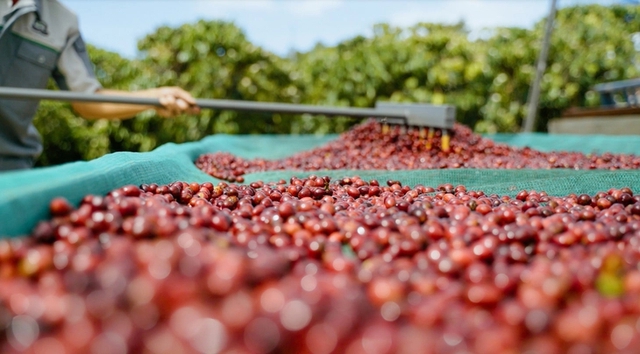
According to EUDR, coffee shipments must still be traceable to their production areas, including geolocation data, and demonstrate that they are not linked to deforestation after December 31, 2020. Photo: B.D. / Tuoi Tre
Although the EU has designated Vietnam as a low-risk country, reducing administrative scrutiny and streamlining risk assessments, Tai emphasized that low-risk status is not a free pass.
Every shipment must still be fully traceable back to its plot of origin via precise geolocation data, proven free of deforestation after the cut-off date of December 31, 2020, and verified compliant with local land laws.
Achieving this is a formidable task. Vietnam’s coffee production spans more than 700,000 hectares, cultivated overwhelmingly by smallholders and funneled through complex, multi-tiered networks of local traders and collectors.
Along the way, beans from hundreds of disparate farms are regularly aggregated, stored, and blended long before reaching processing plants or export hubs.
“Having GPS coordinates for a farm isn't enough,” Tai noted. “Unless we can track actual volumes and physical product flows through every single hand it passes, we cannot prove compliance.”
The primary challenge for Vietnam is less about active deforestation and more about proof: whether the industry can back up its claims with verifiable, unbroken data trails from farm to vessel.
Early preparations underway
Vietnam moved quickly to prepare for EUDR requirements, though industry leaders caution that the broader supply chain is still far from ready.
The Ministry of Agriculture and Rural Development has introduced an adaptation plan, formed a joint EUDR task force, and partnered with local authorities, industry bodies, and international organizations to map coffee plots and baseline forest cover.
According to VICOFA, pilot projects have surveyed over 153,000 hectares of coffee plantations across the Central Highlands. While a promising start, this represents only a fraction of Vietnam's total coffee acreage.
At the commercial level, major exporters have begun registering farmer lists, mapping polygon plot boundaries, cross-referencing satellite imagery for deforestation risks, and digitizing procurement records. Many are adjusting warehouse processes, tightening inventory controls, and running trial data exchanges with European buyers.
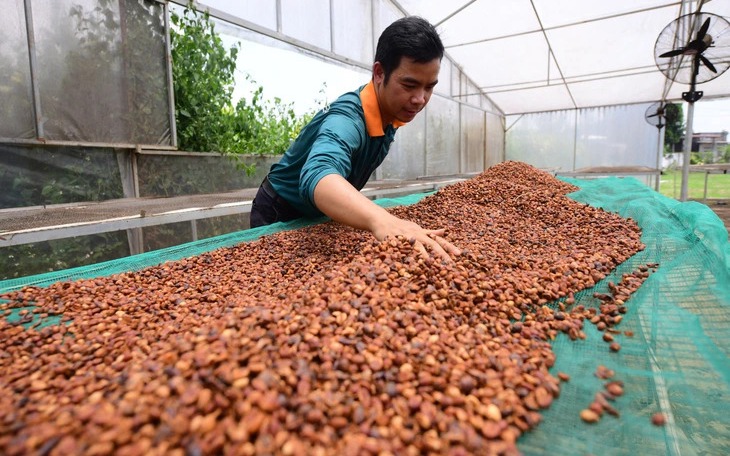
Some exporters have set up dedicated, segregated supply chains exclusively for EU-bound shipments, while providing direct training to local purchasing agents and farmers. Crucially, companies are now auditing plot data at the start of the harvest season rather than waiting until shipments are ready at the port.
At Simexco Daklak, one of Vietnam's largest exporters, preparation has reached the farm level. Ngo Quoc Vu, the company's director of sustainable agriculture, said Simexco has built a comprehensive database tracking individual farmers and land plots, complete with ID records, GPS coordinates, polygon maps, planting years, and land-use histories.
Simexco validates this data using multi-layered checks combining satellite imagery, regional forestry maps, local administrative records, and on-site field audits.
In addition to mapping, the company manages strict producer registries, monitors yield caps against plot sizes to prevent illegal blending, segregates compliant coffee from conventional batches, and tracks individual lot codes throughout the pipeline.
“Our goal isn't just capturing GPS points,” Vu said. “It's building an airtight paper trail so our EU customers can fulfill their due diligence with total confidence.”
While large aggregators like Simexco must overhaul complex supply chains, smaller, vertically integrated companies have had a smoother path.
Phung Ha Long, founder of LOP Creative: Designer Coffee x Fair Farm, runs a direct-trade model built on direct farmer partnerships and transparent processing. Her company already maintains GPS mapping, detailed plot histories, and batch-level tracking from harvest through roasting.
“Many EUDR requirements were already built into our operating model before the regulation was even passed,” Long explained. “For us, it hasn't required a overhaul, just standardizing our data formats and formalizing our existing systems.”
Persistent bottlenecks
Despite these proactive steps, systemic roadblocks remain across the sector.
Because coffee changes hands multiple times between field and port, geolocation data must be continuously reconciled against contracts, weighing tickets, processing yields, and batch numbers. Without standardized unique identifiers and automated volume-reconciliation systems, the risk of double-counting or mixing unverified beans remains high.

Nguyen Thanh Tai, a member of the executive committee of the Vietnam Coffee-Cocoa Association (VICOFA). Photo: Supplied
Data discrepancies pose another major headache. Exporters routinely find conflicting information between provincial cadastral maps, forest cover baselines, and satellite analysis tools.
“We often find long-established coffee farms flagged as protected forest by certain satellite platforms,” said a representative from Simexco. Resolving these false positives requires manual field inspections, historical land records, and physical documentation—a slow, expensive process with no unified official protocol for dispute resolution.
At the field level, onboarding smallholders presents its own hurdles. Long noted that many farmers are unaccustomed to digital recordkeeping, skeptical of sharing location data, or lack formal land-use certificates, relying instead on decades-old handwritten agreements. Exporters are forced to sidestep or exclude suppliers whose documentation cannot be fully verified.
A coordinated national approach
Industry leaders agree that exporters cannot solve these structural challenges in isolation. Meeting EUDR deadlines will require authoritative national reference data, uniform technical standards, clear local verification channels, and financial support for smallholders.
“Individual firms can hire mapping contractors or buy satellite feeds, but they cannot officially define forest boundaries, validate land rights, or resolve conflicting state mapping layers,” Tai stressed.
VICOFA is calling for a unified national database covering forestry lines, agricultural zones, land titles, and historic land-use changes—designed around a 'collect once, verify once, use many times' framework that protects farmer privacy and commercial confidentiality while enabling cross-platform access.
The industry also requires standardized data formats for farmer IDs, plot polygons, batch codes, and mass-balance calculations across processors and warehouses.
When boundary disputes or data anomalies occur, exporters need a clear, streamlined procedure designating which local government authority conducts field verifications and how quickly claims are resolved.
Furthermore, compliance costs must be distributed fairly across the value chain. Expense items like boundary mapping, satellite monitoring, software integration, and separate storage streams add up quickly. If these costs fall entirely on smallholders, vulnerable farming communities risk being priced out of the European market.
Smaller enterprises also urge local governments to take a more proactive role in educating farming communities, updating land registries after administrative redistricting, and offering user-friendly digital tools for rural cooperatives.
Ultimately, stakeholders assert that Vietnam should not treat traceability merely as a reactive compliance exercise for Europe. If designed properly, a robust national data infrastructure will modernize farm management, curb fraud, enable carbon accounting, and command higher premiums for Vietnamese coffee globally.
To tackle these challenges, VICOFA proposes a clear division of labor across the entire supply chain.
Under this framework, the national government would establish the legal foundation, baseline data layers, and official mapping standards, while local authorities manage on-the-ground field verifications and land title updates.
Exporters and processors would take charge of inventory management, batch segregation, and transaction tracking, with local agents and cooperatives working directly with farmers to organize groups and streamline data collection.
Meanwhile, VICOFA would serve as the central coordinating body, standardizing templates, delivering technical training, and leading direct dialogue with EU regulators and importers.









Max: 1500 characters
There are no comments yet. Be the first to comment.