


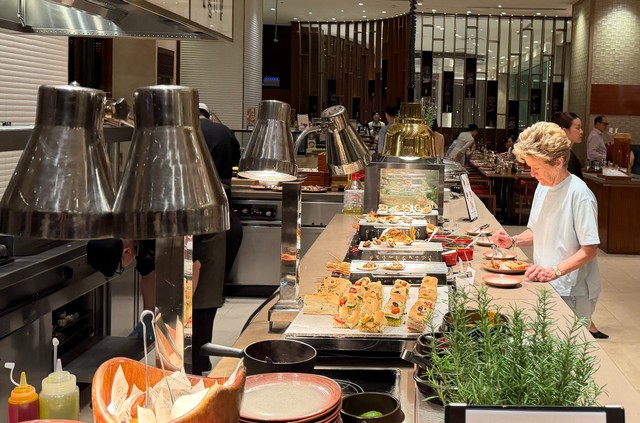
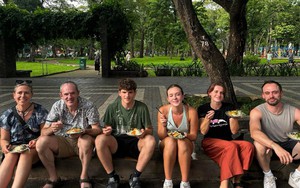
International diners enjoy local Vietnamese flavors. Photo: Hai Kim
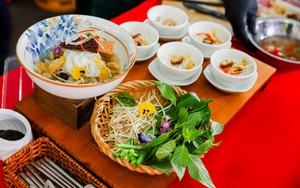
A standout example came when chef Pham Xuan Thang reimagined Hanoi’s snail noodle soup, winning a Marriott International culinary competition.
Instead of traditional rice vermicelli, he used handmade rice rolls to absorb the delicate snail broth.
Snail meat retained its natural crunch, while snail sausage wrapped in wild betel leaves added depth.
Fermented rice vinegar and fish sauce provided a layered sour-salty balance, complemented by seasonal herbs.
Judges praised the dish for elevating local ingredients without replacing them with expensive imports.
“Luxury here comes from understanding and retelling the story of the ingredient itself,” they said.
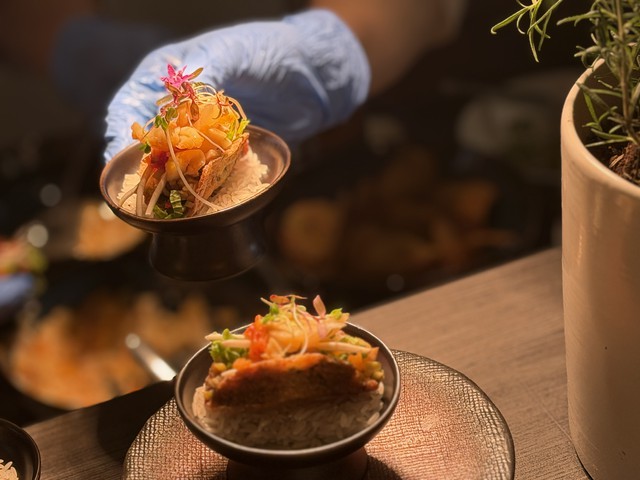
Banh xeo (sizzling Vietnamese pancakes) is served taco-style but retains its traditional taste. Photo: Hai Kim
Nagi Mankarious, Marriott International's director of operations in Vietnam, said the dish reflects a broader trend in which local cuisine is becoming part of the contemporary dining experience at upscale hotels and restaurants.
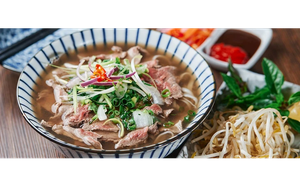
Examples include cheese made from Vietnamese cashews, banh xeo (sizzling Vietnamese pancakes) served in a taco-style format with braised fish sauce and spring onion foam, salmon prepared in a caramelized pepper-and-fish-sauce clay-pot style with young coconut meat, and bun bo Hue (Hue-style spicy beef noodles) retaining the distinctive aroma of fermented shrimp paste while incorporating beef and coriander foam.
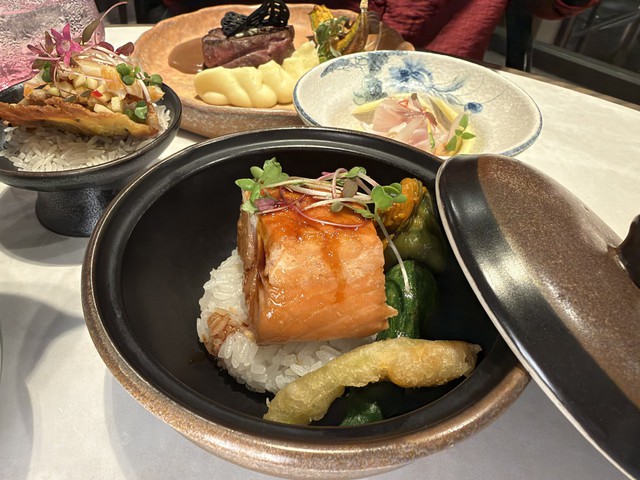
Salmon clay pot is presented beautifully for fine dining guests. Photo: Hai Kim
"The recognition of Vietnamese dishes in upscale restaurants reflects a broader shift in the regional culinary industry. Diners increasingly seek food that tells the story of the places they visit, rather than simply looking for expensive ingredients or familiar restaurant concepts," Mankarious said.
The Future of Food 2027 report confirms this shift, showing that 95 percent of surveyed establishments see rising demand for local specialties.
Diners now value dishes that tell the story of their destination more than simply expensive ingredients.
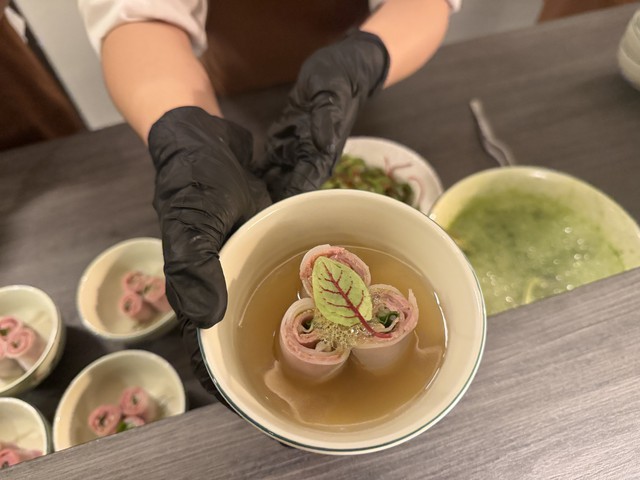
Bun bo Hue (Hue-style spicy beef noodles) retains its signature fermented shrimp paste flavor. Photo: Hai Kim
Over the past year, four out of five establishments surveyed had added more local ingredients to their menus. Examples included Kyoto vegetables in Japan, Kampot sea salt in Cambodian-inspired dishes and indigenous spices across Southeast Asia.
Local ingredients are also appearing more frequently in beverages, with three-quarters of establishments reporting the trend.
Demand for local dishes reached 71 percent in India and 67 percent in Indonesia, indicating that restaurants and hotels are increasingly acting as storytellers for their destinations through food.
Mankarious said the approach does not necessarily require rare or expensive ingredients.
Snails, wild betel leaves, fermented rice vinegar, fish sauce, toasted rice powder, and fresh herbs can all become part of a premium dining experience when supported by thoughtful storytelling and appropriate culinary techniques.
For Vietnam, this is an opportunity. Young chefs are blending international techniques with childhood memories and familiar flavors, creating a new identity for Vietnamese fine dining.
As Mankarious explained, “The luxury of Vietnamese cuisine may not lie in imported ingredients, but in showing why something familiar is worth appreciating.”
Another change in the fine dining segment is shorter experiences.
Instead of multi-hour tasting menus, many restaurants now design meals lasting 1.5-2 hours, offering à la carte options alongside traditional tasting menus.
This adjustment caters to modern lifestyles while maintaining sophistication.








Max: 1500 characters
There are no comments yet. Be the first to comment.