


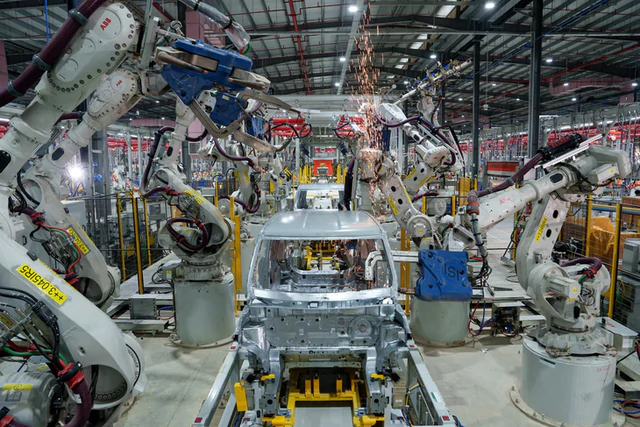
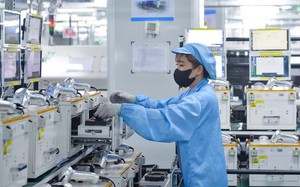
Inside VinFast's electric vehicle manufacturing plant at the Vung Ang Economic Zone in Ha Tinh, Vietnam. Photo: VF
For many local manufacturers, securing long-term contracts with industry giants such as VinFast, Thaco, and TC Motor could provide the stability needed to invest in technology, expand production, and compete internationally.
Domestic suppliers could tap into multibillion-dollar market
Despite growing manufacturing activity in Vietnam, domestic supporting industry firms still face significant challenges in securing a stronger foothold in global supply chains, particularly those dominated by multinational corporations.
Associate Professor Dr. Phan Dang Tuat, chairman of the Vietnam Association for Supporting Industries, said strengthening ties between major domestic manufacturers and smaller suppliers could help address these challenges.
Drawing on the experiences of Japan and South Korea, he suggested that Vietnam should prioritize developing domestic production networks as a foundation for building a stronger supporting industry sector.
The potential economic benefits could be substantial.
For example, VinFast could sell approximately 350,000 cars in 2026, generating more than US$10 billion in revenue at an average price of $30,000 per vehicle.
If domestic manufacturers supplied components accounting for just 30 percent of that value, they could generate more than $3 billion in revenue, excluding opportunities in motorcycles and other products.
He said similar partnerships involving major Vietnamese manufacturers such as Viettel, Thaco, and Hoa Phat could help build a strong domestic supporting industry ecosystem worth tens of billions of dollars.
Major manufacturers open doors to local suppliers
Efforts by automotive giants Vingroup, Thaco, and TC Motor to expand their domestic supplier networks have attracted growing interest from Vietnam's supporting industry businesses.
Vingroup and its carmaking arm VinFast held their second conference on increasing localization and developing supplier networks in Hanoi on Friday, seeking domestic partners in mechanical engineering, manufacturing, machining, software, and advanced technology.
The initiative prompted some local businesses to approach industry associations, contact potential partners, and review technical requirements in hopes of securing contracts.
Beyond supplying its domestic operations, Vingroup plans to source Vietnamese-made components for VinFast factories in India and Indonesia, potentially opening a path for local manufacturers into international markets.
The group has also introduced incentives to attract domestic suppliers. At a conference in 2025, VinFast offered reduced land rental fees and product purchasing commitments under agreed terms for supporting industry firms investing in factories in Hai Phong and Ha Tinh.
These efforts build on VinFast's existing supplier network.
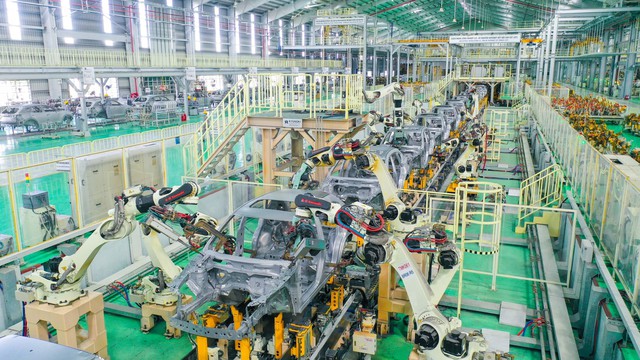
VinFast's electric vehicle manufacturing plant in Ha Tinh Province highlights the growing opportunities for Vietnamese suppliers to join major automotive supply chains. Photo: VF
In July, a company executive said its motorcycles had achieved a localization rate of approximately 90 percent, with significant participation from domestic manufacturers.
Other major automakers are also expanding their manufacturing ecosystems.
Thaco, led by businessman Tran Ba Duong, is developing a supporting industry ecosystem in Chu Lai, covering automotive components, mechanical engineering, and industrial equipment, with an emphasis on exports.
The group has achieved localization rates of 50 percent for passenger cars, 70 percent for trucks, and over 70 percent for buses.
Meanwhile, TC Group began operating its Thanh Cong Viet Hung automobile plant in northern Vietnam's Quang Ninh in March 2025.
With a designed annual capacity of 120,000 vehicles, the facility forms part of a 301-hectare automotive and supporting industry complex associated with the development of the Skoda brand.
The continued expansion of their supplier network is expected to create further opportunities for Vietnamese businesses, particularly those seeking the large, stable orders needed to justify long-term investment.
Long-term contracts key to unlocking investment
Despite growing opportunities, entering major automotive supply chains remains challenging for smaller Vietnamese manufacturers, particularly given the substantial investment required.
The director of a Ho Chi Minh City-based copper wire manufacturer supplying foreign-invested companies said producing automotive components requires substantial investment in molds, production lines, and testing equipment.
Without large, stable orders, domestic manufacturers struggle to compete with imported components.
Long-term contracts would give them the confidence to upgrade technology, hire engineers, and expand capacity.
Nguyen Van Tri, founder of Ho Chi Minh City-based Lap Phuc Co. Ltd., welcomed Vingroup's supplier recruitment initiative, saying it could help Vietnamese manufacturers undertake more technically demanding work and join global supply chains.
Lap Phuc already produces high-precision molds for U.S. companies, with its products entering supply chains serving GM, Tesla, and Ford.
"To become their partner, you need the technical capabilities and expertise to earn their trust," Tri said.
The U.S. market accounts for approximately 95 percent of Lap Phuc's revenue, while domestic sales contribute just five percent. With around 200 employees, the company generates $4-5 million annually.
However, many smaller firms lack the capital and technological capabilities to enter global supply chains independently, underscoring the importance of major domestic manufacturers in supporting their development.








Max: 1500 characters
There are no comments yet. Be the first to comment.