


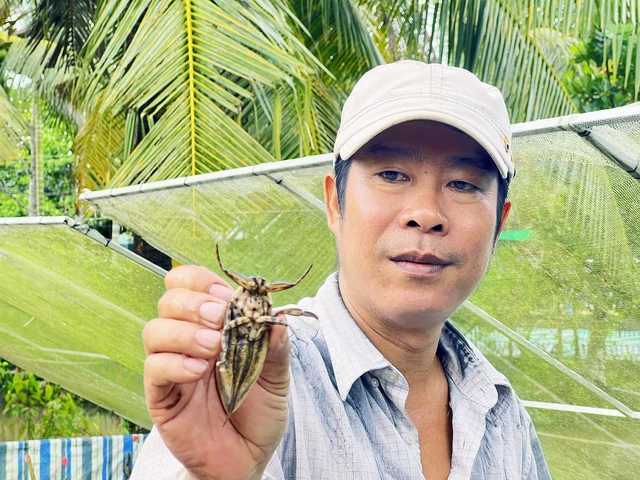
Huynh Van Thuan has turned giant water bug farming into a promising business in his hometown in Can Tho City, southern Vietnam. Photo: Ca Linh
Before settling on giant water bugs, known as ca cuong in Vietnamese, Huynh Van Thuan, 42, researched several farming models, including raising crickets, and chickens.
As he had limited land, he prioritized animals that did not require much space. After researching different options, he eventually chose giant water bugs.
Thuan said male giant water bugs have two scent glands under their chests that produce a distinctive cinnamon-like aroma.
In some places in Vietnam, the oil from male giant water bugs is usually used in very small amounts to add a distinctive fragrance to dishes, particularly fish sauce.
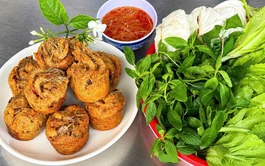
Besides their aromatic oil, the insects themselves are also used in a variety of dishes.
Thuan started experimenting with two cricket pens and six giant water bug tanks in 2023.
During the first year, he mainly learned how to care for the insects and studied their characteristics.
He later expanded his cricket farming to both sell the crickets and use them as feed for the giant water bugs.
As he saw growing market demand, Thuan shifted his focus to giant water bugs and gradually expanded his operation.
He now farms the insects on an area of about 250 square meters.
Each tank covers around six square meters and is built with a metal frame, tarpaulin and netting to prevent the giant water bugs from flying away.
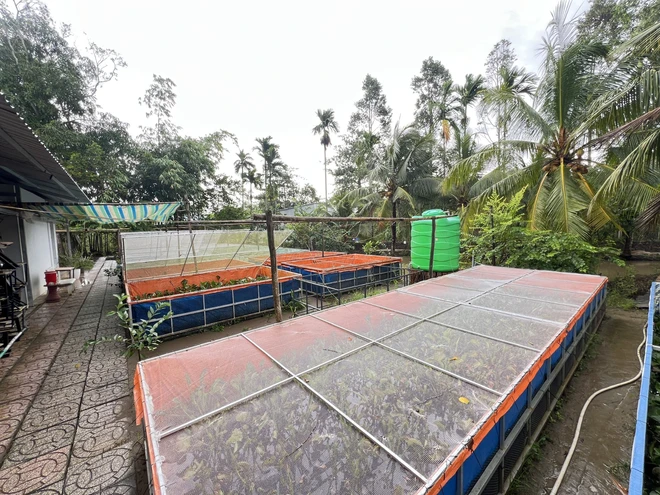
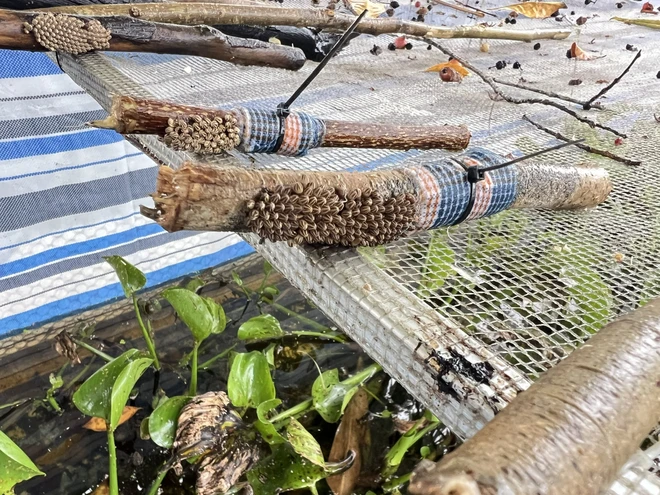
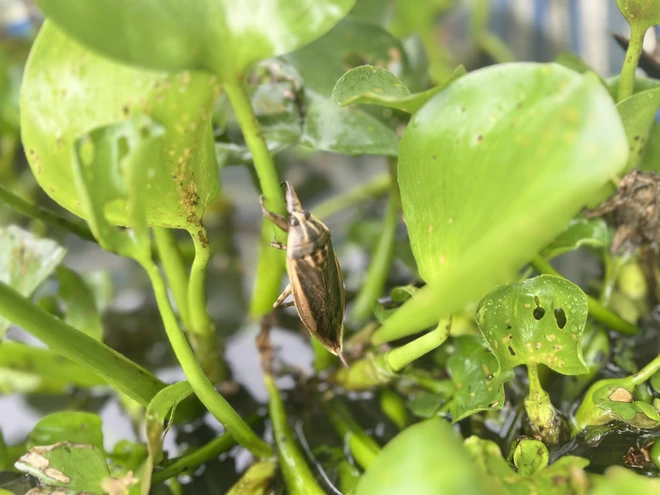
Huynh Van Thuan cleans the giant water bug farming area every day. Photo: Ca Linh
How he profits from giant water bug farming
According to Thuan, giant water bugs are not particularly difficult to raise, but farmers must carefully control the water, food, and living environment.
The insects are sensitive to chemicals, so the water must be clean and free of contaminants.
The tanks need to be covered with netting and equipped with aquatic plants such as algae and water hyacinths, as well as dry branches for female giant water bugs to cling to when laying eggs.
One of the most important lessons, he said, is to secure a reliable food supply.
Giant water bugs feed on live prey such as tadpoles, small fish, and crickets.
Thuan initially raised crickets as feed but later switched to raising tadpoles and fish to cut costs and ensure a steady supply of prey.
When female giant water bugs lay eggs, the egg clusters are moved to separate areas to reduce the risk of being damaged by adult insects.
The eggs can hatch after around six to seven days if properly cared for, with moisture needing to be maintained throughout this stage.
Young giant water bugs begin hunting prey just around 12 hours after hatching.
As they grow, the insects molt several times and consume more food. If food is scarce, they may bite and eat one another.
In the Mekong Delta, where Can Tho is located, giant water bugs can be sold after around 50-65 days or more, depending on whether they are raised for breeding or consumption.
Thuan currently sells an average of 500-600 mature giant water bugs per month, with sales sometimes reaching 700-800 or even around 1,000.
Male giant water bugs sell for around VND40,000-50,000 (US$1.53-1.91) each, while females fetch around VND20,000 each ($0.77).
Egg clusters are sold for around VND100,000 each ($3.83).
After mature male giant water bugs are harvested, they are cleaned, vacuum-packed and distributed to consumers.
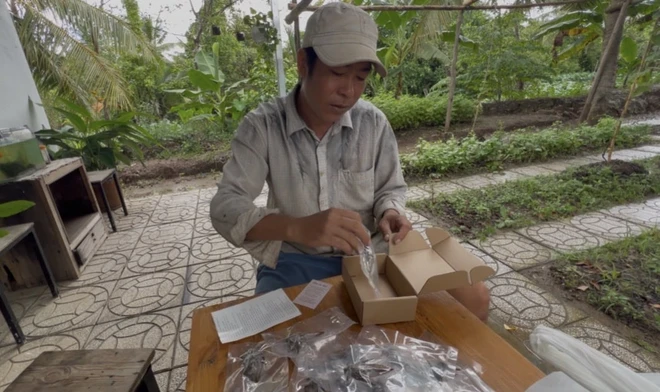
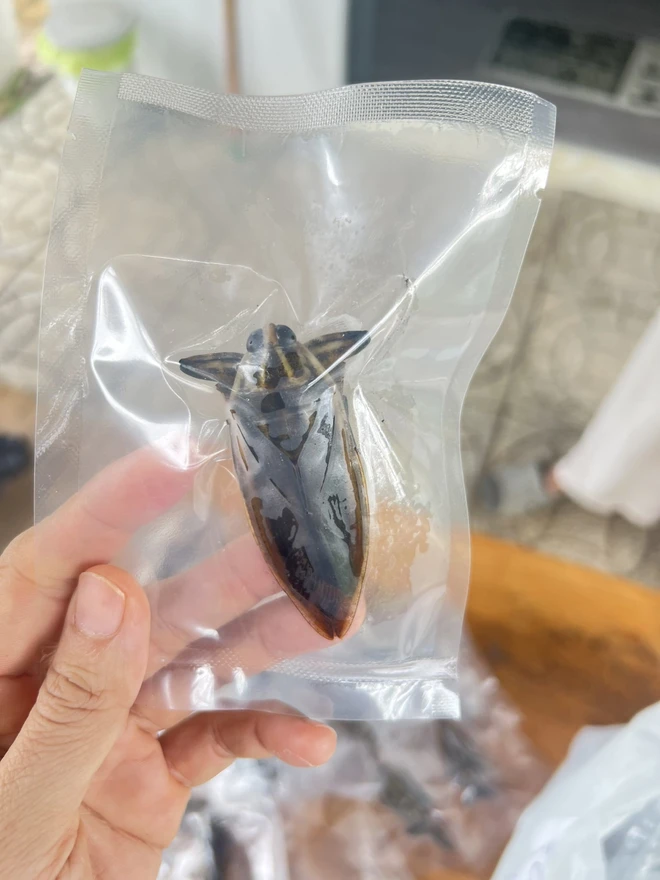
Hiynh Van Thuan packages male giant water bugs for distribution to consumers. Photo: Ca Linh
Thuan's customers come from many provinces and cities, particularly northern Vietnam and major urban centers.
Besides raising the insects himself, he also works with other farmers to purchase their products and fulfill orders.









Max: 1500 characters
There are no comments yet. Be the first to comment.