


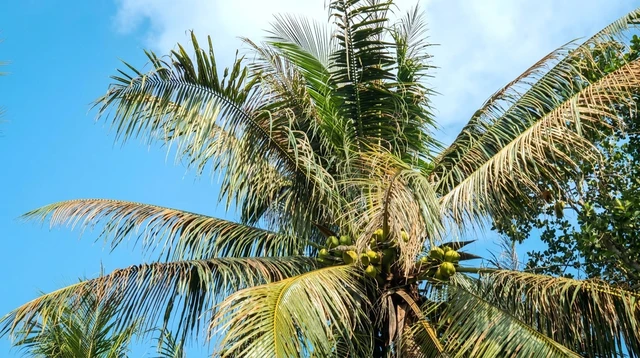
Vinh Long Province has the largest coconut-growing area in Vietnam. Photo: Hoai Thuong / Tuoi Tre
These biological control measures have helped coconut plantations regain healthy growth and development, while pest infestations in coconut plantations have declined significantly.
The area affected by rhinoceros beetles and black-headed caterpillars has decreased by more than 1,000 hectares compared with the same period last year.
Currently, only about 2,383 hectares of coconut plantations remain infested with rhinoceros beetles.
Vinh Long has the largest coconut-growing area in Vietnam, with more than 122,000 hectares, accounting for approximately 61 percent of the country's total coconut cultivation area.
The Vinh Long agricultural sector is also actively monitoring crop pests through light traps, field surveys, and pest forecasting to provide farmers with timely guidance on preventing and controlling infestations.
Recently, the illegal breeding of coconut palm weevil larvae for food consumption and commercial purposes has been detected in Vinh Long, raising concerns over the potential spread of harmful pests and threats to the province's coconut-growing areas.
In response, the Vinh Long People's Committee has issued a directive prohibiting the unlawful breeding and release of coconut palm weevil larvae. Violators will face strict penalties under the law.
According to the provincial Department of Agriculture and Environment, offenders face fines of VND3-6 million (US$114-228) for non-commercial violations, and VND6-12 million ($228-456) for commercial activities.
Authorities also impose remedial measures, including the mandatory destruction of all larvae and other harmful organisms, as well as the confiscation of any illicit profits earned from the violations.










Max: 1500 characters
There are no comments yet. Be the first to comment.