



Many small- and medium-sized enterprises have orders but still struggle to access bank credit. Photo: Supplied
Business representatives are urging banks to broaden their credit assessment methods by giving greater weight to cash flow, contracts, payment history, and business performance.
The call comes after the prime minister approved Decision No. 1809 on further modernizing the banking system, addressing weak credit institutions, and improving access to capital, particularly for SMEs.
Under the plan, at least 300,000 SMEs are expected to gain access to bank credit by 2030.
Businesses call for less reliance on collateral
For many SMEs, the main barrier to bank financing is not a lack of orders or cash flow, but insufficient collateral.
Do Van Ve, chairman of the Hung Yen Province Business Association, said many firms with viable business plans still struggle to borrow because lending decisions remain heavily tied to secured assets.
“If collateral becomes an almost decisive condition, many businesses with markets, orders, cash flow, and viable business plans will still find it difficult to access credit,” Ve said.
He urged banks to assess borrowers more broadly, using data such as cash flow, contracts, payment history, tax records, e-invoices, and business performance.
“Banks should not only look at how many assets a business owns today, but also at how much value it can generate in the future,” he said.
Ve noted that firms with few assets may still have strong repayment capacity if they hold stable contracts, regularly supply large companies, and maintain a good payment record.
Nguyen Thi Lan Huong, a representative of Vietnam Young Entrepreneurs Association, echoed the view, saying banks should take into account revenue, cash flow, contracts, orders, receivables, payment history, and tax obligations alongside collateral.
She cited dealers, cooperatives, and businesses acting as F1 or F2 purchasing agents for major agricultural exporters. Such firms may handle large and regular cash flows but often lack sufficient assets to pledge for loans.
Huong called for wider use of value-chain financing and pilot lending models based on cash flow, invoices, purchase orders, and receivables for firms with reliable data and stable business relationships.
Timely financing matters as much as borrowing costs
Huong said businesses are concerned not only about whether they can borrow, but also about capital costs, collateral requirements, loan tenors, procedures, and disbursement times.
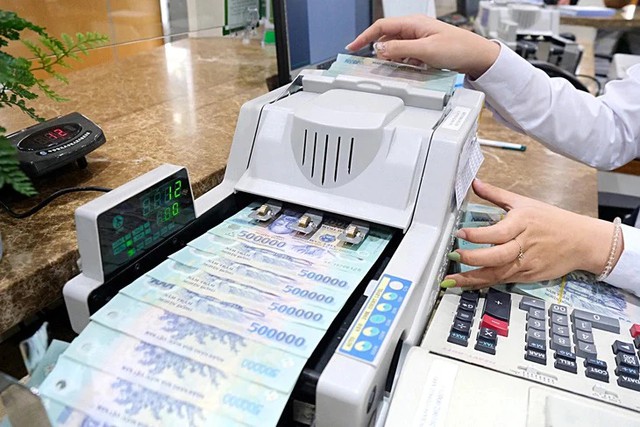
Delayed loan disbursement can cause businesses to miss business opportunities. Photo: Ngoc Phuong / Tuoi Tre
“For businesses, time is also a cost. Delayed financing can mean missing a business opportunity,” she said.
Ve said banks should offer more tailored credit products for different sectors, as manufacturers, exporters, supporting-industry firms, and businesses investing in digital or green transformation have different capital needs and business cycles.
He suggested expanding cash-flow-based lending, supply-chain finance, purchase-order financing, and receivables financing, while increasing access to medium- and long-term loans for investment in machinery, technology, innovation, and digital transformation.
Huong also called for greater transparency over the total cost of borrowing, not just interest rates. Costs such as insurance, asset valuation, documentation, and interest-rate adjustments after promotional periods can all affect the efficiency of borrowed capital.
“Banks should continue to make the total cost of borrowing more transparent, simplify documentation, clearly disclose lending conditions, and shorten appraisal and disbursement times,” Huong said.
Businesses also need medium- and long-term financing to invest in machinery, technology, deeper processing, logistics, digital transformation, and the green transition.
Credit institutions should therefore design loan tenors, grace periods, and repayment schedules that better match the investment cycles of different industries.
Businesses do not want an ask-and-give mechanism for accessing capital. They want a clear, transparent, and accessible credit market that properly assesses their capabilities and shares risks reasonably.
“They need financing at the right time, with the right maturity, and in a form that matches their ability to generate cash flow,” she said.
According to the State Bank of Vietnam, outstanding credit to the economy reached nearly VND21 quadrillion (US$802 billion) as of August 28, up 10.24 percent from the end of 2025.
Outstanding loans to SMEs exceeded VND4.1 quadrillion ($156.5 billion), up 12.4 percent from the end of last year, outpacing overall credit growth and accounting for around 20 percent of total outstanding loans.








Max: 1500 characters
There are no comments yet. Be the first to comment.