


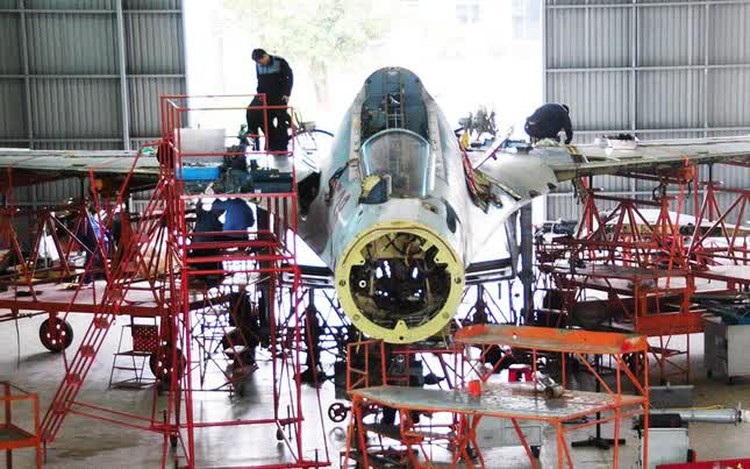
Technicians work on a Su-family fighter jet at a workshop of Factory A32 in Da Nang City, central Vietnam. Photo: B.D. / Tuoi Tre
The facility has evolved into a key center for overhauling and extending the operational lifespan of the Russian-made fighter aircraft.
Operating under the Air Defense and Air Force Service of the Vietnam People’s Army, Factory A32 has, over its 60 years of operation, developed into one of the country’s leading aircraft maintenance hubs.
From foreign dependence to in-house capability
Factory A32’s development reflects a gradual shift from reliance on foreign technical assistance toward mastering increasingly complex aircraft maintenance technologies.
Vietnam’s air force operates several generations of Russian-origin aircraft, including the Su-27 series and the more advanced Su-30MK2.
According to senior officers at the factory, each fighter jet type is designed with a limited number of flight hours or service years before requiring a major inspection and overhaul.
Previously, most complex maintenance work depended on foreign partners, with Russian specialists invited to Vietnam to conduct repairs using imported equipment.
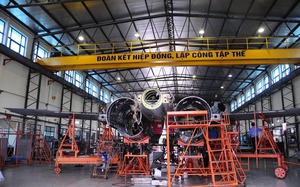
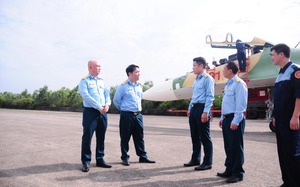
In cases of severely damaged or fully expired aircraft, airframes had to be transported abroad for an overhaul, a costly and time-consuming process that could leave jets grounded for extended periods.
A turning point came after 2010, when Vietnam placed greater emphasis on defense technology autonomy.
Factory A32 was tasked with gradually developing capabilities in large-scale maintenance and life-extension programs for fighter jets.
Engineers and technicians were sent to Russia and other countries operating similar aircraft for training.
At the same time, teams worked domestically to analyze technical documentation and build in-house expertise.
First Su-27UBK life extension marks key milestone
A major breakthrough came in late May 2016, when a Su-27UBK with tail number 8526 completed a successful post-overhaul test flight after undergoing its first life-extension program at Factory A32.
The flight, conducted by pilots from Air Division 372 and supervised by senior defense officials, marked the first time Vietnam had independently established and operated a full life-extension overhaul line for the Su-27.
The milestone drew attention from international military aviation observers.
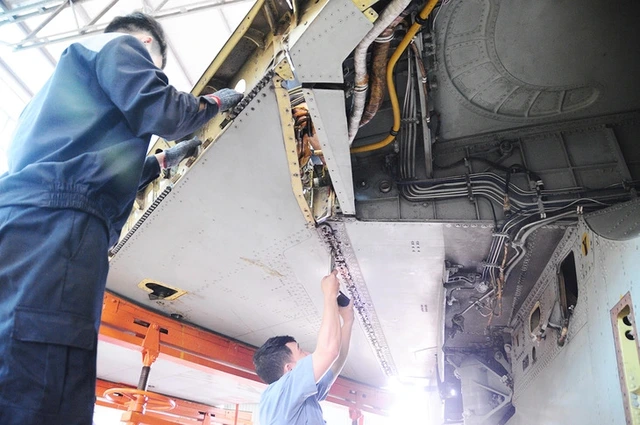
A technician repairs a Su-27 fighter jet at a workshop of Factory A32 in Da Nang City, central Vietnam. Photo: B.D. / Tuoi Tre
A Russian media outlet at the time noted that Vietnam had become one of the few countries capable of independently extending the service life of the Su-27 fighter jet.
Factory A32 director Colonel Pham Ba Nguyen said the 2016 result not only demonstrated progress in mastering Su-27 maintenance technology but also laid the foundation for work on more advanced aircraft, particularly the Su-30MK2, dubbed ‘King Cobra.’
Building on this success, the factory received additional aircraft from air force units to continue life-extension programs while preparing for the more complex task of overhauling the Su-30MK2 fleet.
Su-30MK2 overhaul signals major capability leap
According to Lieutenant Colonel Trinh Van Minh, deputy head of the factory’s technical department, the Su-27 entered Vietnam’s air force in the mid-1990s, while the Su-30MK2 was introduced later and features significantly more advanced digital and electronic systems.
Colonel Pham Ba Nguyen said that although the factory had accumulated experience with earlier-generation aircraft, the Su-30MK2 posed far greater challenges due to its complex avionics and the limited availability of global repair expertise outside the original manufacturer.
When the program began, A32’s technical documentation for the Su-30MK2 remained incomplete.
Engineers also had limited hands-on experience with deep-level maintenance.
Spare parts and testing equipment were difficult to obtain, requiring extensive training, research, and documentation development.
Despite these constraints, knowledge of the Su-30MK2 was gradually accumulated through incremental repairs.
Military personnel and workers at Factory A32 eventually developed a complete set of technical documentation for repairing the aircraft, comprising more than 900 volumes, totaling nearly 60,000 pages, astonishing even the aircraft supplier.
After nearly two years of intensive work, a Su-30MK2 with tail number 8535 successfully completed a post-overhaul test flight at Da Nang airport on October 23, 2024.
The result marked another step in Vietnam’s ability to independently maintain and extend the service life of its most advanced fighter jets.
Colonel Nguyen said the achievement represented a significant technological leap, underscoring Vietnam’s growing capability in the deep maintenance of Su-family fighter jets.
Factory A32 will mark its 60th anniversary in June this year.









Max: 1500 characters
There are no comments yet. Be the first to comment.