


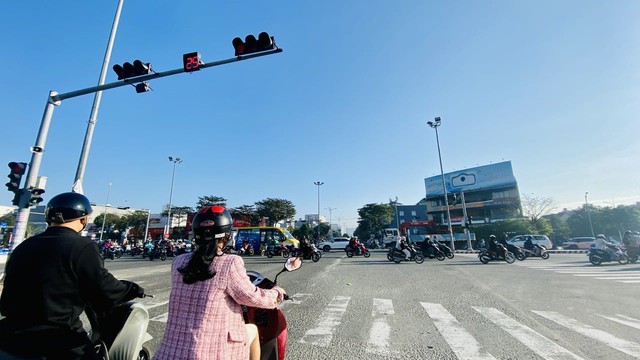
Da Nang residents stop at a red light. Photo: Truong Trung / Tuoi Tre
Editor's note: This article reflects the views of Darren Chua, a Singaporean who spent a decade living and working in Ho Chi Minh City. Having also studied in Melbourne, Australia, he has experienced different traffic cultures across the region and beyond. Drawing on those experiences, he shares his observations on Da Nang's road culture, which he believes offers a compelling example of how empathy and courtesy can help shape a more civilized urban environment.
The article has been edited by Tuoi Tre News for clarity, consistency, and coherence.
I have spent my life navigating global roads, from the strict and orderly precision of Singapore’s highways to four years in Melbourne for my bachelor’s degree, where I mastered the art of giving way. Later, I spent a solid decade living and working in Ho Chi Minh City, fully immersing myself in the rhythm of the southern metropolis.
To say Ho Chi Minh City traffic is an experience is an understatement. It is a chaotic ecosystem where honking is a dialect and 'giving way' means 'whoever dares, wins.' I thought a decade of navigating those busy streets had entirely desensitized me to how roads function in Vietnam. Then, stories began emerging from the streets of Da Nang, leaving me in absolute disbelief.
Drivers there are doing something unprecedented: cars are voluntarily halting a full five meters behind intersections at red lights, deliberately leaving a wide-open zone at the front exclusively for motorcycles. Even on blazing hot days when the countdown timer reveals a grueling 99-second red light, travelers note a baffling 'culture shock.'
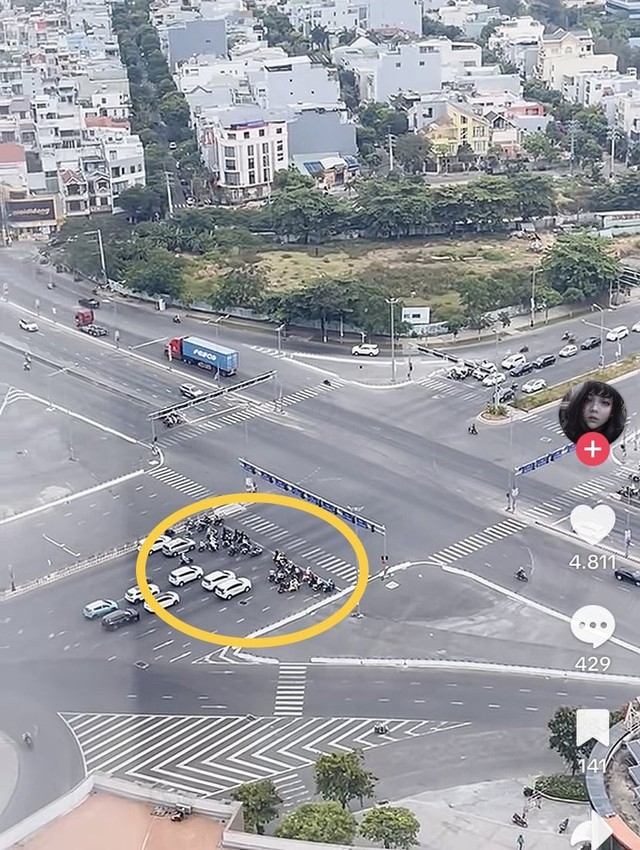
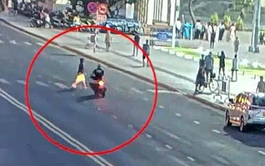
This image, captured from a video circulating on social media, shows cars voluntarily stopping well behind the stop line to leave room for motorcycles at the front in Da Nang City, Vietnam.
There is no anxious chorus of honking, no frantic crowding, and no desperate revving of engines to steal a head start. Instead, there is a collective, calm patience.
What is happening structurally, separating heavy metal from nimble two-wheelers, is brilliantly simple. But what is truly profound isn’t the engineering or the paint on the asphalt; it’s the human empathy driving it. Even on stretches of road where no specific 'motorcycle zones' are painted, car drivers still voluntarily pull back five meters.
As one local driver put it so beautifully, "I am sitting in an air-conditioned car, so I should give way to the people on motorbikes."
In Singapore or Melbourne, order is reinforced by cameras and hefty fines. It is a top-down civilization. What is happening in Da Nang is much more beautiful: it is organic courtesy born from empathy.
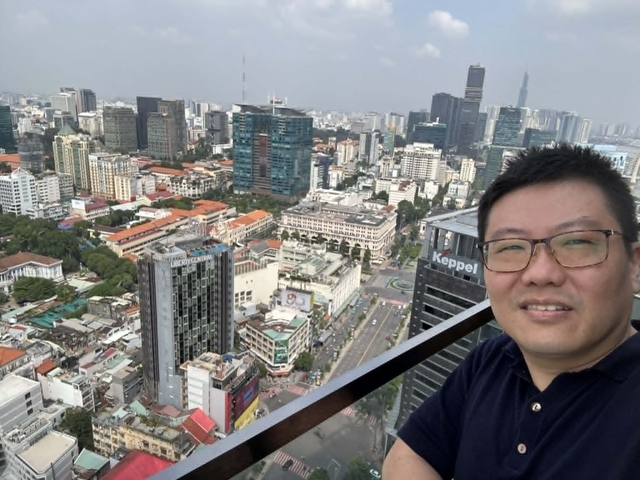
Darren Chua is seen in a photo he provided Tuoi Tre News
The rapid modernization of a city must eventually be matched by the quality of its human relationships. We cannot expect people struggling for bare survival to prioritize social civility, but as life improves, our streets should reflect that progress.
Da Nang drivers aren't keeping back due to fear of enforcement; they do it because they have evolved past the 'rough and hard life' mentality. They recognize that a driver's impatience shouldn't come at the expense of a rider's safety.
For years, observers have resigned themselves to the belief that the region's traffic is an untamable beast. But the widespread admiration for this movement proves that people deeply yearn for change. They look at this patience with a desire to see it mirrored in the chaotic grids of Hanoi and Ho Chi Minh City.
As the Vietnamese proverb goes, 'Mot dieu nhin, chin dieu lanh' (One token of patience brings nine pieces of good fortune).
Now, I wonder: if this brilliant street design were implemented across Vietnam, what would the impact be?
In this day and age, even Singapore and other major global cities can learn a thing or two from Da Nang's mindset towards traffic. It shows that the best way to move a nation forward isn't always through brute force, surveillance, or hefty fines. Sometimes, it is as simple as leaving a little room for the person beside us.








Max: 1500 characters
There are no comments yet. Be the first to comment.