


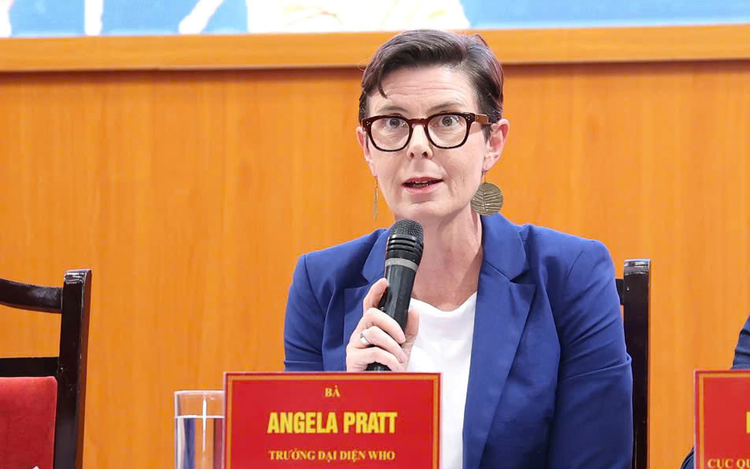
Angela Pratt, WHO representative in Vietnam. Photo: T. Minh
Angela Pratt, WHO representative in Vietnam, made the remarks at a press briefing on the draft revised Law on Donation, Removal and Transplantation of Human Tissues and Organs and Donation and Recovery of Cadavers on Tuesday afternoon.
She said WHO supports efforts to expand access to transplantation in line with ethical principles, but protecting donors must remain the top priority.
Pratt said tissue and organ donation involving children is a sensitive issue requiring careful consideration.
It is essential to establish a system with clear ethical principles that is transparent, fair, and safe for both donors and recipients.
WHO recommends making children's best interests and highest level of protection the primary considerations.
It also stresses the need to distinguish between living donation and donation after death.
Organ donation after death by minors has been practiced in some organ donation and transplantation systems around the world, Pratt said.
Meanwhile, living organ donation by minors should only be considered in exceptional circumstances.
For regenerative tissues such as stem cells, donation between family members may be considered when no suitable adult donor is available, but it must meet professional requirements and be subject to strict safeguards, she underlined.
According to WHO, minors who may donate tissues or organs should receive information appropriate to their age, be given opportunities to express their views, and have their parents or legal guardians involved.
Children should also be guaranteed the right to refuse or withdraw consent, while receiving independent counseling and assessment to prevent family pressure, coercion or commercialization.
WHO considers Vietnam's draft law broadly consistent with its principles and international experience.
However, the draft could be further improved, particularly regarding the provision of age-appropriate information and ensuring that children's consent is genuine.
Draft law does not give children final say on donation
Duong Duc Hung, director of Viet Duc University Hospital in Hanoi, provided further clarification on tissue and organ donation at the briefing.
He said transplantation currently relies on two main sources: living donors and donors who have died following brain death or circulatory death.
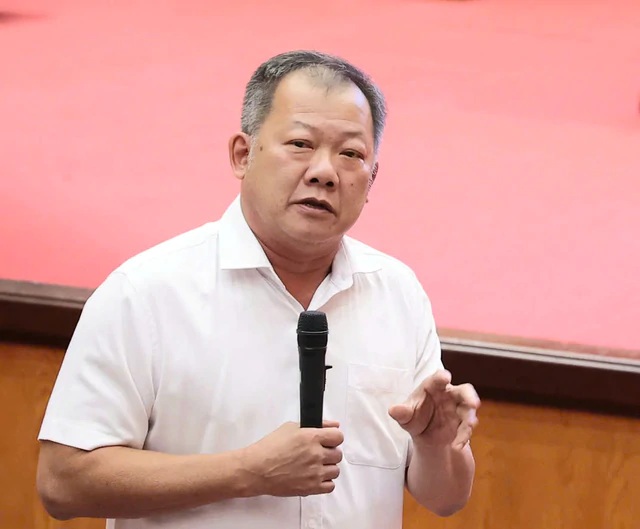
Duong Duc Hung, director of Viet Duc University Hospital in Hanoi. Photo: T. Minh
Under current Vietnamese law, organs cannot be retrieved from living donors under 18.
However, regulations on certain regenerative tissues need to be considered with due regard for children's safety and rights, Hung said.
Because children have not fully developed their ability to make informed decisions, tissue donation must be carefully assessed for its potential health effects, with the involvement of parents or legal guardians and a professional council.
Seeking children's views is intended to understand their wishes and thoughts, not to give them the right to make the final decision on tissue donation.
Hung cited bone marrow donation for a biological brother or sister as an example, saying such procedures must fully comply with professional requirements and legal regulations.
He said medical professionals sometimes face difficult situations in which patients need transplants to survive but they cannot receive them because the law does not permit the procedures.
Nevertheless, amending the law should not simply aim to expand donation and transplantation opportunities. It must also establish a sufficiently robust legal framework to protect donors.
He called for constructive discussion of the proposed amendments, balancing opportunities to save patients' lives with the need to protect children.
Children face shortages of suitable donor organs
Nguyen Hoang Dinh, deputy director of the University Medical Center Ho Chi Minh City, said organ transplantation for children presents particular challenges, especially regarding the size and compatibility of donated organs.
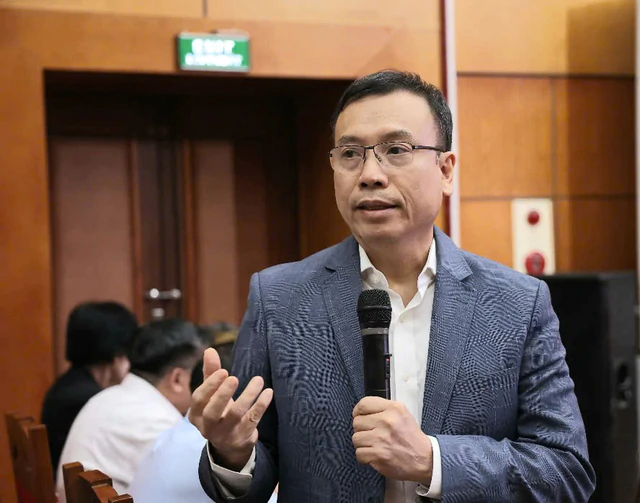
Nguyen Hoang Dinh, deputy director of the University Medical Center Ho Chi Minh City. Photo: T. Minh
A 2023 study found that around 160-180 children in the Mekong Delta and southern Vietnam needed organ transplants each year. Of these, approximately 95 needed liver transplants, 75 heart transplants, and 77 kidney transplants.
For heart transplants, not every donor heart is suitable for a child.
At his hospital, the youngest child to receive a heart transplant was nine years old and weighed 45 kilograms.
Finding a compatible heart becomes even more difficult for children who weigh less.
Meanwhile, liver transplants for children still depend heavily on living donors, primarily parents donating part of their liver to their children.
Only a small number of cases involve livers from adult donors who have died following brain death.
According to Dinh, the three-year survival rate among children who undergo liver transplantation exceeds 90 percent.
However, living donors still face certain health risks. Expanding the supply of organs from deceased donors could therefore increase children's access to transplantation while reducing reliance on family members.
He said legislation should both prevent the exploitation of children and provide a clear legal basis for medical professionals to carry out donation and transplantation when all professional and legal requirements are met.
Regenerative tissue donation must meet strict conditions
Tran Minh Dien, director of the National Children's Hospital in Hanoi, stressed that the proposal to allow people under 18 to donate regenerative tissues must be understood in terms of eligible donors, the purpose of donation, and professional requirements.
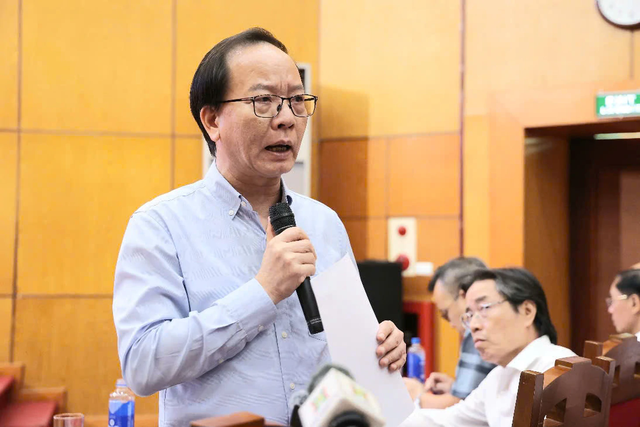
Tran Minh Dien, director of the National Children's Hospital in Hanoi. Photo: T. Minh
Under the draft, regenerative tissue donation would be restricted to biological siblings rather than allowing donors to give tissues to recipients of their choice, he said.
For example, in bone marrow donation to treat thalassemia, the donor and recipient must have a suitable level of compatibility. Being biological siblings does not automatically mean they can donate bone marrow to each other.
Dien said regenerative tissue donation would only be permitted when professional requirements were met and donor safety was ensured.
Tissue could not be retrieved for transplantation into a relative in every case, as transplant outcomes depend significantly on compatibility between the donor and recipient.
Regarding the proposal to allow organ donation after brain death by people under 18, Dien said the draft requires an independent council to assess brain death, separate from those responsible for determining whether the recipient should receive a transplant.
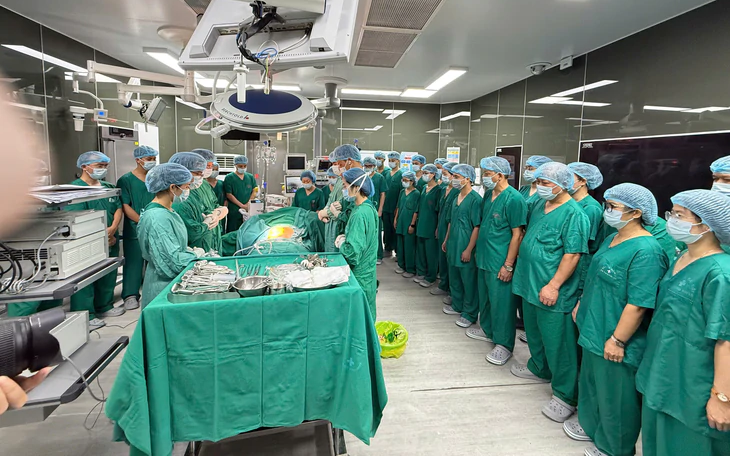
This mechanism is intended to ensure that the determination of brain death is not influenced by the demand for organs.
At the National Children's Hospital, organs received from the National Organ Transplant Coordination Center or other facilities must be handled in accordance with professional procedures.
The process involves a council, and the hospital's legal department reviews the relevant documentation.
Dien said expanding the supply of donated organs, particularly from brain-dead donors, is necessary to improve treatment opportunities for patients, including children with life-threatening illnesses.
However, any expansion must be accompanied by strict oversight to protect donors' rights and safety.
Experts said the amended law should pursue two objectives simultaneously: expanding patients' access to organ transplantation and establishing strong safeguards to ensure that children are not exposed to risks or pressured into donating tissues or organs.
The Ministry of Health has presented the draft revised Law on Donation, Removal and Transplantation of Human Tissues and Organs and Donation and Recovery of Cadavers to the National Assembly.
Under the draft, people under 18 could register to donate organs after brain death or circulatory death, provided that they register or express their wishes before death and their legal representative gives consent.
The proposal sparked public concern over the risk of human tissue and organ trafficking involving children.
In response, the ministry noted that the draft law explicitly prohibits buying, selling, coercing, stealing, or brokering human tissues and body parts.
It also bans exploiting guardianship, alternative care, or adoption relationships to harvest tissues and body parts from minors. Violators will face criminal prosecution.
The Ministry of Health is also seeking input from children aged seven to under 18 on the draft law, explaining that it aims to consider the perspectives of children when developing policies and laws that affect them.


Max: 1500 characters
There are no comments yet. Be the first to comment.