


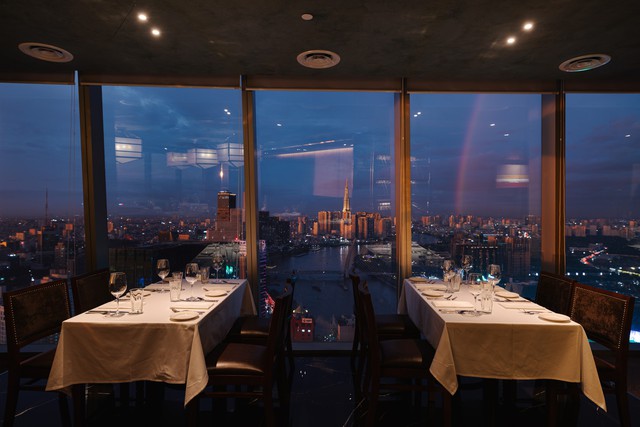
A 360-degree view of Ho Chi Minh City from The Capital Grille's first restaurant in Asia. Photo: Supplied
A food and beverage group operating across the APAC region, Ko Hospitality Group has recently entered Vietnam as the operator of The Capital Grille, the American fine-dining steakhouse brand owned by Darden Restaurants, with its first Asian restaurant in Ho Chi Minh City.
“It was a natural decision,” Ko told local media during a roundtable in mid-September.
“While we’re confident we’ll eventually have venues in other Asian places, such as Singapore, Jakarta or Manila, we feel that everything is syncing up properly here first."
What makes Vietnam stand out
Vietnam is currently standing out from other markets in the region, Ko said, describing the current period as “a unique moment for Vietnam.”
“There’s a lot of focus, a lot of development and foreign investment. Obviously, the GDP growth is really high, eight percent,” he said.
“Along with that, the foreign trade surplus with the U.S. is also important.”
He said the strong trade ties with the U.S. are a sign of Vietnam’s deep integration into global supply chains, particularly its exposure to the U.S. market.
For an American F&B brand, Ko sees those growing trade ties as an opportunity to provide ancillary services as more businesses operate and expand in Vietnam.
Ko also pointed to Vietnam’s transition toward higher-value technology manufacturing, saying the shift was a positive sign for the country’s future and strengthened his confidence in the market.
But most importantly, he said, the country has a growing workforce thanks to its young population.
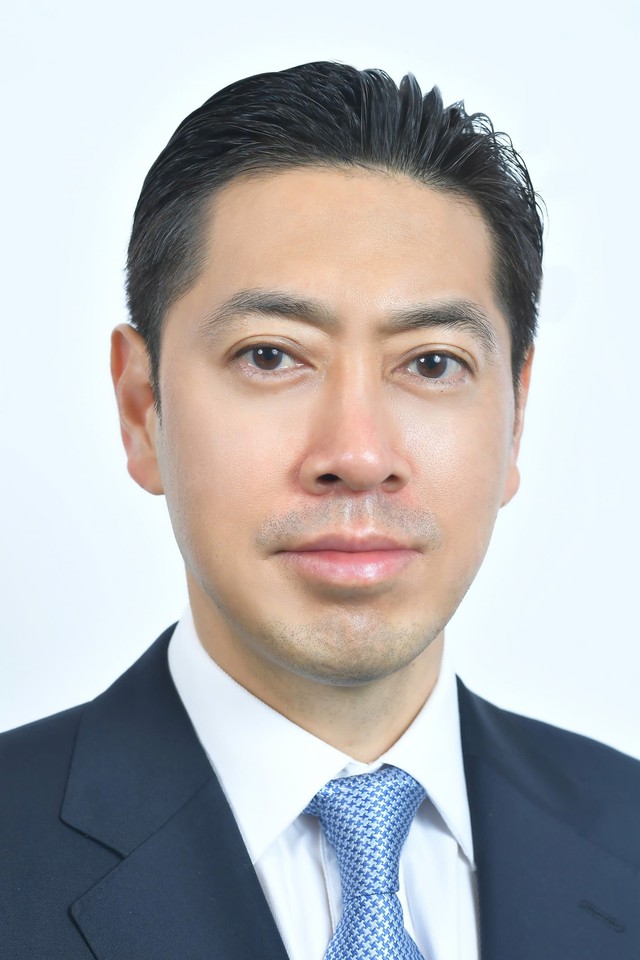
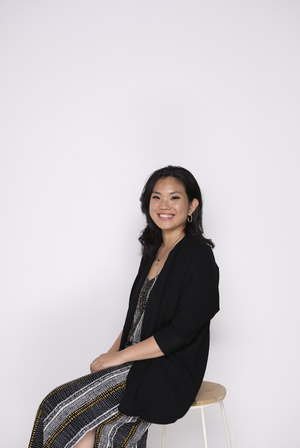
Stanley Ko, President of Ko Hospitality Group. Photo: Supplied
His view is partly shaped by personal experience working with Vietnamese staff in the U.S., which had reinforced his confidence in Vietnam’s human capital.
Many of the people he considers “among his best” in the U.S. are of Vietnamese descent, and they have encouraged him to open a business in Vietnam, telling him they would come back and work for him there, Ko said.
“It’s the people. That is number one. Human capital,” he stressed.
The president of Ko Hospitality Group said the entrepreneurial spirit, energy, and work ethic he has seen among Vietnamese are factors that cannot be fully captured by the financial and demographic data typically used to assess a market.
“Yes, there’s a science to investing and making investment decisions, financial metrics and all these things. But beyond that, how you interpret that data is sort of the art,” he said.
For Ko, that first-hand experience is what lies “behind, beyond the numbers.”
“It’s very encouraging to see the energy, conscientiousness, and hard work of the young workforce here,” he said.
“It’s like a ‘secret weapon,’ and I think that gives me extreme confidence in the market going forward.”
Vietnam’s appeal also extends to its growing F&B market and changing consumer expectations.
“I think people are more aspirational. They’re going to be more discerning and want a particular grade or standard, and they’re going to expect that,” he said.
“Hopefully, we can capitalize on that phenomenon right now. So, I think this is a unique time and moment."
Brad Smith, president of Darden Franchising, said the opening of the first restaurant in Vietnam represents a significant step in their expansion across Asia.
“Vietnam's strong economic growth, evolving fine dining landscape, and vibrant business community make it the ideal market for our first location in the region,” Smith stated.
Getting the local fit right
For foreign F&B brands entering Vietnam, Ko said the key considerations extend beyond the restaurant itself, from regulations and import costs to whether a product fits local tastes and dining habits.
“Anything that impacts beyond the four walls of a restaurant, that's the big risk for fine dining,” he said, pointing to factors such as regulations, importation, trade agreements, and staff training.
Ko said businesses also need to assess whether their products are genuinely suited to the local market rather than assuming that a concept successful elsewhere will work in another market.
“Don't force things,” he said. “You have to think carefully about what your product is. Do they really want your product?”
Getting localization right can also be the key.
The Capital Grille, for example, has made adjustments to fit local dining habits while retaining the essence of the brand.
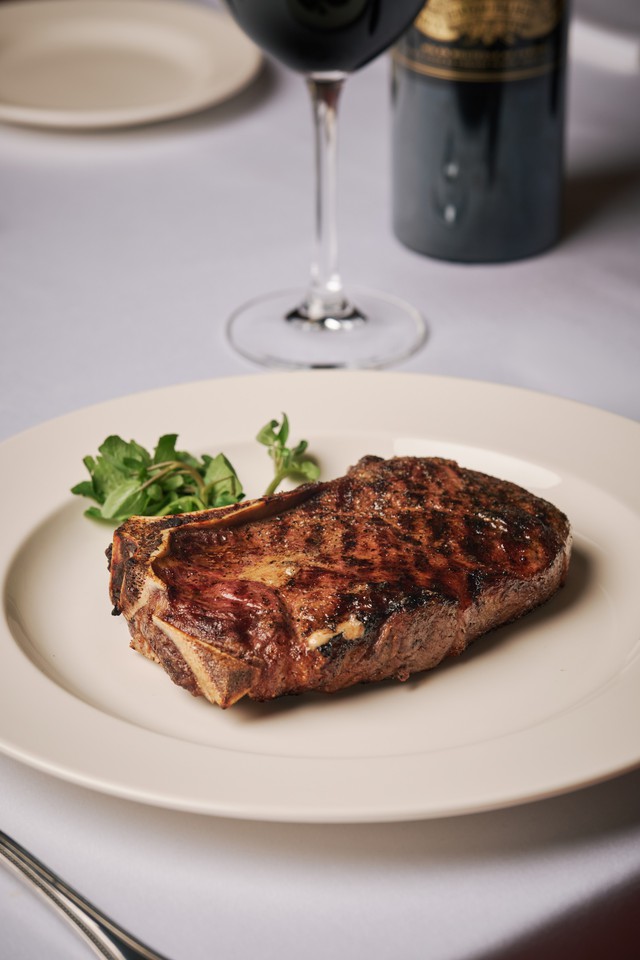
For Stanley Ko, president of Ko Hospitality Group, that existing appetite for beef is another factor that works in favor of a steakhouse brand entering Vietnam. Photo: The Capital Grille
In the Vietnam restaurant, steaks are offered in smaller portions, including a six-ounce option compared with the eight-ounce standard in the U.S., while larger cuts are also available for groups to share.
The restaurant has also incorporated wine lockers as another way to accommodate local dining habits.
They said the lockers can be shared among family members, such as a husband and wife, reflecting the strong culture of sharing among Vietnamese diners.
Ho Chi Minh City’s dining potential
When choosing a city for the group’s first restaurant in Vietnam, Ko said Ho Chi Minh City stood out for its openness to Western and American popular culture.
He sees similarities between Ho Chi Minh City’s central business district and major business centers in the U.S., saying the area around former District 1 reminded him of downtown New York.
Bitexco Financial Tower, where The Capital Grille is located, also reminded him of landmarks such as Rockefeller Center and Wall Street.
Looking ahead, Ko sees room for Ho Chi Minh City to develop into a fine-dining hub of the region.
“I think there’s a lot of room for growth,” he said, pointing to the young and energetic workforce entering the industry.
“It takes time, but it’s definitely a possibility.”
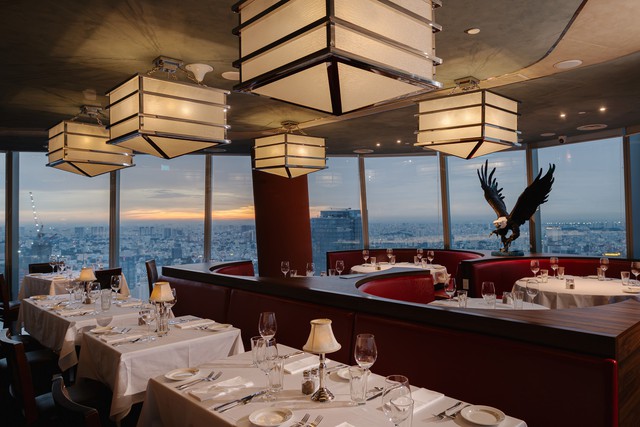
A 360-degree view of Ho Chi Minh City from the restaurant. Photo: The Capital Grille
Ko said the development of the F&B industry would largely mirror the broader economy.
As Vietnam becomes more internationalized and Ho Chi Minh City moves toward becoming a major financial and technology hub in Southeast Asia, he expects ancillary services such as hospitality and dining to develop alongside it.
He also identified formal culinary training as another area that could help strengthen the industry.
In his view, the growth of restaurants would eventually create enough demand for institutions that provide professional culinary training.
“If you want to excel at that, then you might see the establishment of a culinary school here that does more formalized training in the culinary arts,” he said.
Ko pointed to Singapore, where international culinary institutions have established campuses, as an instance of how professional training can develop alongside a growing restaurant industry.








Max: 1500 characters
There are no comments yet. Be the first to comment.