


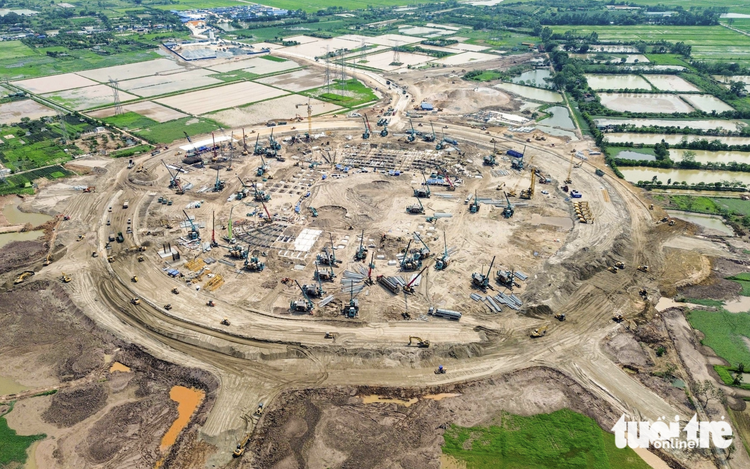
A panoramic view of the 135,000-seat stadium construction site in southern Hanoi. Photo: Hong Quang / Tuoi Tre
After just three months of construction, the stadium, designed to hold an unprecedented 135,000 spectators, is beginning to emerge.
As part of the ambitious Olympic Sports Urban Area in Thuong Phuc Commune, the project officially got off the ground on December 19, 2025.
Spanning 73.3 hectares, the stadium is envisioned as a global landmark, meeting FIFA standards while boasting the largest capacity and fully retractable roof system in the world.
Beyond its scale, Lac Viet Stadium distinguishes itself through a design deeply rooted in Vietnamese cultural identity.
Architectural elements draw inspiration from Dong Son bronze drum motifs, blending traditional symbolism with cutting-edge engineering to create a venue that is both modern and emblematic.
International attention has recently intensified following a social media post on March 6 by renowned Italian football journalist Fabrizio Romano.
"Vietnam has started the construction for the biggest stadium in the world!” Romano said in the post on March 6.
His mention of the project sparked widespread discussion, turning the Hanoi-based development into a trending topic across global platforms.
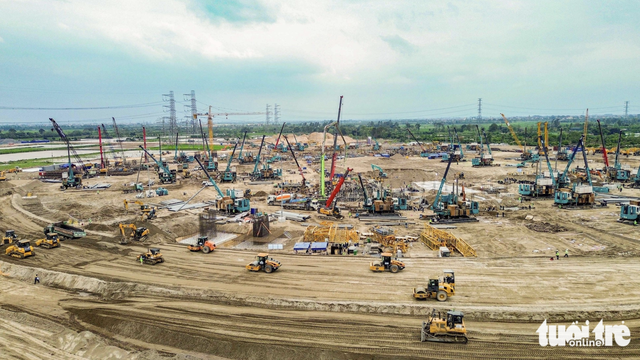
Lac Viet Stadium is a key component of the Olympic Sports Urban Area project in Hanoi.
On-site observations reveal a vast construction complex already in full swing.
Thousands of workers operate in continuous shifts, supported by an array of equipment, signaling the project’s accelerated timeline and national significance.
The stadium is also positioned as a model of sustainability and technological integration.
Plans include artificial intelligence systems capable of replacing the playing surface within six to 10 hours, 5G-connected smart seating, and real-time crowd and security management.
Environmental features are equally prominent, with water recycling systems expected to reduce clean water usage by up to 70 percent, along with heat and UV-resistant materials, natural ventilation to cut energy consumption, and noise reduction measures.
A dedicated VVIP section is also being developed to meet international standards for hosting heads of state and high-level delegations during major events.
Construction is slated for completion in August 2028.
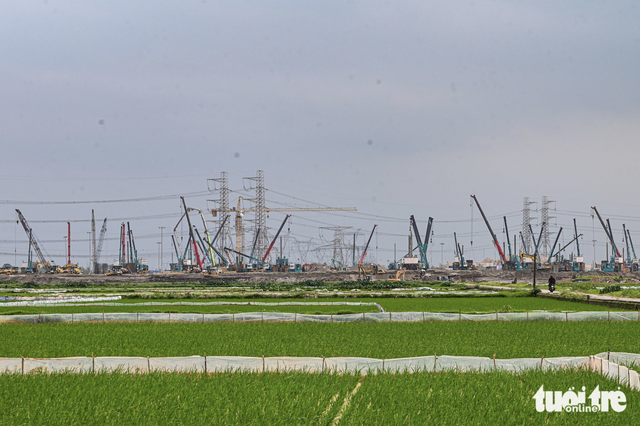
A large number of cranes and machines have been mobilized to the construction site, which spans dozens of hectares.
Apart from the stadium, the sports urban area includes the Global Aquatic Arena, the Vietnam Sports Tower, and a large-scale E-Sports arena, all contributing to the vision of a comprehensive sports and entertainment hub.
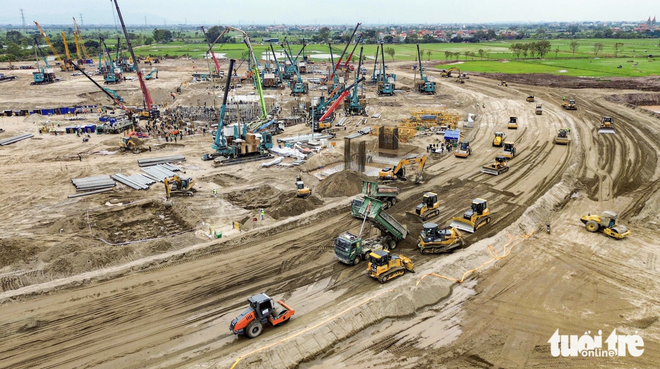
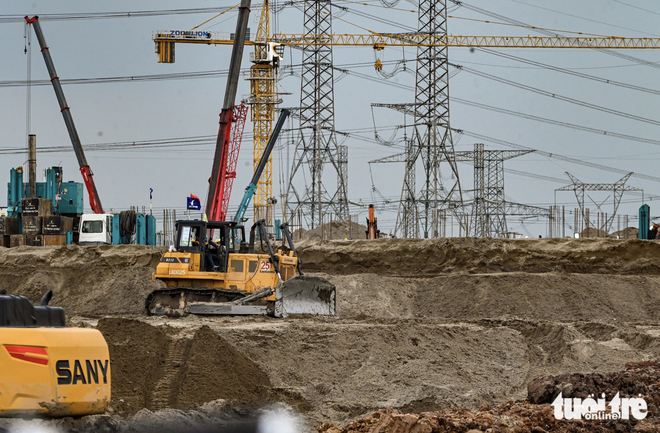
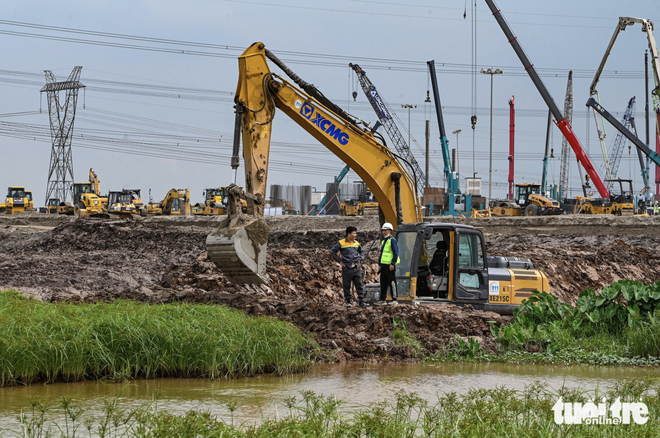
The outer diameter of the stadium structure continues to be expanded to ensure the planned capacity of 135,000 seats.
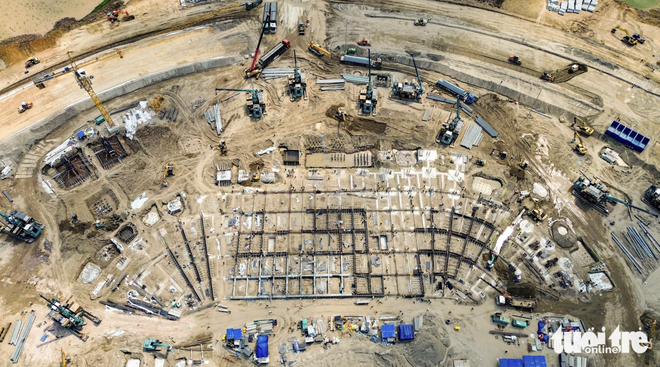
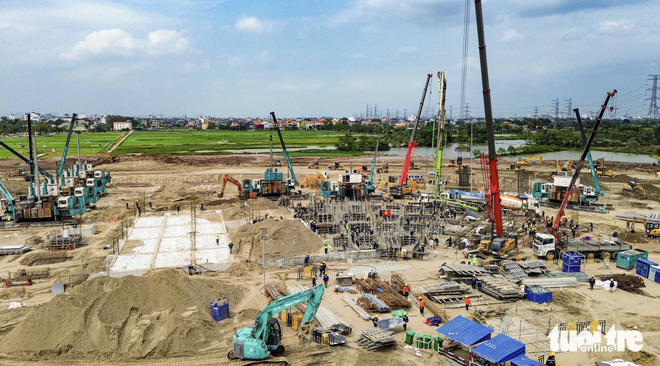
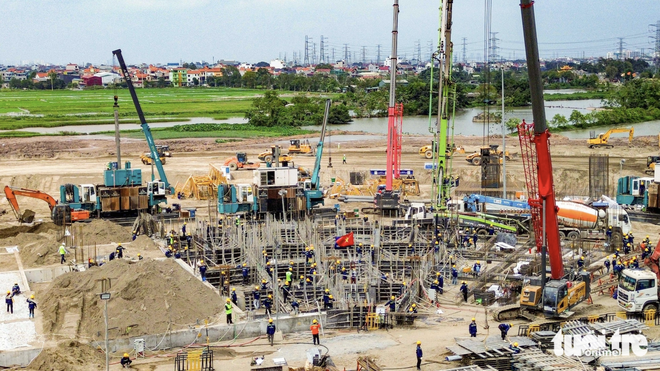
According to the design, the stadium is envisioned as a green, AI-integrated facility capable of replacing the playing surface within six to 10 hours, featuring 5G-connected smart seating, as well as real-time security and crowd management systems.
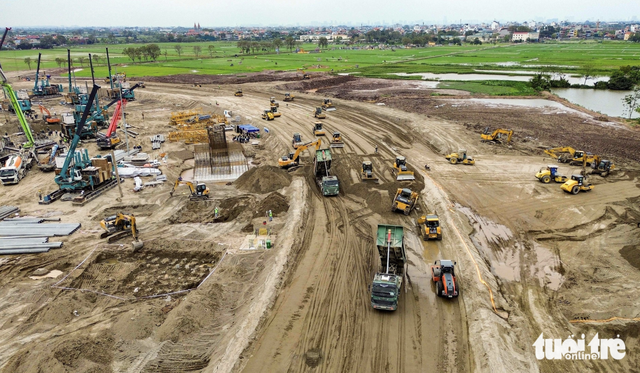
Thousands of workers are currently on site carrying out construction.








Max: 1500 characters
There are no comments yet. Be the first to comment.