


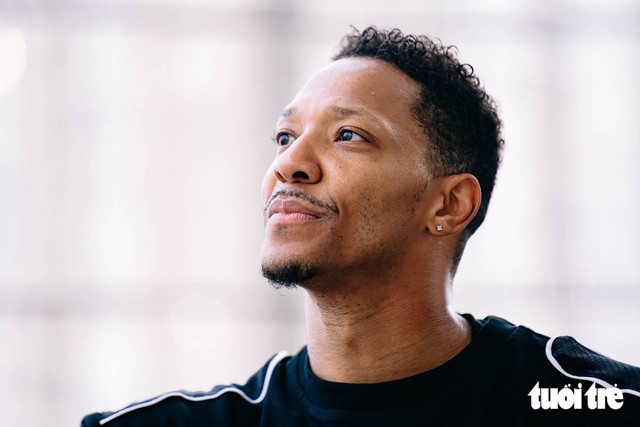
American breaking artist Bboy Morris. Photo: Thanh Hiep / Tuoi Tre
Bboy Morris spent nearly two weeks in Ho Chi Minh City as part of the Next Level artist residency program, funded by the U.S. Department of State to mark the 250th anniversary of U.S. Independence Day (July 4, 1776 – July 4, 2026).
The program aimed to promote creative exchange between cultures through hip-hop music and dance.
Hip-hop emerged in New York City in the 1970s, became widely popular in the 1980s and 1990s, and has since developed into a global cultural movement.
According to Britannica, while there is still debate over the number of elements that make up hip-hop, four are widely regarded as pillars of the culture: DJing, rapping, graffiti and breaking, also known as breakdancing or B-boying.
In Vietnam, hip-hop has also become part of the country's cultural life, with numerous communities and activities for people interested in the genre.
Vietnamese identity in every move
When Bboy Morris first came to Vietnam in late September this year, he had no idea what the local breaking scene would be like.
After spending time with the local B-boys and B-girls, Bboy Morris realized their level was much higher than he had expected.
“I came in thinking it was like we're gonna go from zero, but they're already at like 80,” Bboy Morris told Tuoi Tre News in an exclusive interview.
“Most B-boys here know how to dance,” he said.
“They have all the ingredients, now we are trying to cook it up so they can win and be on the map,” he added.
“If I can help put them on the map that would be great for hip-hop in general. There's a good feeling, an energy from Vietnam. They have a personality.”
Bboy Morris of the eminent Rock Force Crew is part of the USA Dance’s Breaking DanceSport Athlete Council.
He’s accumulated 122 competitive titles and built an extensive resume over his 26-year career in breaking.
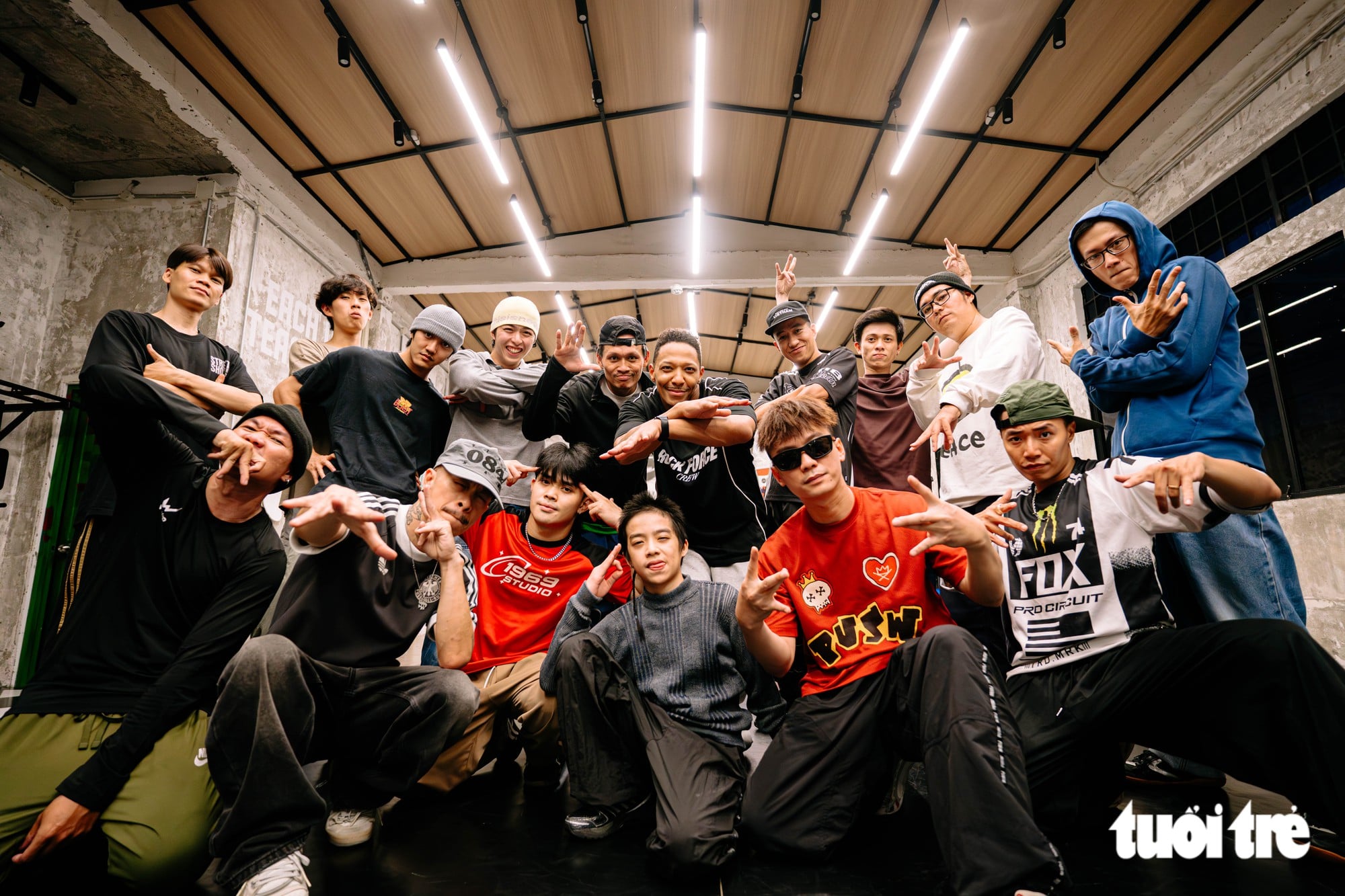
Bboy Morris (center) connects with Vietnam's hip-hop community through energetic dance moves during workshops at PUSW Studios in Ho Chi Minh City in September 2026. Photo: Thanh Hiep / Tuoi Tre
What impressed Bboy Morris was not only the technical skills of Vietnamese B-boys and B-girls, but also the way they maintain their personality while pursuing an art form that originated in the U.S.
“Internationally, the way dance works for a lot of people is they try to emulate who's the best, and what happens is that everybody starts looking the same,” Bboy Morris said.
Meanwhile, Morris has found that Vietnamese dancers maintain their own identity in their moves.
“Even though they're doing an American art form, they still incorporate their culture,” he said.
“What makes dance special is when I can see where you're from and you're proud to be where you're from.”
At the same time, Bboy Morris said Vietnamese dancers are also among the most attentive and eager to learn as much as possible.
Vietnam is at a special moment
Bboy Morris sees another advantage for Vietnamese breaking.
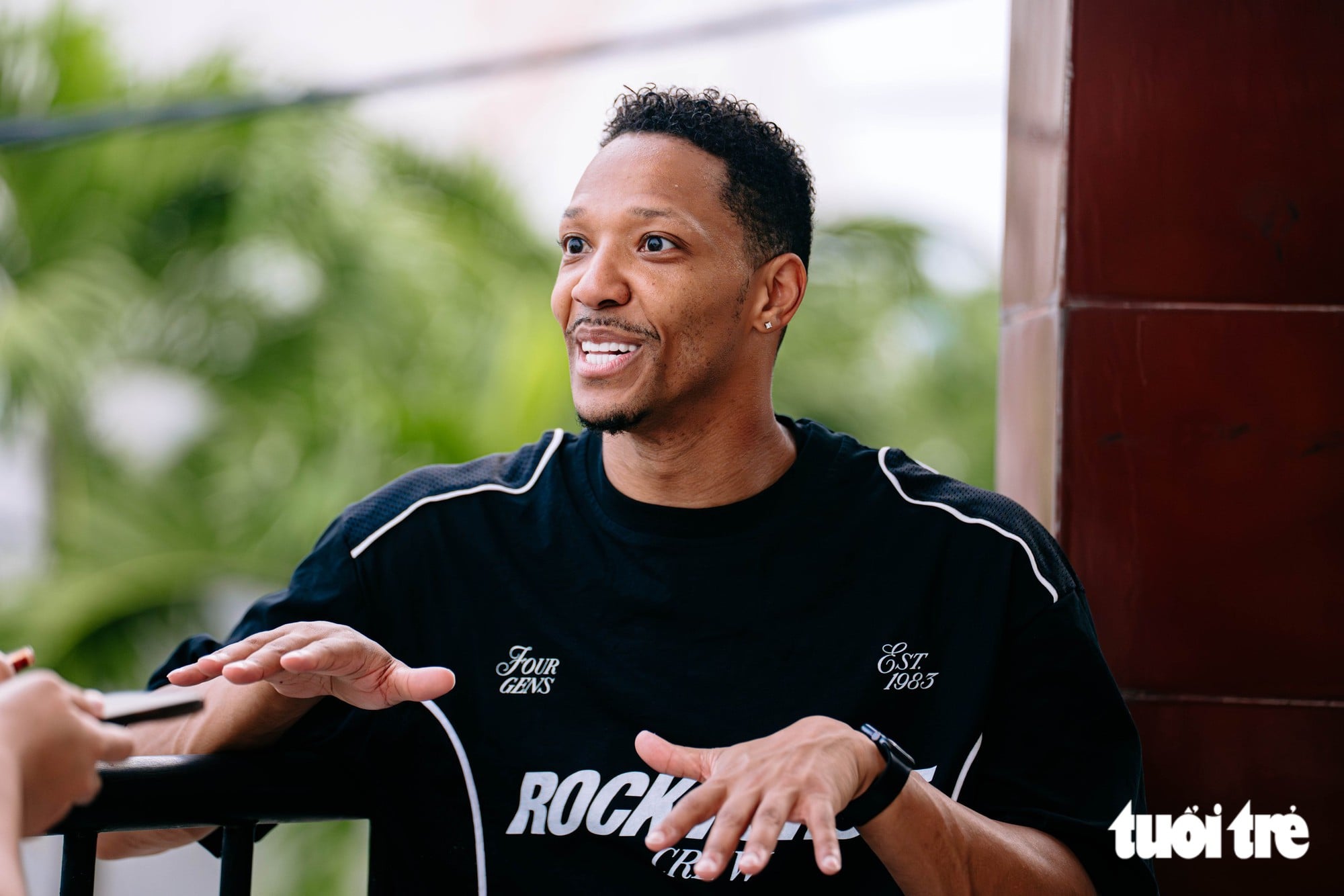
Bboy Morris speaks at an exclusive interview with Tuoi Tre news in Ho Chi Minh City in September 2026. Photo: Thanh Hiep / Tuoi Tre
Although B-boys and B-girls have been active in Vietnam for more than 20 years, Vietnamese breaking is still relatively new on the international stage.
“It's growing and this is when it's the best,” he said.
“The advantage that Vietnamese B-boys have right now is that it’s not really an industry yet. It’s more pure, so the music, the community, the people matter.”
He said this is a good time for Vietnam's dance community to build its own identity and way of operating before more performance programs, brands and commercial opportunities enter the scene.
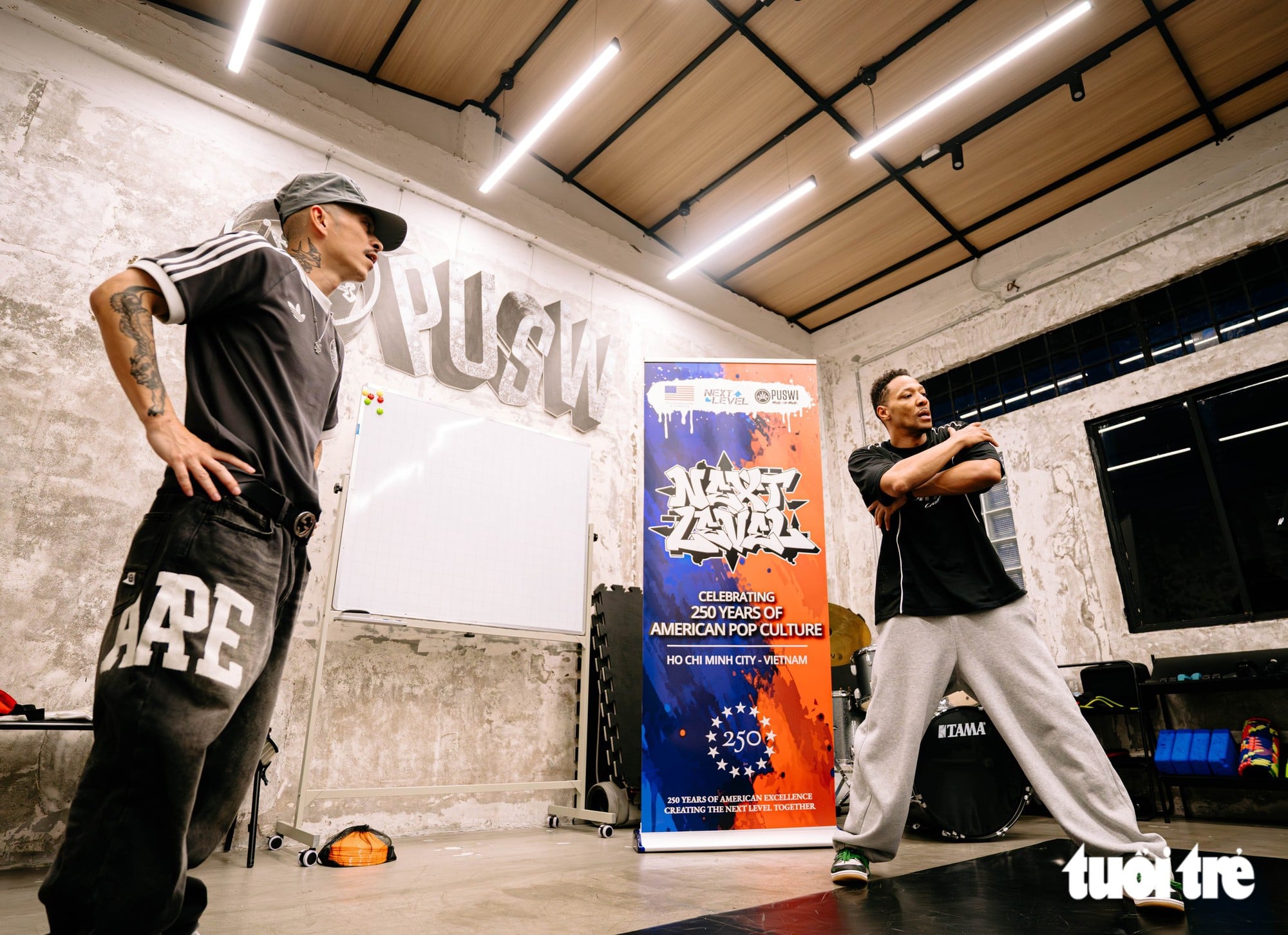
Bboy Morris (right) shares his experience and skills with Vietnamese breaking artists. Photo: Thanh Hiep / Tuoi Tre
Another piece of advice Morris has for Vietnam's breaking community is to stay united as the industry begins to develop.
Dancers may be rivals when they enter a battle, but afterward they are part of the same community.
“If they stick together when the industry comes in, for high-value shows and productions, they can grow an ecosystem where they can build a better life,” he said.
According to him, dancers in Vietnam are right at that cusp where people are starting to take a lot of notice, so if they stick together, they can get more.
For Bboy Morris, one of the greatest values of exchange programs like Next Level lies not only in what dancers learn during workshops, but also in the connections they make.
“The number one thing is networking,” he said. “Over anything in life, whether it's breaking, artistry, or corporate, networking is everything.”
“You can have the best product, the best brand, but if you don't know the right people, you go nowhere fast,” he added.
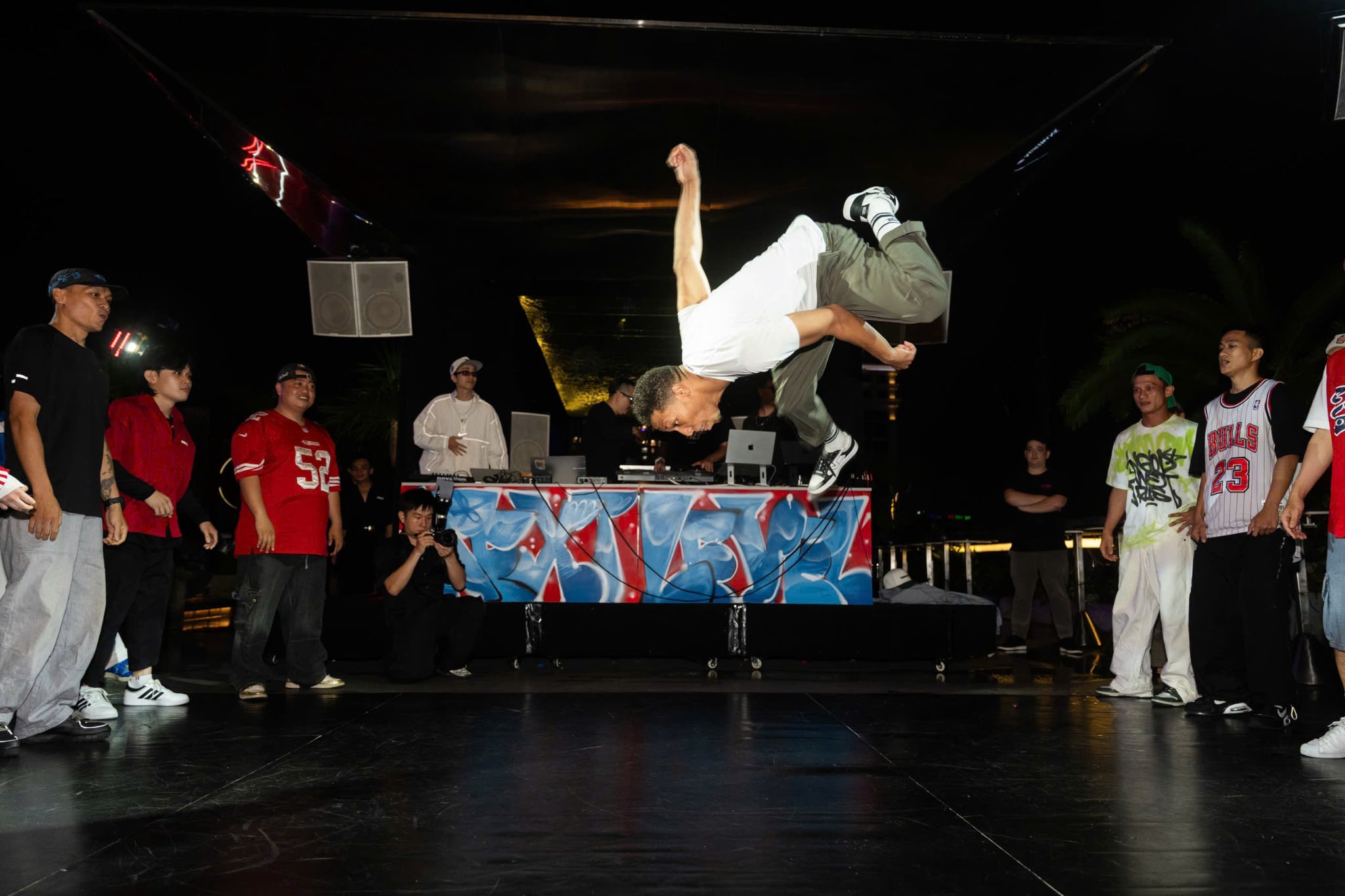
Bboy Morris performs at the closing event of the Next Level program in Ho Chi Minh City. Photo: Radio Pictures
After his time in Vietnam, Bboy Morris hopes to become a "door" that helps Vietnamese dancers get closer to international organizers.
“I can't promise they'll hire them, but I can make sure that the world promoters are aware of these B-boys and B-girls,” he said.
“In hip-hop, you see somebody with a talent, you want to help,” Morris added. “You guys have some high-level dancers here.”
- REFERENCE MORE
- REFERENCE MORE
- REFERENCE MORE




Max: 1500 characters
There are no comments yet. Be the first to comment.