


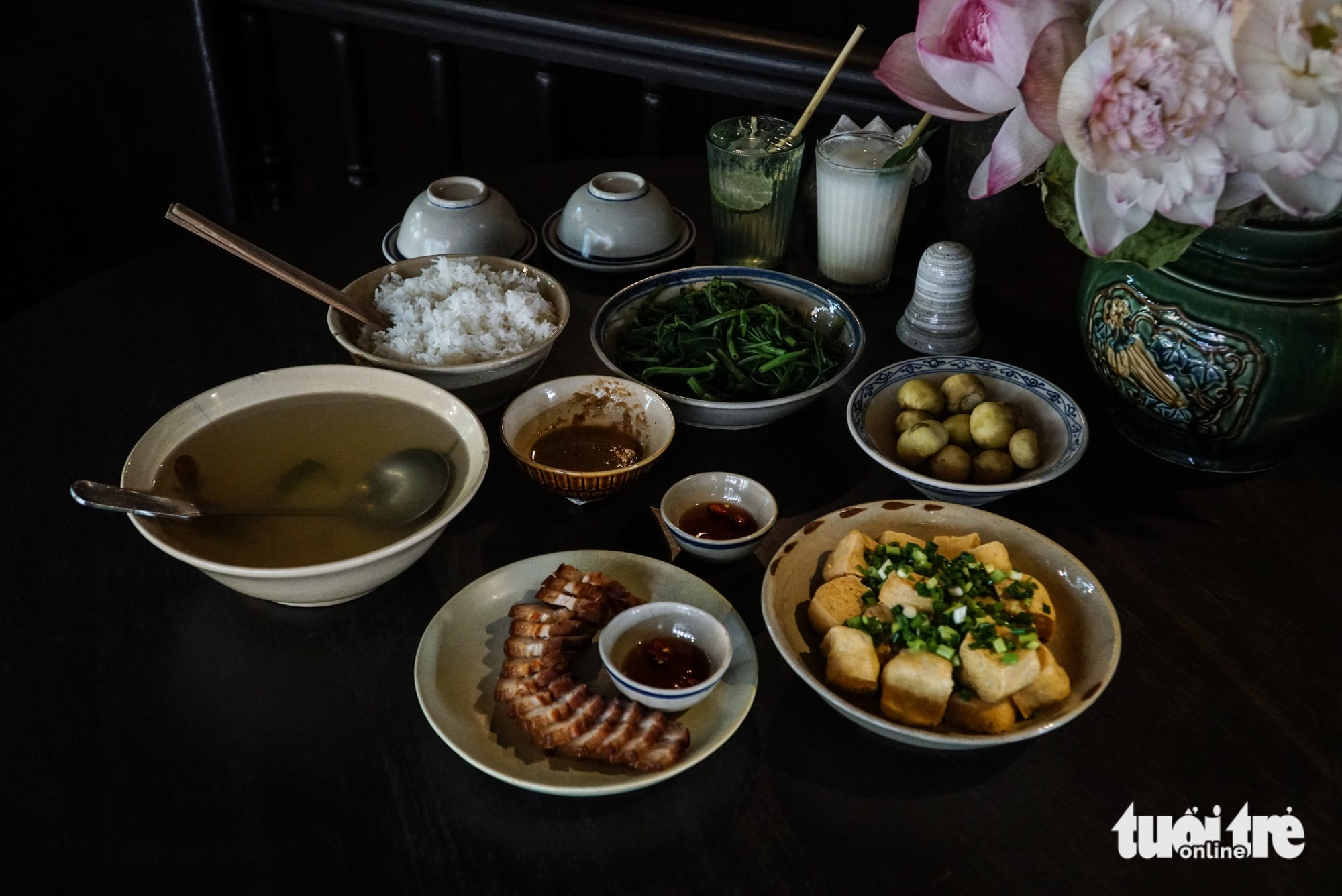
Traditional dishes commonly found in a Vietnamese family meal at Tam Vi, a one-Michelin-star restaurant in Hanoi. Photo: Nguyen Hien / Tuoi Tre
A traditional Vietnamese family meal that costs around VND500,000 ($19) to prepare could potentially be sold to international diners for VND5 million ($190), according to Duong Quoc Nam, a judge on the Top Chef Vietnam 2026 competitive cooking show.
Nam made the remark after tasting a contestant's beautifully presented Vietnamese family meal during the show.
While preserving authentic traditional flavors, the meal was elevated with refined presentation and premium dining standards.
Although he described the comment as light-hearted, Nam said it reflected a larger reality: the Vietnamese family meal has the potential to become a cultural product with significant economic value if it is thoughtfully elevated.
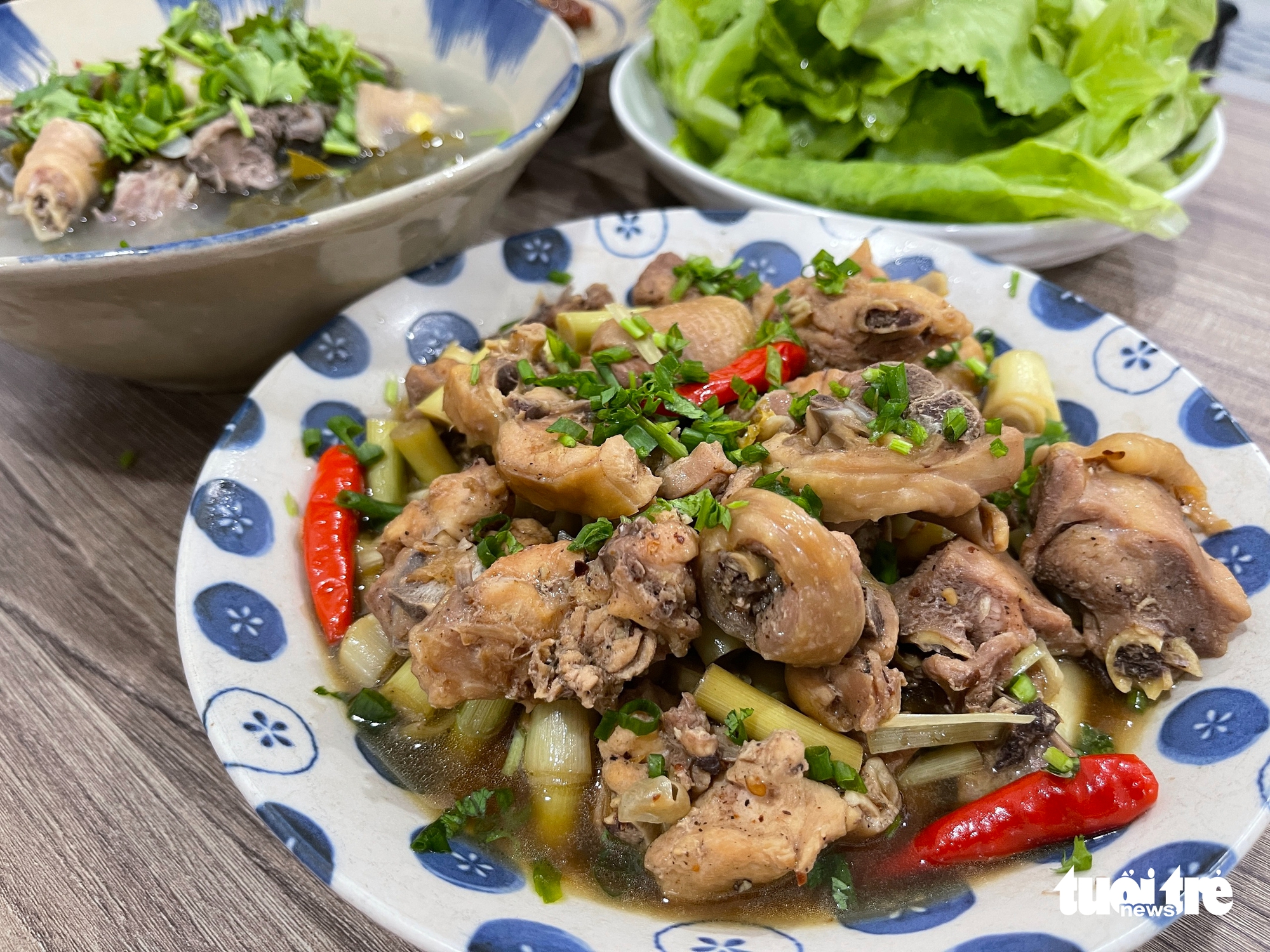
Braised chicken, a dish commonly found on Vietnamese family dinner tables. Photo: Dong Nguyen / Tuoi Tre News
A potential high-value cultural product
The growing global popularity of experiential dining, storytelling through fine dining, and sustainable culinary concepts such as farm-to-table and zero-waste cuisine presents a major opportunity for Vietnam, whose culinary traditions are deeply rooted in culture.
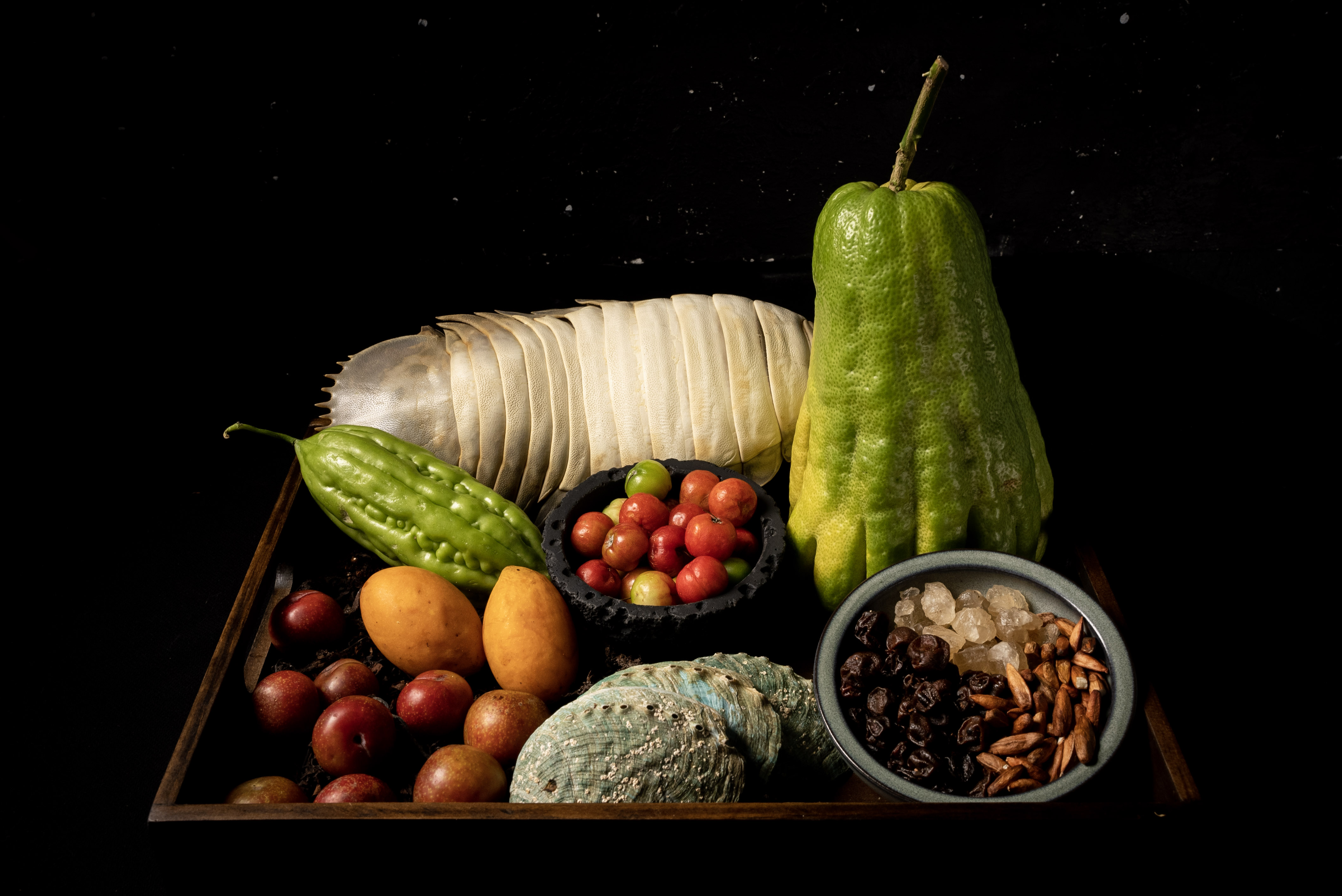
Experts believe that by combining modern culinary techniques, high-quality service, and rich cultural storytelling, familiar Vietnamese dishes, or a traditional family meal, could be transformed into premium tourism products, helping turn cuisine into a high-value economic sector.
Nam, founder of the Ga Trong restaurant chain, said the true value of food lies not only in its ingredients but also in the cultural stories behind it, the cooking techniques involved, and the ability to convey Vietnamese identity to diners.
He believes this is the path toward turning Vietnamese cuisine into a high-value economic industry.
He said this is also the path toward creating greater economic value for the culinary industry.
Meanwhile, Nguyen Quoc Ky, chairman of the Vietnam Cuisine Culture Association, said every Vietnamese dish embodies the cultural essence passed down through generations.
Throughout Vietnam's history, family meals and the familiar flavors of home have provided a source of spiritual strength, helping generations of Vietnamese people overcome periods of hardship.
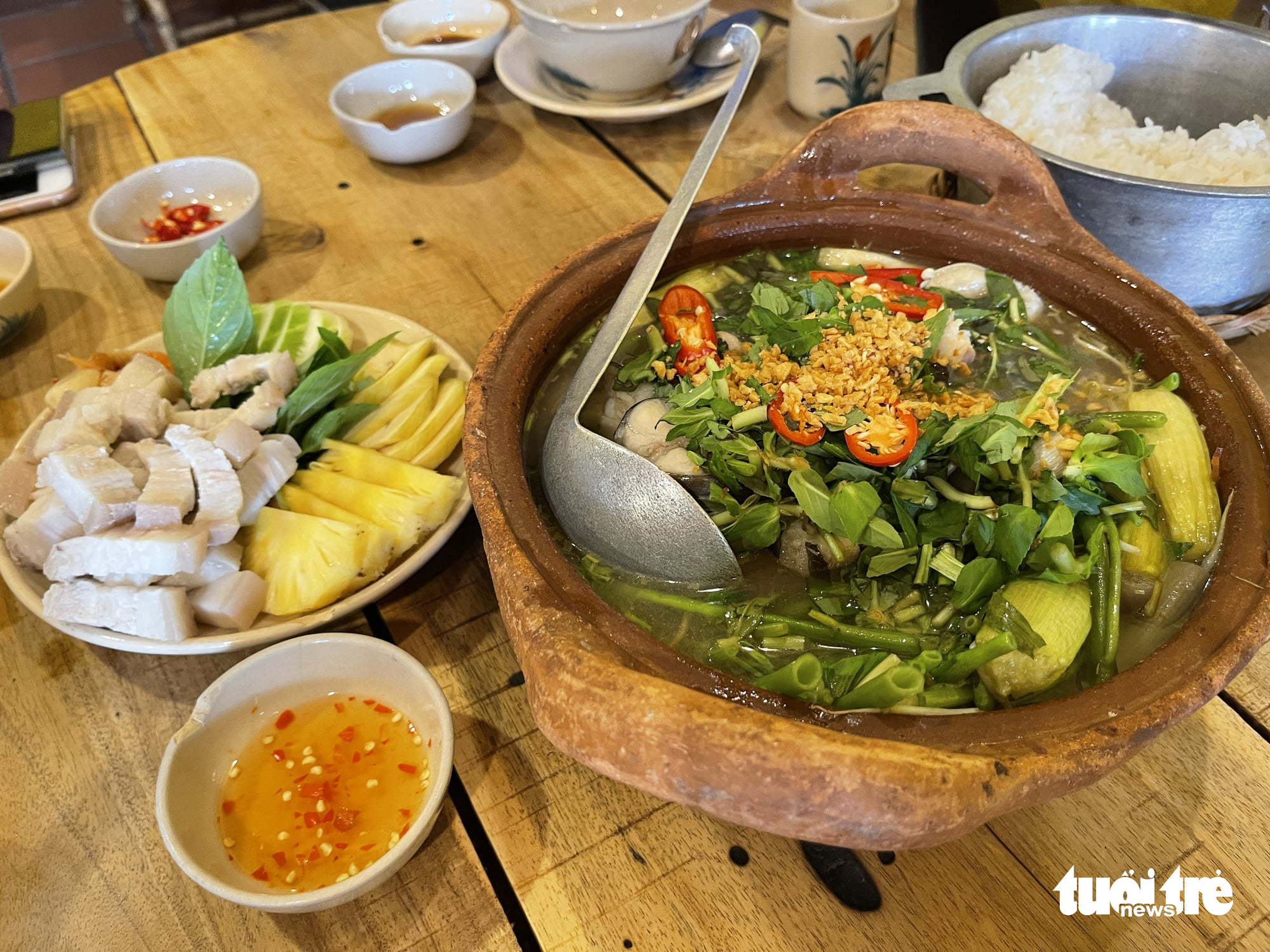
Boiled pork served with sour fermented shrimp paste (mam tep chua) and sweet-and-sour soup, two staples of a traditional Vietnamese family meal, at a restaurant on Phu Quoc Island off southern Vietnam. Photo: Dong Nguyen / Tuoi Tre News
Ky said promoting Vietnamese cuisine is not only about preserving cultural heritage but also about enhancing the country's soft power, boosting tourism, and strengthening its cultural competitiveness in an increasingly integrated world.
He said the government's strong focus on developing cultural industries, including culinary culture, has provided fresh momentum for chefs, businesses, and other industry professionals to take concrete action to preserve and promote the value of Vietnamese cuisine.
A generation of talented young chefs
Judge Alain Nguyen, a veteran chef with 35 years of experience who trained in France, believes Vietnamese chefs are every bit as skilled as their international counterparts.
"Our ancestors left us with an extraordinary culinary heritage,” he said.
“Vietnamese cuisine is delicious, from home-cooked family meals to street eateries and fine restaurants,” he added.
He encouraged the younger generation of chefs to accelerate their learning, master modern techniques, and help elevate Vietnamese cuisine on the global stage.
“I am not looking for the single best chef. I want to see the best generation of chefs,” he said.
“We need to bring Vietnam's signature dishes to the world, just as Italy has done with pizza and Japan with sushi.”
Meanwhile, judge Nguyen Thi Kim Oanh said Vietnam's ambition to become one of the world's leading culinary destinations depends not only on the talent of its chefs but also on a well-developed ecosystem, spanning quality ingredient production, workforce training, international promotion, business support, and enabling government policies.
"Vietnamese cuisine faces strong competition from countries such as South Korea, Thailand, and Japan. We need to recognize this challenge to understand where we stand,” she emphasized.
“Vietnamese chefs must remain rooted in the nation's cultural identity while continuously learning from the essence of global cuisine to strengthen their competitiveness."

From right: Nguyen Quoc Ky, chairman of the Vietnam Cuisine Culture Association; Top Chef Vietnam 2026 judges Chef Alain Nguyen, Nguyen Thi Kim Oanh, and Valentin Tran. Photo: Top Chef Vietnam
Vietnamese cuisine goes global
The year 2026 is shaping up to be a milestone for Vietnamese cuisine as the country's culinary heritage continues to earn growing international recognition, including a 16th-place ranking in TasteAtlas' list of the world's 100 best cuisines.
International travel publications, including Travel + Leisure, Condé Nast Traveler, and CNN Travel, have repeatedly named Vietnam among the world's top destinations for travelers seeking culinary and cultural experiences.
Most recently, in June, Time Out ranked Ho Chi Minh City sixth among the world's 20 best food cities.
Meanwhile, a growing number of Vietnamese restaurants have been recognized by the Michelin Guide, while Vietnamese chefs are increasingly making their mark on prestigious international platforms such as Asia's 50 Best Restaurants and the Bocuse d'Or, underscoring the country's rising stature on the global culinary stage.









Max: 1500 characters
There are no comments yet. Be the first to comment.