


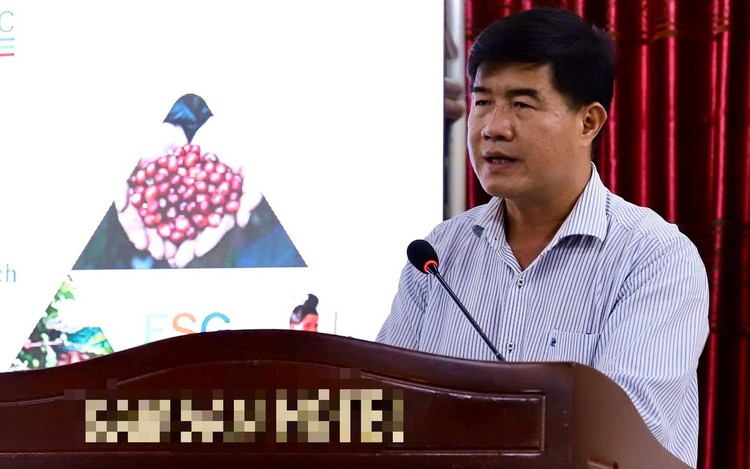
Deputy chairman of the Dak Lak administration Nguyen Thien Van speaks at a ceremony marking the rollout of the project titled ‘SustainCoffee - Advancing ESG Practices in the Coffee Sector in Vietnam’ in Dak Lak Province, November 6, 2026. Photo: K. Trang / Tuoi Tre
Titled ‘SustainCoffee - Advancing ESG Practices in the Coffee Sector in Vietnam,’ the project was officially rolled out in Dak Lak Province in Vietnam’s Central Highlands on Friday by CARE International in Vietnam and its partners.
Project launched to promote ESG practices in coffee sector
Funded by the EU under its Global Gateway initiative, the project is scheduled to run from December 2025 to May 2029 in Son La and Dak Lak Provinces.
It is expected to directly benefit more than 400 businesses and cooperatives, while indirectly benefiting around 1.4 million farmers and workers.
The project will develop three ESG self-assessment toolkits tailored to different groups in the coffee value chain, alongside training courses, expert consultations and technical guidance.
It will also provide financial support packages to help businesses apply sustainable solutions to production, processing and trading activities.
Other initiatives will focus on improving traceability, connecting businesses with green financing sources and strengthening local capacity for ESG consulting, said Le Kim Dung, head of CARE International in Vietnam's representative office.
Dung said many small businesses and cooperatives had already taken steps toward sustainable production but lacked the tools and resources to demonstrate the progress they had made.
The EU Delegation to Vietnam said the project aims to help Vietnamese coffee businesses and producers improve their competitiveness, enhance transparency and participate more effectively in global value chains.
Sustainability and traceability gaps persist
The project comes as Vietnamese coffee producers face growing pressure to meet international sustainability and traceability requirements, particularly those imposed by the EU.
An initial assessment conducted by management consulting firm MCG found that 84 percent of surveyed businesses and cooperatives had adopted environmental and social sustainability measures.
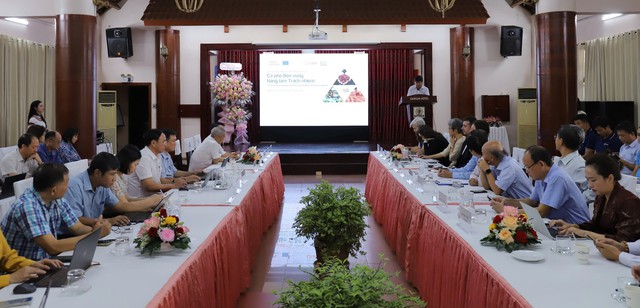
A discussion among delegates after the ceremony marking the rollout of the project titled ‘SustainCoffee - Advancing ESG Practices in the Coffee Sector in Vietnam’ in Dak Lak Province, November 6, 2026. Photo: K. Trang / Tuoi Tre
However, only 44 percent had formal corporate governance practices, none had published sustainability reports, and just 1 percent had accessed green credit.
In 2025, only around 30 percent of Vietnam's coffee output came from supply chains with certification or traceability systems supported by geolocation data, while the remaining 70 percent moved through traditional channels, relying largely on paper-based documentation.
These shortcomings pose growing challenges as importing markets increasingly demand traceability, forest protection, lower emissions and greater responsibility toward workers.
Dak Lak, Vietnam’s coffee capital, seeks greener coffee production
Nguyen Thien Van, deputy chairman of the Dak Lak administration, said the province, known as the country’s coffee capital, has more than 217,000 hectares of coffee plantations and produces over 580,000 metric tons annually.
The coffee industry provides direct employment for around 300,000 workers and indirect jobs for nearly 200,000 others.
However, nearly 90 percent of the coffee-growing area is managed by individual farming households, most of which cultivate just one to two hectares.
Small-scale production, climate change, drought, irrigation water shortages and aging coffee plantations that need replanting remain major challenges, he said.
For the 2026-30 period, Dak Lak aims to develop green, sustainable and low-emission agriculture, supported by science and technology applications and digital transformation.
Van pledged the province's cooperation in implementing the project and called on participating organizations to ensure that project activities reflect actual production conditions and farmers' needs.
He stressed that the project should go beyond developing tools and conducting surveys, with practical solutions put into use through the active participation of businesses, cooperatives and farmers.


Max: 1500 characters
There are no comments yet. Be the first to comment.