


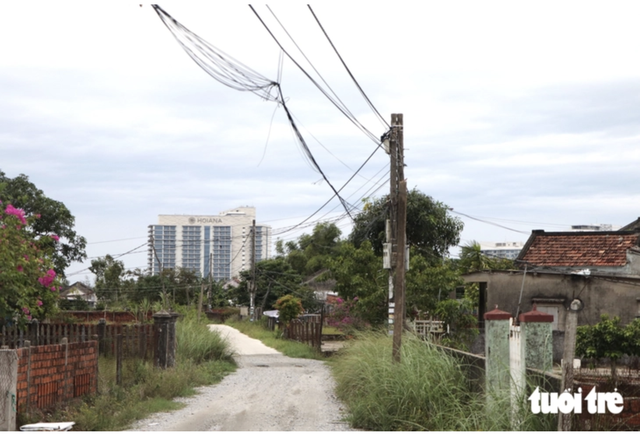
Homes inside the planned Hoiana resort development have fallen into disrepair as residents wait years for compensation and resettlement. Photo: Tran Thuong / Tuoi Tre
For nearly a decade, the home of 91-year-old Nguyen Thi Cam in Duy Nghia Commune, Da Nang City, central Vietnam, received only makeshift repairs to keep out the sun and rain.
Living with uncertainty
The aging tile roof has been patched with corrugated metal sheets after years of wear, while much of the wooden frame has been weakened by termites.
Each rainy season, Cam worries about leaks but has avoided major repairs or rebuilding because her home falls within the planned expansion area of the Hoiana integrated resort, a $4 billion project near the ancient town of Hoi An.
Authorities surveyed her family’s house and land in 2015, she said, but compensation and clearance have yet to materialize.
Cam's situation is shared by hundreds of households in Duy Nghia, where residents say they have been left unable to either rebuild their homes or move elsewhere as the Hoiana resort project has dragged on for years without completing compensation, land clearance and resettlement.
Nguyen Vinh, 72, said his family’s more than 1,300 square meters of land was surveyed years ago.
He has nine married children and wants to subdivide the property so they can build homes of their own, but planning restrictions have prevented him from doing so.
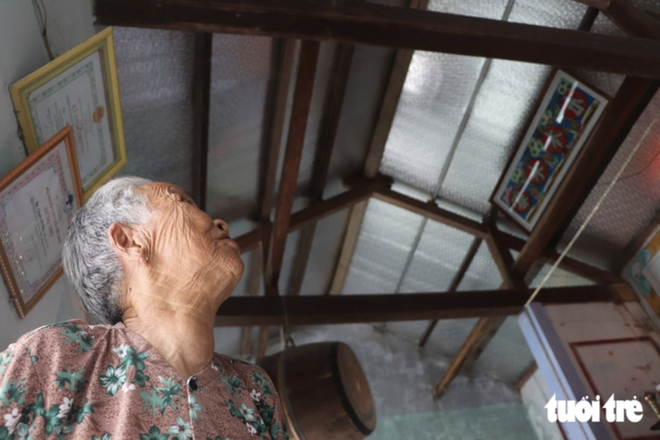
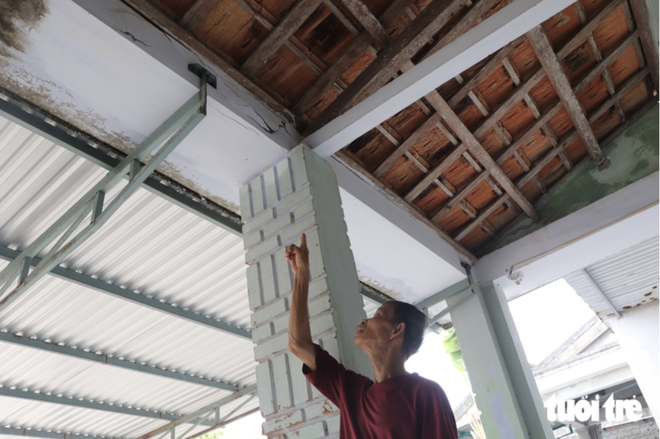
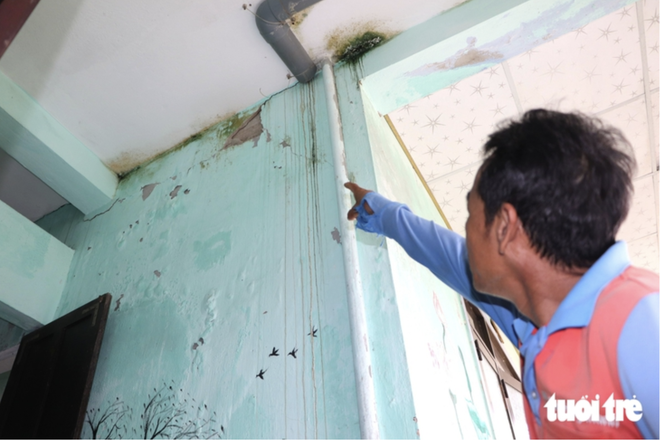
Homes have fallen into disrepair as residents wait for compensation and resettlement, with the approaching storm season adding to their concerns. Photo: Tran Thuong / Tuoi Tre
"My house was built in 2004 and is now close to collapsing. I've had to reinforce it with extra beams just to keep living in it," Vinh said.
"I can't repair it, nor can I divide the land for my children."
Nguyen Van Bi, 52, said his family's property was surveyed in 2017 and 2018, but they have yet to receive a compensation plan.
The five-member family lives in a small house with only a few rooms, leaving no space to expand as the children have grown up.
A few days ago, Bi said he was awakened by a loud bang and rushed outside to find chunks of cement had broken away from a wall, heightening his fears that the house may not withstand the approaching storm season.
"Last year I spent tens of millions of dong replacing the roof because it was full of holes," Bi said. [VND1 million = $38]
"But even after fixing it, I keep wondering when we'll be forced to move. The house is deteriorating day by day, and we still have to live here."
The cost of delays
More than 250 homes in Duy Nghia are at risk of collapse or in severe disrepair, according to the local People’s Committee.
Most households within the project area had their properties surveyed years ago, but compensation plans, financial support and resettlement arrangements have yet to be finalized.
At a recent meeting with Da Nang Fatherland Front Committee oversight delegation, Pham Duoc, chairman of the Duy Nghia Commune People’s Committee, said five resettlement sites designated for the project, including Duy Hai Phases 1, 2, 3; Noi Rang; and Son Vien, have yet to be fully completed.
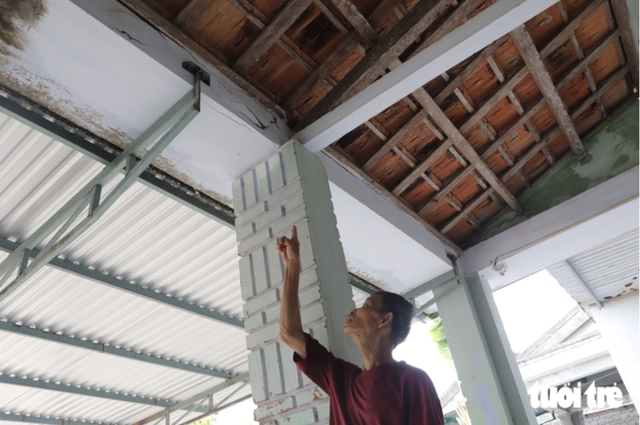
A tarp is used to keep rainwater out of a resident's deteriorating home during the rainy season. Photo: Tran Thuong / Tuoi Tre
Some resettlement sites have deteriorated after more than 16 years in use, while others remain inaccessible because connecting roads have yet to be built.
Land clearance is also incomplete in several areas, preventing families from moing in, Duoc said.
Delays in completing the resettlement sites have left many households whose land has already been acquired without new residential plots, forcing them to remain in severely deteriorating homes that pose risks to both their safety and livelihoods, he said.
Local authorities have repeatedly urged higher-level agencies to resolve financial, infrastructure and administrative bottlenecks to protect residents’ interests.
Nguyen Vinh Tran, director of Hoi An South Development Co. Ltd., said many issues under the jurisdiction of Da Nang authorities had been gradually resolved in recent years.
However, the project still faces legal hurdles dating back years that are tied to central government regulations and will require more time to address.
Once those legal issues are resolved, the project will be able to move forward, helping attract investment, create jobs and support socio-economic development, Tran said.
Licensed in 2010, the Hoiana integrated resort project spans more than 985 hectares and has a total registered investment of more than $4 billion.
While its first phase, including a casino, hotels, a golf course and retail facilities, has opened, much of the remaining site has yet to be developed because of unresolved legal issues and land clearance delays.









Max: 1500 characters
There are no comments yet. Be the first to comment.