


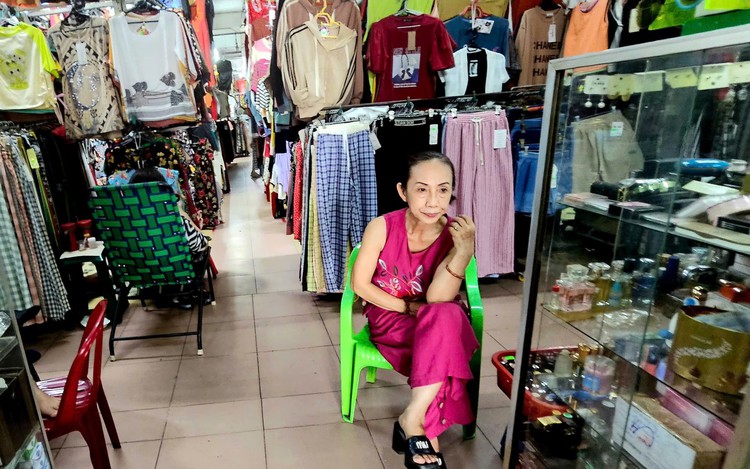
A fashion trader waits for customers at Thu Duc Market in Ho Chi Minh City. Photo: Nguyen Tri / Tuoi Tre
The situation comes as consumers increasingly turn to supermarkets, convenience stores, and online shopping, which offer a wider range of products and services than traditional markets.
At Pham Van Hai Market, only 1,072 of its 1,688 stalls are currently operating, according to its management board.
Bui Thi Anh Nguyet, deputy head of the market management board, said purchasing power at the market has fallen by around 70 percent compared with more stable periods, with non-essential goods and fashion products among the hardest hit.
The prolonged slump has prompted many traders to close or transfer their stalls, while some have left without paying outstanding market fees.
The market has kept stall rents unchanged since 2011 to support traders, but the decline in customers has made it increasingly difficult for the management board to generate revenue.
Nguyet said 65 business households have accumulated unpaid fees and are now virtually unable to settle their debts after disappearing from the market.
At the market, customer traffic for food and dining businesses remains relatively stable, but overall, the sector is not doing much better than others.
Meanwhile, fashion stalls are often empty, with some traders closing early in the afternoon.
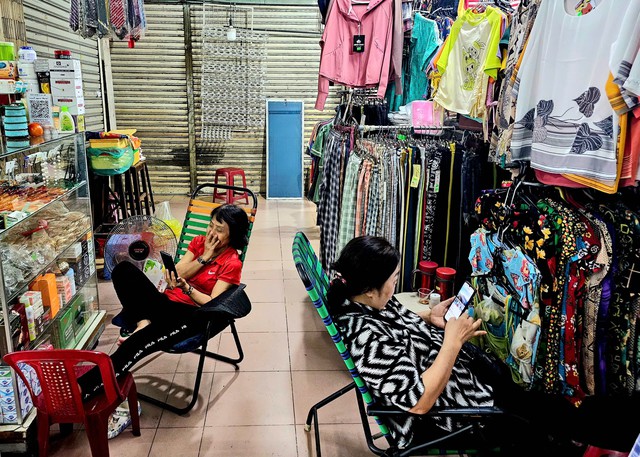
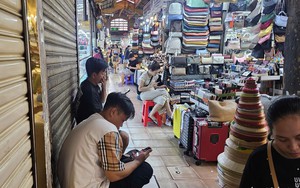
Two traders at a traditional market use their smartphones to pass the time while waiting for customers in Ho Chi Minh City. Photo: Nguyen Tri / Tuoi Tre
Trader Tran Thi Phuong said opening a stall for only two or three days without making a sale has gradually become normal for some vendors.
She attributed the trend partly to changing shopping habits, with consumers increasingly buying online while manufacturers and businesses deliver goods directly to customers.
The situation is also difficult at other traditional markets, particularly those specializing in fashion and wholesale goods.
At Thu Duc Market, many traders have seen their sales fall by 80-90 percent compared with before the COVID-19 pandemic despite trying promotions and regularly changing their products, according to Nguyen Thi Khai Minh, head of the ready-made clothing section.
She said rising operating costs and tax-related difficulties have added to traders' burdens, prompting more vendors to gradually leave the market.
The market was designed to accommodate 936 kiosks and stalls, but only around 600 are currently operating, according to its management agency. The rest have either temporarily suspended operations or been abandoned.
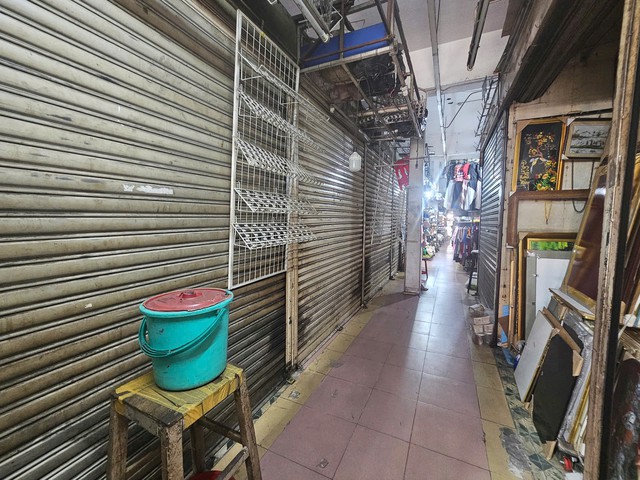
Many stalls at a traditional market remain closed during business hours due to a serious lack of customers in Ho Chi Minh . Photo: Nguyen Tri / Tuoi Tre
At An Dong Market, a major wholesale fashion market, Nguyen Thi Van, a footwear trader, said the number of customers from other provinces has dropped sharply.
She said she used to receive goods shipments every day and needed seven storage rooms to keep them, but business has now slowed so much that the space is no longer needed.
"Customers from the provinces used to come in large numbers. We shipped goods to other provinces every day. Now business is so slow that I don't even want to come to the market," Van said.
Tan Binh Market, another major wholesale fashion market, is also seeing more sellers than buyers.
Traders said its nine entrances used to be packed with customers, while clothing and footwear stalls were busy preparing shipments to other provinces.
Now, even after cutting prices or selling goods at cost, many traders still struggle to attract customers.
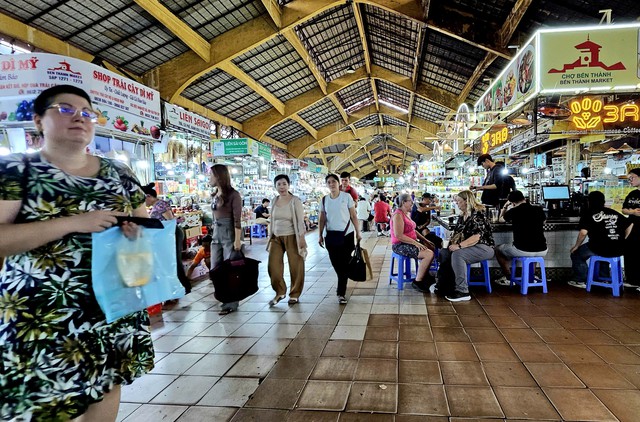
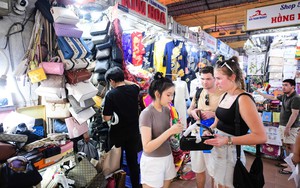
A corner of Ben Thanh Market, where the lack of customers is less severe than at many other traditional markets in Ho Chi Minh City. Photo: Nguyen Tri / Tuoi Tre
The decline in foot traffic has also affected Ben Thanh Market, although it remains in better than many other traditional markets because of its steady flow of international visitors.
The market management agency said the total number of visitors has fallen by around 25-30 percent from two to three years ago and by about 60 percent from the pre-COVID- peak of 2,000-3,000 visitors a day.
Visitors are also spending less.
During more stable periods, about one in every three visitors would make a purchase, while the market now needs around five visitors to generate one buyer, according to the management agency.
Customers who previously spent millions of Vietnamese dong are now more likely to spend only a few hundred thousand dong on lower-priced goods.
The agency said it is seeking additional ways to attract visitors as traditional markets across the city struggle to adapt to weaker demand and changing consumer habits.
(US$1 = VND26,000)
- REFERENCE MORE
- REFERENCE MORE
- REFERENCE MORE
- REFERENCE MORE









Max: 1500 characters
There are no comments yet. Be the first to comment.