


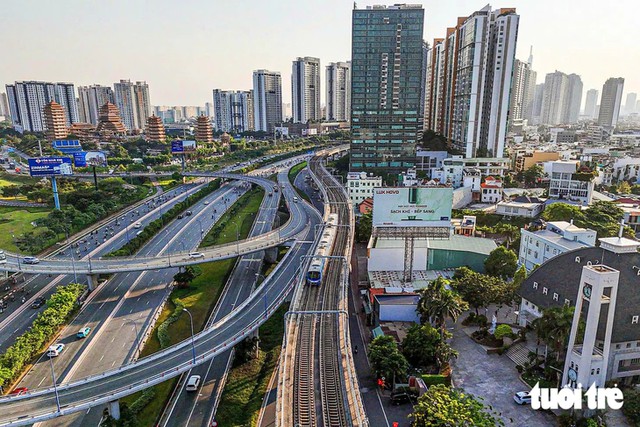
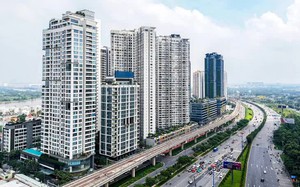
Ho Chi Minh City’s expanding metro network is expected to unlock new development value around stations. Photo: Chau Tuan / Tuoi Tre
Housing affordability in TOD areas
One of TOD’s greatest benefits is bringing people, jobs, commerce and services closer to major public transport hubs. As accessibility improves, land around stations can be used more efficiently, development density can increase, and the area becomes more attractive to both residents and businesses.
But the same process can create an affordability problem: as an area becomes easier to reach and more desirable, it can also become more expensive to live in.
That pattern has been seen in major transit-oriented cities such as Tokyo, Seoul, Hong Kong and Singapore, where properties near metro stations often command a premium. Ho Chi Minh City is beginning to see a similar trend.
According to Savills, a real estate consulting firm, apartment prices along Metro Line No. 1 rose by around 35-70% between 2015 and 2023. Knight Frank, another property consultancy, estimates that properties within 500-800 meters of a metro station are typically priced 10-30% higher than comparable areas without urban rail, while the premium at interchange stations can reach 30-50%.
VARS IRE (the research arm of the Vietnam Association of Real Estate Brokers) also reported that, over the past two years, projects with convenient metro access recorded price growth around 10-20% above the broader market average.
Affordability is not determined by housing prices alone, but also by commuting costs, travel time and access to jobs and essential services. Even so, the trend is clear: as metro access makes an area more attractive, that added value is increasingly reflected in land and property prices.
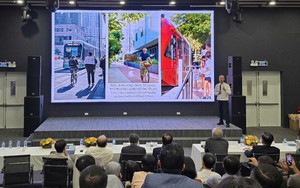
Tran Hoang Nam, MSc, head of the Real Estate program at the Ho Chi Minh City University of Economics and Finance (UEF), warned that without appropriate policies, rising land and housing prices could make it increasingly difficult for low- and middle-income households to access or remain living near public transport.
Renters are particularly vulnerable, as they may feel the impact sooner through higher rents and rising living costs.
“TOD should not be seen simply as a transport-planning model, but as a process of restructuring urban space around accessibility,” he said.
That makes housing policy part of the TOD equation rather than a separate social policy issue.
Dr. Nguyen Hoang Binh, a lecturer at RMIT University Vietnam’s School of Business, said Ho Chi Minh City could consider requiring new developments to allocate a share of units to social or below-market housing, while offering incentives such as density bonuses.
But simply adding more obligations to developers is unlikely to solve the problem.
Requirements that are too onerous could undermine project viability; yet if most of the value created by infrastructure and additional development rights is captured through higher property values, income-based segregation could deepen.
The question, therefore, is not simply how much affordable housing TOD should provide, but how the value it creates should be shared while keeping projects commercially viable. That brings the debate to a broader issue: how to divide the gains from TOD among the government, investors and the community.
From land value gains to public benefits
Affordable housing and investment viability should not be treated as an either-or choice in TOD. The more fundamental question is how the additional value created by public investment and planning decisions should be shared.
“The core challenge is how to move from a mindset of ‘managing development’ to one of ‘creating and sharing value,’” Nam stressed.
That value can come from several sources: investment in public transport, improved accessibility, changes in land use, higher development density, better public spaces and new economic activity.
When the government grants additional development rights, through a higher floor area ratio (FAR), for example, or permission for more valuable forms of development, Nam said the key question should be: “Where does that additional value come from, and what does society receive in return?”
The underlying principle is straightforward. The government creates favorable conditions through infrastructure, planning, public land and development rights. Investors gain additional commercial and development opportunities.
In return, part of that benefit can be translated into affordable housing, social infrastructure, public space, pedestrian improvements or better first- and last-mile connections.
This is the basic logic behind land value capture: not simply recovering the cost of infrastructure, but converting part of the value created by public action into tangible public benefits.
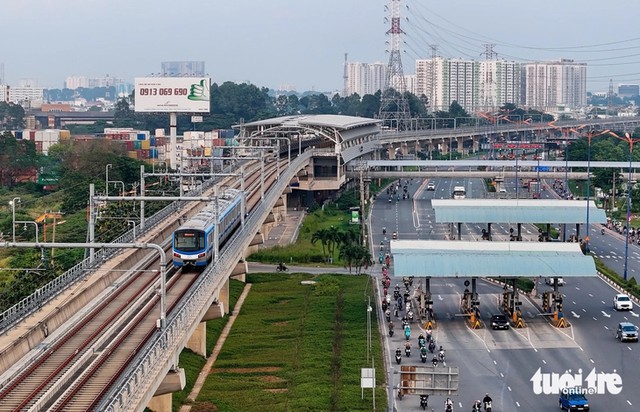
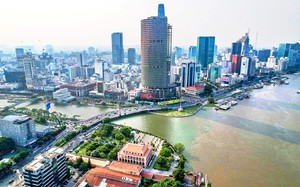
In the coming period, Ho Chi Minh City will focus on defining the boundaries of TOD areas to move forward with planning, while accelerating the review, preparation and approval of relevant planning schemes. Photo: Chau Tuan / Tuoi Tre
Cities have applied that principle in different ways.
In New York, the Universal Affordability Preference, introduced in late 2024, allows developments in medium- and high-density residential areas to receive up to 20% additional residential floor area if the extra space is permanently dedicated to income-restricted housing targeting an average of 60% of Area Median Income.
For Ho Chi Minh City, the relevance lies less in copying the policy itself than in the underlying exchange: additional development capacity is granted in return for an affordable-housing contribution.
Singapore follows a different model, with the state taking a more active role in coordinating land, transport and urban development. Through the Government Land Sales program, public land is released in line with long-term planning objectives.
One recent example is the Bayshore Drive site tendered in 2026. The mixed-use development around Bedok South MRT Station is planned to include housing, a bus interchange and retail space, with the potential to provide around 1,280 homes.
Rather than building rail infrastructure and then simply allowing surrounding land values to rise, Singapore coordinates transport, land supply, planning and development so that part of the value created by public investment is incorporated into the development process itself.
Other cities have used land and development rights more directly to support housing affordability.
Binh of RMIT University Vietnam pointed to Bogotá’s Metrovivienda program, under which the government acquired land early, provided basic infrastructure and reserved large sites for social housing near public transport.
In Ahmedabad, India, higher development density has also been linked to requirements or incentives for developers to allocate more floor area to lower-income housing.
The instruments differ, but the underlying logic is similar: public infrastructure and planning decisions create additional development value, and part of that value can be returned to the community.
Nam therefore favored an approach based on “conditional incentives and proportionate obligations.” That also points to the need to avoid a one-size-fits-all approach. The appropriate mix of incentives and obligations may differ depending on location, market strength, socioeconomic conditions and the type of development.
A value-sharing mechanism
For the value-sharing approach to work, Nam said the rules used to determine developer obligations need to be both proportionate and predictable.
If obligations are too high, projects may lose financial viability and new supply may fail to materialize. If incentives are too generous while social obligations remain limited, much of the additional value created by public investment may accrue to a relatively narrow group.
The city would therefore need a clear way to assess how much additional value a project receives from infrastructure, planning changes or additional development rights, and how much of that value can reasonably be translated into public benefits without undermining investment viability.
For more complex projects, joint development arrangements or public-private partnerships could provide greater flexibility in sharing risks and benefits between the public and private sectors.
Possible mechanisms include profit sharing, revenue sharing, in-kind contributions, cross-subsidies, or using revenues from land development to support the financial viability of a PPP project.
Nam also cautioned against capturing the same value more than once.
If part of the value uplift has already been accounted for under a joint development arrangement, any additional land value capture mechanism based on FAR should include an appropriate offset to avoid “double counting” that value.
That distinction is important because the objective is not to maximize what the city can extract from a project, but to structure an exchange in which public benefits grow alongside the commercial viability of private investment.
Ultimately, Nam argued that Ho Chi Minh City should move beyond asking how much TOD will increase property prices and instead ask what additional value it creates, which resources create that value, who benefits from it and how part of it can be returned to improve the city.
“A successful TOD project is not one where property prices around stations rise the most,” he said.
Success, rather, should be measured by whether public transport investment improves accessibility, supports more efficient economic activity and creates a better living environment, while the added value is shared reasonably among the state, investors and the community.








Max: 1500 characters
There are no comments yet. Be the first to comment.