
Lobster-farming waste blankets scenic beach in Vietnam’s Cam Ranh Bay
A once-pristine beach in Binh Lap Village, Nam Cam Ranh Commune, Khanh Hoa Province, south-central Vietnam, has become heavily polluted by waste from nearshore lobster farming, degrading the local environment and threatening tourism, according to local authorities.
The Nam Cam Ranh administration said on Saturday that pollution at the beach had intensified as some aquaculture farmers continued to dump waste while cleaning lobster cages and rafts.
Despite local efforts to raise public awareness about environmental protection, plastic waste from lobster farming has remained a problem because there is no suitable unit to collect and dispose of it, according to the administration.
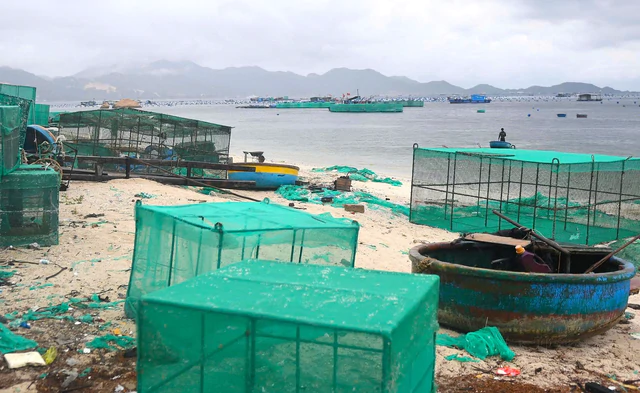
Lobster cages are scattered across the beach in Binh Lap Village, Nam Cam Ranh Commune, Khanh Hoa Province, contributing to environmental pollution. Photo: Nguyen Hoang / Tuoi Tre
Lobster farming in some coastal areas has also developed spontaneously and at high densities, making it difficult for authorities to manage farming activities and monitor water quality.
A survey of cage farming in Cam Ranh Bay identified an 884-hectare area off the eastern coast of Nam Cam Ranh as a proposed aquaculture zone.
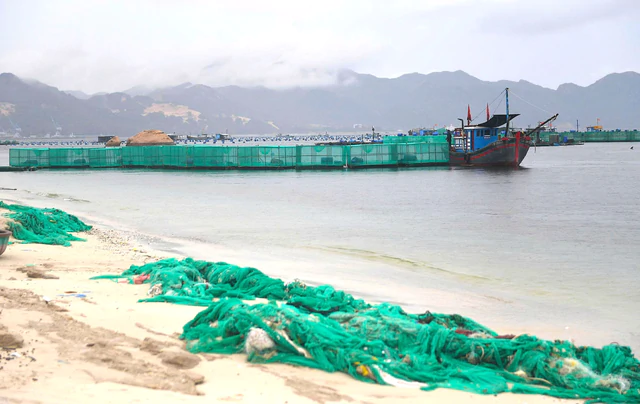
Discarded fishing nets lie along the beach, while lobster cages stretch across the waters of Cam Ranh Bay. Photo: Nguyen Hoang / Tuoi Tre
However, many households have already been raising lobsters and other aquatic species there, complicating efforts to determine farming boundaries and regulate operations, the local administration said.
Field observations showed that dozens of lobster cages were concentrated along more than one kilometer of Binh Lap's coastline.
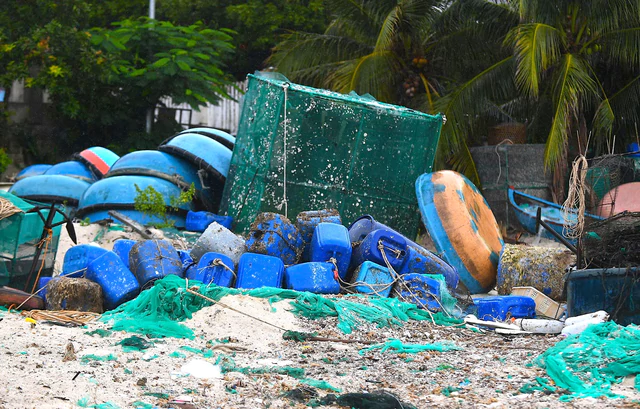
Discarded barrels, plastic containers and old nets pile up on the beach in Binh Lap Village, Nam Cam Ranh Commune, Khanh Hoa Province. Photo: Nguyen Hoang / Tuoi Tre
The cages, covered in oysters, are brought ashore by traders to be cleaned, rewoven and fitted with new nets by hired workers.
During the process, oyster and snail shells, plastic waste and old nets are left scattered along the beach.
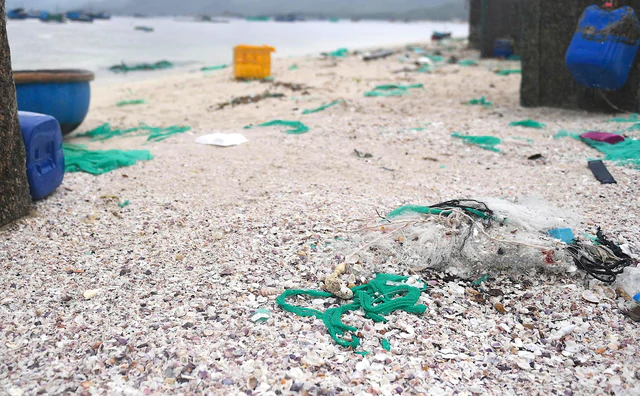
Shells, discarded nets and leftover lobster feed are scattered across the beach in Binh Lap Village, Nam Cam Ranh Commune, Khanh Hoa Province. Photo: Nguyen Hoang / Tuoi Tre
In some sections, waste and discarded fishing equipment have accumulated underwater, forming large patches of debris, while prolonged pollution in certain areas has caused foul odors.
The accumulation of waste has not only degraded the beach's environment but also undermined its appeal as a tourist destination, potentially affecting local tourism activities.
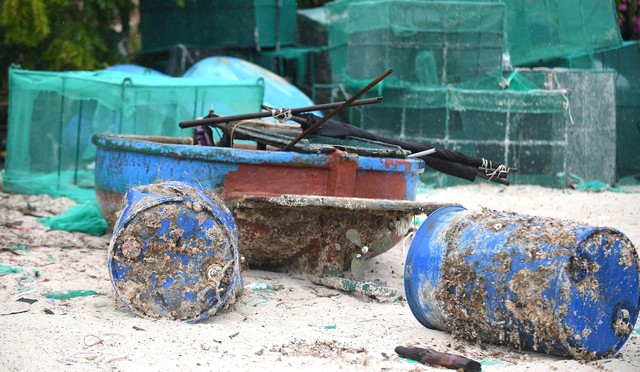
Barrels used in lobster farming are left haphazardly on the beach in Binh Lap Village, Nam Cam Ranh Commune, Khanh Hoa Province. Photo: Nguyen Hoang / Tuoi Tre
A resort owner in Binh Lap said the seawater had once been crystal clear and the beach had fine, clean sand, attracting local residents and tourists for sightseeing and overnight stays.
However, marine pollution has become increasingly severe as lobster cage farming has expanded in the area, threatening the beach's appeal to visitors and affecting local tourism businesses.


Vinh Tho - Nguyen Hoang / Tuoi Tre News
Link nội dung: https://news.tuoitre.vn/lobster-farming-waste-blankets-scenic-beach-in-vietnams-cam-ranh-bay-103261031204258289.htm