
Surprising stories behind Hanoi’s famous ‘Hang’ streets
At first glance, Hang Chieu Street looks like a window into old Hanoi, home to the city’s last surviving ancient gate, O Quan Chuong (Hanoi Old City Gate). But it was actually the first street in the Old Quarter to be rebuilt with features of a modern Western city.
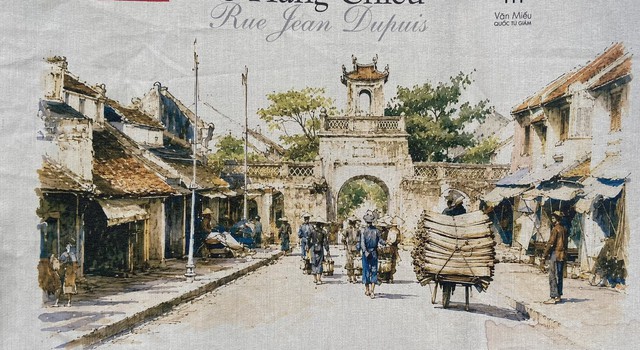
Hang Chieu Street, home to Hanoi’s only surviving old city gate, dating back to the ancient Thang Long citadel
Many interesting stories about Hanoi's 36 streets can be found at the 'Net Ha Thanh - Hanoi Elegance' exhibition, currently on display at the Temple of Literature, as part of the second Thang Long-Hanoi Festival in 2026.
Hang Chieu, Hang Dao: Hanoi's historic mat and silk streets
In old Hanoi, streets were often named after the goods sold or made there, with 'Hang,' meaning a street lined with shops selling a particular type of goods, followed by the name of the product.
Hang Chieu, for instance, was known for selling mats, while Hang Bong was once associated with cotton.
After Hanoi's first 'Western-style' street, Trang Tien, was completed in 1885 in the French concession, Hang Chieu followed three years later.
It was the first street in the Old Quarter to be laid out according to Western urban-planning principles, with sidewalks for pedestrians, trees, streetlights, and drainage systems.
The beautifully designed 'Net Kinh Ky' (Imperial Charm) exhibition is set in the scenic rear grounds of the Temple of Literature. Video: Thien Dieu / Tuoi Tre
The plan came about because of a fire.
In 1888, after a fire destroyed the old neighborhood, the French authorities rebuilt Hang Chieu as the first street in the Old Quarter to be developed according to the Western-style model.
Hang Chieu also featured prominently in Vietnam’s critical realist literature, particularly in connection with the 'human market' around the alleys of Dong Xuan Market, where poor workers gathered to wait for people to hire them for temporary jobs.
Vietnamese writer Vu Trong Phung, one of the country’s best-known critical realist authors, visited the area while working on his book Com Thay Com Co.
The work depicts the harsh lives of poor workers, laborers, and other people living on the margins of society.
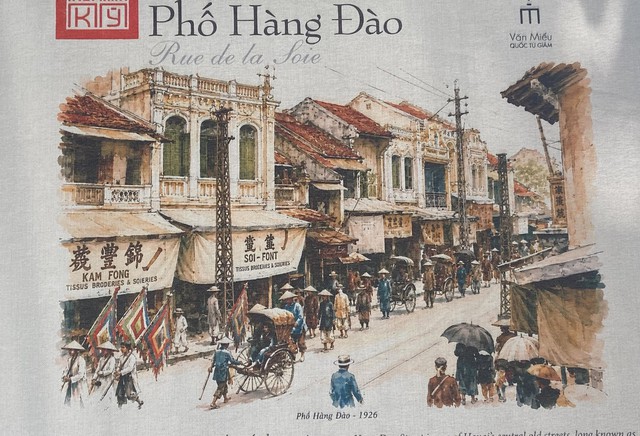
Hang Dao Street was where reformist Luong Van Can lived, and where the Dong Kinh Nghia Thuc movement, a pioneering education and reform movement, was launched in 1907
Hang Dao Street, long known as one of old Hanoi’s silk-trading streets, was also a cradle of the Duy Tan movement and Dong Kinh Nghia Thuc, a reform movement that promoted modern education and new ideas.
House No. 4 on Hang Dao Street was where scholar and reformist Luong Van Can opened a school.
The site later became the birthplace of Dong Kinh Nghia Thuc in 1907.
The movement challenged the traditional classical education system, promoted reading and writing in the Vietnamese national script, translated progressive books and newspapers, and spread ideas of patriotism, national independence and modern civilization.
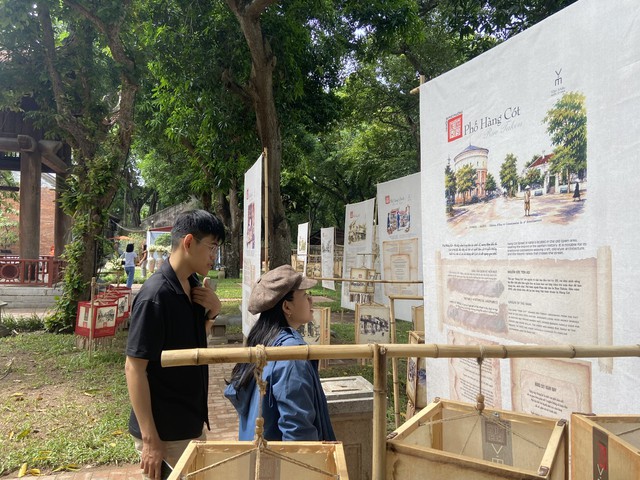
The 'Net Kinh Ky' exhibition, showcasing the cultural heritage and history of old Hanoi, attracts visitors. Photo: Thien Dieu / Tuoi Tre
How about old Hanoi's 'newspaper street'?
From the late 19th century to 1945, Hang Bong Street was known not only for selling cotton and fabrics, but also as a cradle of Hanoi’s press and publishing industry, housing some of the capital city’s largest printing houses and editorial offices.
In 1887, F. H. Schneider established his printing house at 49-51 Hang Bong Street, marking the beginning of a new era and role for the street: as a cradle of the press and publishing industry, one of the earliest centers of Vietnamese-language journalism in Hanoi, and what became known as the 'Newspaper Street.'
After Schneider, the Tan Dan printing house and publishing company, based at 93 Hang Bong Street, became Vietnam’s largest publishing center before 1945.
It produced a series of influential publications, including Tieu thuyet thu bay, Tao Dan, and Pho thong ban nguyet san.
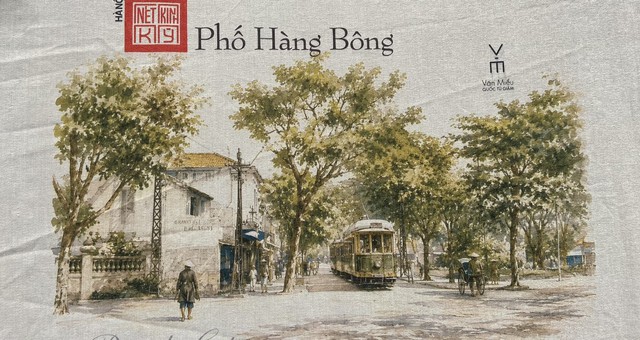
Hang Bong Street, once known as the 'Newspaper Street'
Tan Dan supported and published works by some of Vietnam’s most influential writers, including Nam Cao, a major figure in Vietnamese realist literature; Vu Trong Phung, known for his sharp critical realism; and Nguyen Cong Hoan, another prominent realist writer.
It also published Vu Ngoc Phan’s acclaimed Modern Writers, a major work of Vietnamese literary criticism.
Hang Bong Street and the surrounding streets were once home to, and places of study and work for, some of the leading literary figures of 20th-century Vietnam.
Vu Bang once rented a room near No. 11 Hang Bong. In the early 20th century, poets Xuan Dieu and Huy Can, two of the most prominent voices in modern Vietnamese poetry, also rented rooms and lived together while writing on the street.
Hang Gai Street and Phung Hung Street, which intersects with Hang Bong, were called 'Newspaper Streets.'
The area accommodated numerous printing houses and newspaper offices, including Trung Bac Tan Van, Dong Duong Tap Chi, Hoc Bao, L’Annam Nouveau, Khai Hoa, Dong Phap, Huu Thanh, and Dong Phuong.
Hang Bac Street was the birthplace of Nguyen Tuan, one of Vietnam’s most celebrated writers, while Hang Da Street holds many memories of leading Vietnamese writers and artists.
Writer and journalist Ngo Tat To, a major voice in Vietnam’s realist literature, often sat writing at a newspaper office on a street corner. Nguyen Tuan would also sometimes come by to spend hot summer nights there.
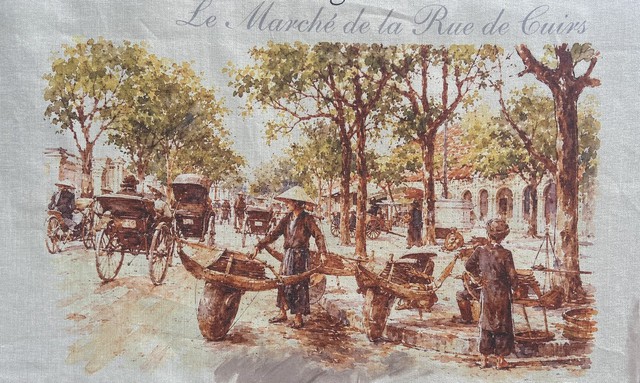
Hang Da Street in the past, known for its leather goods market and its close ties to many prominent Vietnamese writers and artists.
No. 11 Hang Da Street was once home to Vu Bang, a prominent Vietnamese writer and journalist.
His time there is preserved in a commemorative photograph and in correspondence with fellow writer Ly Van Sam.
Hang Giay Street was once known as the 'Street of Books,' as No. 46 (old address) was the home of the family of cultural figure Nguyen Van Vinh, who played a major role in promoting the Vietnamese national script and Western literature in the early 20th century.
The Ich Ky bookstore on the street also helped bring Vietnamese folk literary works, including Pham Cong and Phan Tran, to a wider audience in the Vietnamese national script.
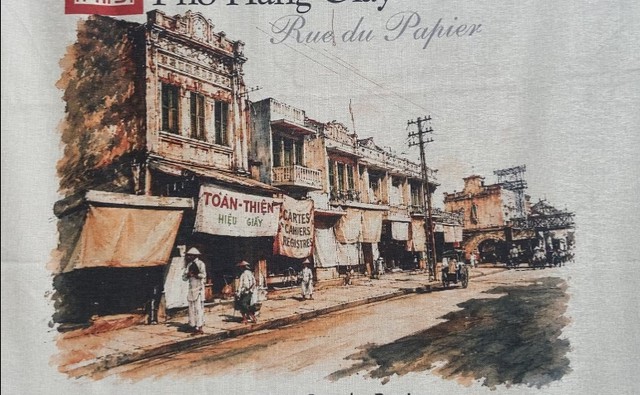
Hang Giay Street, once known as A Dao Street during the early French colonial period
- REFERENCE MORE
- REFERENCE MORE
Van Giang - Thien Dieu / Tuoi Tre News
Link nội dung: https://news.tuoitre.vn/surprising-stories-behind-hanois-famous-hang-streets-103260917205939471.htm