
Vietnam urged to shift FDI focus toward core technologies, stronger local businesses
Vietnam needs to shift from attracting FDI based on its manufacturing and processing advantages toward developing core technologies, a skilled workforce, and a domestic business ecosystem amid a global technology growth cycle driven by AI, according to foreign and domestic experts.
The recommendations were made at the CEO 500 program with the theme ‘The Convergence of FDI, Technology and Global Financial Flows,’ held on Monday as part of the Autumn Economic Forum 2026, which opened in Ho Chi Minh City on the same day.
Vietnam attracted US$50.36 billion in registered FDI in the first nine months of 2026, up 76.4 percent year on year, according to data presented at the program.
The country also led ASEAN in attracting FDI, according to a 2025 report by the United Nations Conference on Trade and Development (UNCTAD).
However, the challenge remains to improve the quality of these inflows, retain more value domestically, and strengthen the capabilities of local businesses.
AI boom heightens need for higher-value FDI
Fazurin Jamaludin, the International Monetary Fund’s resident representative for Vietnam and Laos, said AI is becoming one of the major drivers of global economic growth, particularly in manufacturing, exports, and technology investment.
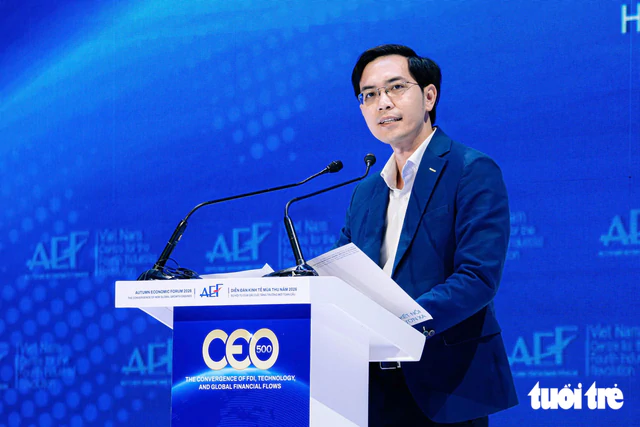
Nguyen Huu Huan, vice-chairman of the executive agency of the Vietnam International Financial Center in Ho Chi Minh City, speaks at the CEO 500 program, part of the Autumn Economic Forum 2026 in Ho Chi Minh City, October 26, 2026. Photo: Thanh Hiep / Tuoi Tre
Despite global economic uncertainties in 2026, including energy shocks and trade-related risks, the global economy has proved more resilient than expected, partly thanks to the AI-driven technology growth cycle, which has boosted demand for hardware production, exports and related services, he said.
In Asia, the AI boom is driving industrial production and intra-regional trade.
Technology investment in the first half of 2026 already exceeded the total for all of 2025, helping several economies grow faster than expected, Jamaludin said.
Vietnam is also benefiting from this growth cycle, although it remains significantly affected by energy shocks.
However, the country’s ability to capitalize on the AI boom would depend on its preparedness, particularly its legal framework, energy infrastructure, and workforce quality, he said.
Jamaludin also warned that if expectations for AI-driven productivity gains and profits fail to materialize, Asia could suffer greater negative impacts than other regions.
For Vietnam and Ho Chi Minh City, he recommended strengthening macroeconomic fundamentals, improving businesses’ access to capital, and modernizing monetary and fiscal policies.
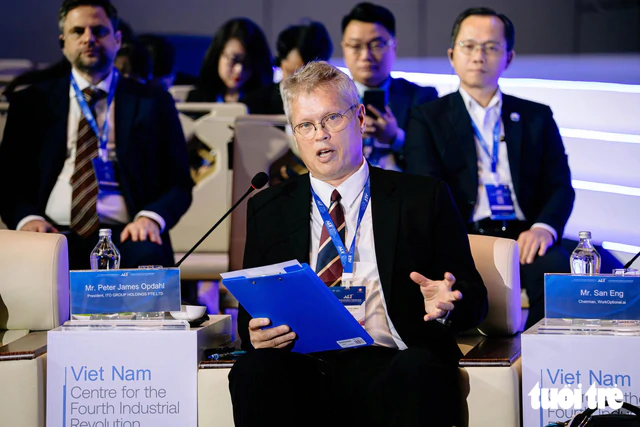
Peter James Opdahl, president and CEO of Singapore-based ITO Group Holdings, speaks at the CEO 500 program, part of the Autumn Economic Forum 2026 in Ho Chi Minh City, October 26, 2026. Photo: Thanh Hiep / Tuoi Tre
He also stressed the need to improve the quality and transparency of economic data, enabling international investors to better assess Vietnam’s potential and supporting efforts to attract long-term investment.
Nguyen Huu Huan, vice-chairman of the executive agency of the Vietnam International Financial Center in Ho Chi Minh City, said Vietnam needs to change its approach to attracting foreign investment by prioritizing projects that generate greater added value.
The foreign-invested sector has accounted for 80.7 percent of Vietnam’s total export turnover in 2026, but high export figures do not fully reflect domestic technological capabilities or the value retained by Vietnamese businesses, he said.
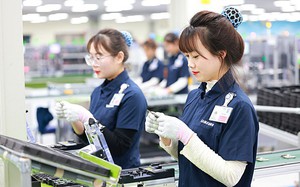
Vietnam still relies heavily on imported components and materials while undertaking low-value processing and assembly, limiting the value it could generate domestically, Huan said.
The country should invest more in research, design, core technologies, intellectual property, and brand development to increase the value retained by Vietnamese businesses, he added.
Stronger supply chains, industrial infrastructure
From the perspective of foreign investors, Peter James Opdahl, chairman of Singapore-based ITO Group Holdings, said Vietnam needs more extensive and better-connected supply chains to compete with regional economies with well-developed manufacturing ecosystems, such as Japan and South Korea.
The domestic market also needs to be developed to create more business opportunities for small enterprises, particularly those without international customer networks.
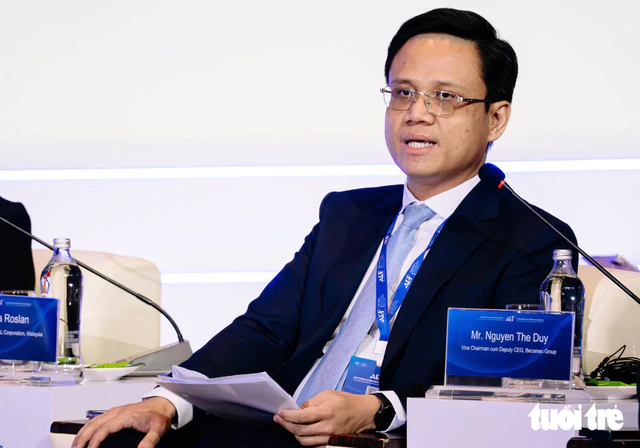
Nguyen The Duy, vice-chairman and deputy general director of Ho Chi Minh City-based Becamex Group, speaks at the CEO 500 program, part of the Autumn Economic Forum 2026 in Ho Chi Minh City, October 26, 2026. Photo: Thanh Hiep / Tuoi Tre
Opdahl proposed providing greater support for local businesses to establish partnerships and access global business networks through international networking events.
He also called for continued efforts to improve the investment climate at both central and local levels to make Vietnam more attractive to both foreign and domestic investors.
Beyond institutions and human resources, industrial infrastructure is another important condition for attracting high-tech FDI.
Nguyen The Duy, vice-chairman and deputy general director of Ho Chi Minh City-based Becamex Group, said the city has an opportunity to accelerate development thanks to its expanded development space, interregional infrastructure, and new decentralization mechanisms.
To attract high-tech FDI, Duy proposed transforming traditional industrial parks into green industrial zones, promoting renewable energy through cooperation with the World Bank and the International Finance Corporation (IFC), and working with Singapore’s Advanced Remanufacturing and Technology Center to upgrade automation technology and train highly skilled technical workers.
He also proposed developing a science and technology urban area in northern Ho Chi Minh City that would integrate research, innovation, training, and urban development.
Vinh Tho - Nghi Vu - Cong Trieu / Tuoi Tre News
Link nội dung: https://news.tuoitre.vn/vietnam-urged-to-shift-fdi-focus-toward-core-technologies-stronger-local-businesses-103261026221736966.htm